African leaders adopted the Kampala Declaration for Africa’s agri-food systems transformation from 2026 to 2035 at the Extraordinary African Union Summit on the Comprehensive Africa Agriculture Development Program (CAADP) in Kampala, Uganda.
About African Union (AU)
- Formation: Established in 2002, succeeding the Organization of African Unity (OAU).
- Headquarters: Addis Ababa, Ethiopia.
- Members: 55 countries from the African continent.
- Agenda 2063: Agenda 2063 is the continent’s blueprint and master plan for transforming Africa into the global powerhouse of the future.
- It is the concrete manifestation of how the continent intends to achieve this goal within a 50-year period.
- The First Ten-Year Implementation Plan spanning from 2014 to 2023, outlines a set of goals, priority areas and targets that the continent aims to achieve at national, regional and continental levels.
|
Enroll now for UPSC Online Course
About Kampala Declaration
- Successor: The declaration succeeds the Malabo Declaration, whose implementation concludes in 2025.
- Focus: It emphasizes transformative agri-food systems to address Africa’s food security and agricultural challenges.
- Alignment: Integrates with Agenda 2063 (Africa’s development blueprint) and the Africa Common Position on Food Systems.
- Vision: Advocates for sustainable and resilient agri-food systems for a healthy and prosperous Africa.
- Approach: Introduces a shift from agriculture-led growth to an agri-food systems approach that considers the entire food value chain.
- Agri-food systems approach: FAO defines agri-food systems as all the interconnected activities and actors involved in getting food from field to fork.
- This broad definition encompasses everything from agricultural production and processing to distribution, consumption, and waste management.
- It also highlights the critical role of economic, social, and environmental factors in shaping how food reaches our plates.
- Roadmap: Provides a detailed framework with clear implementation and monitoring strategies.
Background of CAADP and Previous Declarations
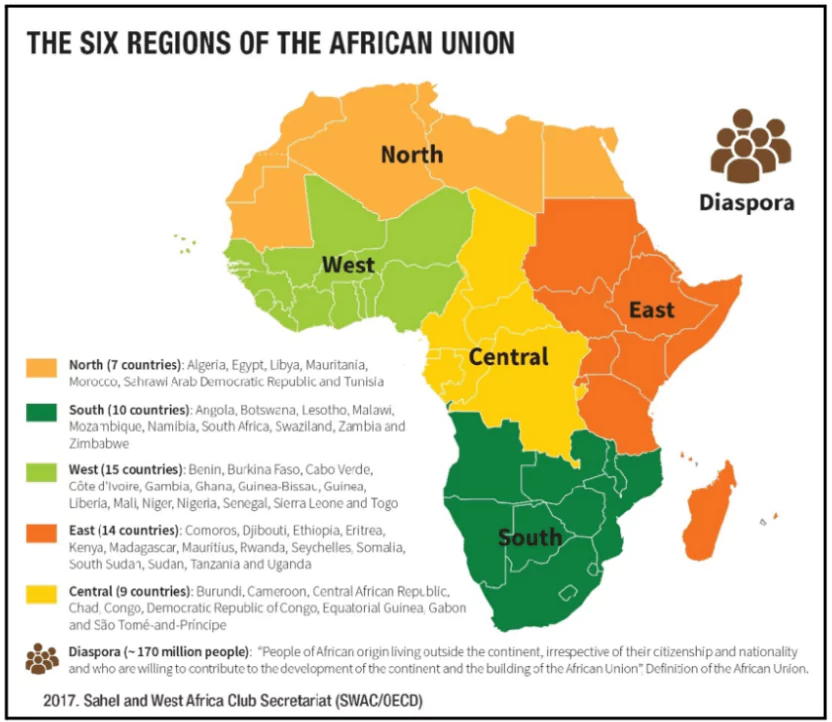
- Comprehensive Africa Agriculture Development Program (CAADP):
- Launched in 2003 under the Maputo Declaration to eliminate hunger and reduce poverty through agriculture-led development.
- Aimed to achieve 10% budget allocation to agriculture and 6% annual agricultural productivity growth.
- Malabo Declaration (2014):
- Expanded CAADP to include goals such as eradicating hunger, tripling intra-African trade, and enhancing resilience.
- Despite efforts, the 2024 Biennial Review Report revealed Africa remains off-track in meeting key commitments like ending hunger by 2025.
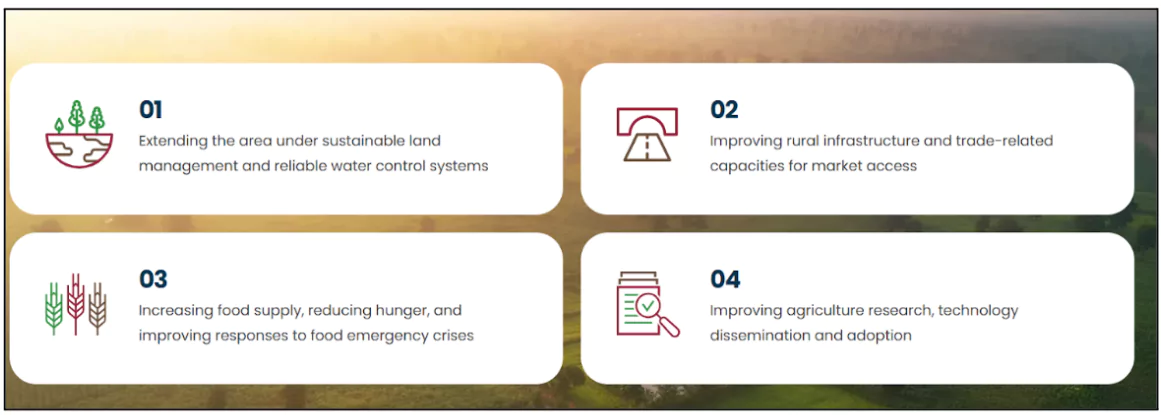
CAADP Priority Areas
Persisting Challenges in Africa’s Agriculture Sector
- Food Security: According to FAO , Africa remains the region with the largest estimated proportion of the population facing hunger at 20.4 percent.
- Malnutrition: Despite progress in reducing stunting, malnutrition continues to hinder development and increase mortality rates.
- Rising obesity and related health issues add economic and health burdens.
- External Shocks: COVID-19 pandemic, conflicts, the Russia-Ukraine war, and climate change have disrupted agricultural systems.
Check Out UPSC Modules From PW Store
Way Forward
- Strategic Shift: The post-Malabo agenda (2026–2035) introduces an integrated agri-food systems approach addressing challenges across the entire food value chain.
- Prioritizes sustainability, resilience, and combatting malnutrition through diverse and nutritious diets.
- Climate-Smart Innovations: Focuses on adopting climate-smart technologies to close agricultural productivity gaps.
- Ensures food security for Africa’s projected 2.5 billion population by 2050.
- Resilience Building:Aims to strengthen the ability to adapt to and recover from shocks like climate change and pandemics.
- In 2023, only two African countries were on track for resilience-building targets.
- Leadership Commitment: Leaders from Kenya, Ethiopia, Angola, Burundi, and Somalia emphasized the importance of modernizing agriculture for food security and economic growth.


 17 Jan 2025










 GS Foundation
 Crash Course
 Combo
Combo Optional Courses
 Degree Program