

Piprahwa Relics

8 May 2025

Piprahwa Relics

Recently India served legal notice to Sotheby’s and the Peppé family, demanding cessation of the auction and repatriation of Piprahwa relics, citing cultural and legal violations.
  • Protection of Cultural Property: India’s objection is supported by global norms under the UNESCO 1970 Convention on the Means of Prohibiting and Preventing the Illicit Import, Export and Transfer of Ownership of Cultural Property.
  • Violation of Ethical Heritage Principles: The auction potentially breaches international ethical standards on the handling of sacred and historical objects, particularly those of religious significance to communities and nations of origin.

About the Piprahwa Relics

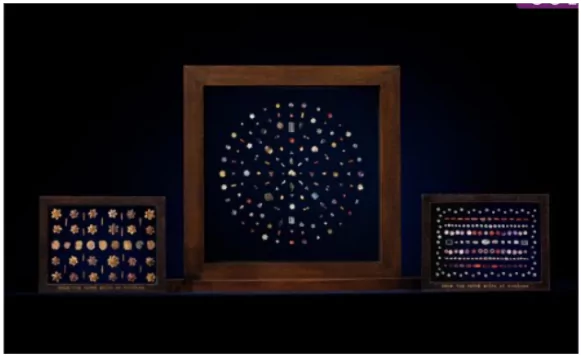
  • The Piprahwa relics are ancient artefacts linked to the Buddha, discovered more than 125 years ago at an archaeological site near the India-Nepal border.
  • Piprahwa RelicsDiscovery : In 1898, William Claxton Peppé, a British colonial landowner and engineer, excavated a stupa at Piprahwa in present-day Uttar Pradesh, believed to be ancient Kapilavastu, the capital of the Shakya republic.


  • Relic Collection: The relics include bone fragments, soapstone and crystal caskets, a large sandstone coffer, and a range of offerings such as gold ornaments, nearly 1,800 pearls, rubies, topaz, and sapphires.
  • Cultural Significance: These relics are believed to be part of the original eight stupas that received portions of the Buddha’s cremated remains.
    • The Piprahwa stupa was likely built by the Buddha’s own Shakya clan to honour him.
    • The Piprahwa gems date back to the Mauryan Empire, circa 240 to 200 BC.

India’s Demand for Repatriation

  • Grounds for India’s Objection: India argues that the relics are an inalienable part of its religious and cultural heritage and that the sale violates Indian laws and international conventions.
    • The relics are protected under the 1972 Antiques and Art Treasures Act, the 1958 Ancient Monuments and Archaeological Sites and Remains Act, and the 1878 Indian Treasure Trove Act.
  • Buddhist Communities Concern: Buddhist scholars and monks have condemned the auction, stating that the relics were intended for perpetual veneration by followers of the Buddha.
    • The British MahaBodhi Society emphasized that selling such relics contradicts Buddhist teachings and the wishes of the original custodians.

Archive Calendar

Mon Tue Wed Thu Fri Sat Sun
 1
2345678
9101112131415
16171819202122
232425262728  

Need help preparing for UPSC or State PSCs?

Connect with our experts to get free counselling & start preparing

Aiming for UPSC?

Download Our App

      
Quick Revise Now !
AVAILABLE FOR DOWNLOAD SOON
UDAAN PRELIMS WALLAH
Comprehensive coverage with a concise format
Integration of PYQ within the booklet
Designed as per recent trends of Prelims questions
हिंदी में भी उपलब्ध
Quick Revise Now !
UDAAN PRELIMS WALLAH
Comprehensive coverage with a concise format
Integration of PYQ within the booklet
Designed as per recent trends of Prelims questions
हिंदी में भी उपलब्ध

<div class="new-fform">


    </div>

    Subscribe our Newsletter
    Sign up now for our exclusive newsletter and be the first to know about our latest Initiatives, Quality Content, and much more.
    *Promise! We won't spam you.
    Yes! I want to Subscribe.