A new study has found that the tiger population in India has increased by 30% over the past two decades.
About Tiger
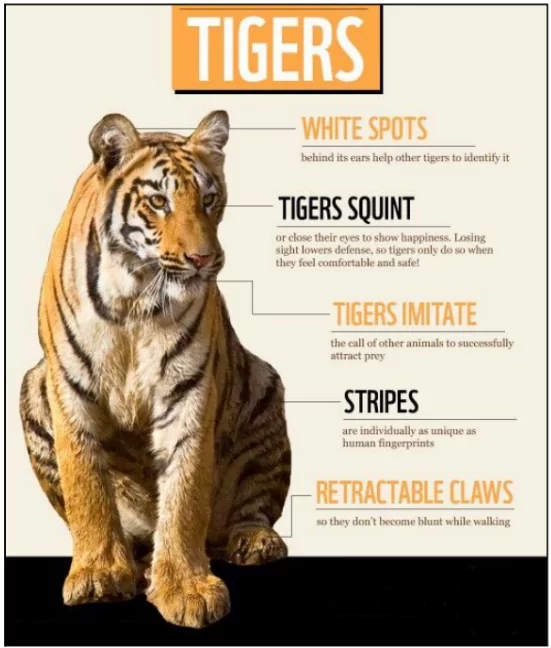
- Tigers are the largest wild cat species in the world.
- Scientific name: Panthera tigris
- Conservation status IUCN: Endangered
- Significance: They are apex predators and play a vital role in maintaining healthy ecosystems.
- Habitat Requirements: Tigers are “landscape” species.
- They need vast areas with diverse habitats.
- These areas must be free from human disturbance and rich in prey to support tigers.
- These areas, called tiger landscapes, are crucial for biodiversity and the well-being of human communities living nearby.
- Current Tiger Population in India
- India has a minimum of 3,167 tigers, according to the 2022 estimation.
- Further data analysis, using advanced statistical models, estimates:
- Upper limit: 3,925 tigers
- Average population: 3,682 tigers
- The annual growth rate of the tiger population stands at 6.1%, indicating steady progress.
Enroll now for UPSC Online Course
Key Factors Behind Tiger Recovery
- Balanced Conservation Strategy
- India’s conservation success is due to a scientific approach and a mix of land-sharing and land-sparing methods.
- Protected areas (land sparing)—where humans are restricted—support 85% of breeding tigers.
- Multi-use forests (land sharing) allow tigers to live alongside human populations, proving that coexistence is possible.
- Strong Legislative Support
- Conservation efforts are backed by strict wildlife laws, including:
- Wildlife Protection Act 1972
- Forest Conservation Act 1980
- National Tiger Conservation Authority (NTCA)
- Role of Socio-Economic Factors
- Economic prosperity and cultural values have helped in tiger conservation.
- Areas with less dependence on forests and better economic conditions see higher tiger recolonization.
- Challenges:
- Regions with high poverty and conflicts (like Naxal-affected areas in Chhattisgarh and Jharkhand) have witnessed tiger population decline.
Future Challenges & Recommendations
- Challenges
- 157,000 sq km of potential tiger habitat remains unoccupied due to political instability and habitat loss.
- Human-wildlife conflict continues to pose a challenge.
- Recommendations for Improvement
- Expand protected areas and habitat corridors.
- Strengthen anti-poaching measures to protect tigers.
- Promote sustainable livelihoods for local communities.
- Improve conflict mitigation strategies, including:
- Early warning systems.
- Rapid response teams.
Ready to boost your UPSC 2025 preparation? Join PW’s UPSC online courses today!


 1 Feb 2025










 GS Foundation
 Crash Course
 Combo
Combo Optional Courses
 Degree Program