

NGT Issues Notice to Centre on Use of Invasive Fish Species for Mosquito Control

4 Feb 2025

NGT Issues Notice to Centre on Use of Invasive Fish Species for Mosquito Control

The National Green Tribunal (NGT) has sought a response from the Centre regarding the use of two highly-invasive and alien fish species for mosquito control.
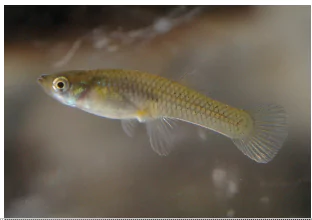
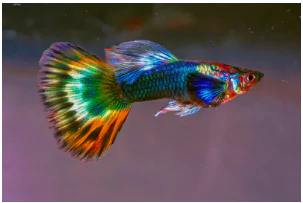
  • The tribunal was hearing a plea regarding the release of Gambusia Affinis (Mosquitofish) and Poecilia Reticulata (Guppy) in water bodies across various states.

About Gambusia Affinis (Western Mosquitofish)

NGT

  • Common Name : Mosquitofish.
  • Purpose : Used as a biological agent to control mosquito larvae.
  • Native Range: Mississippi River basin from Central Indiana and  Illinois to the Gulf of Mexico .
  • Mosquito Control: A single adult fish consumes 100 to 300 mosquito larvae per day.
  • Characteristics: 
    • Habitat: Found in freshwater; tolerates brackish water and high salinities.
    • Adaptability : Survives in low oxygen levels.
    • Reproduction : Breeds throughout summer and are  Viviparous , that is they give birth to live young instead of laying eggs.
    • Invasiveness: Listed among the 100 worst invasive alien species by IUCN.
    • Historical Use in India: Introduced in 1928 during British rule for mosquito control.
    • IUCN Status: Least Concern.

Enroll now for UPSC Online Classes

About Poecilia Reticulata Common names: Guppy, Millionfish or Rainbow Fish

NGT

  • Range: Native to Northern South America and Caribbean islands.
  • Habitat: Found in shallow edges of pools and streams.
  • Usage: Also used for mosquito larvae control.
  • IUCN Status: Least Concern.

States Involved in Fish Release

  • Mosquitofish was released in Assam, Arunachal Pradesh, Gujarat, Karnataka, Maharashtra, Rajasthan, Tamil Nadu, Uttar Pradesh, Odisha, Punjab, and Andhra Pradesh.

What is an Invasive Species?

  • Invasive species are non-native organisms that spread rapidly and harm local ecosystems.
  • They often outcompete indigenous species, disrupt ecosystems, and cause economic or environmental damage.

Examples of Invasive Species in India

  • Flora: Lantana camara, Parthenium hysterophorus (Congress grass), Prosopis juliflora (Vilayati Kikar).
  • Fauna: African Catfish (Clarias gariepinus), Tilapia (Oreochromis mossambicus), and Giant African Snail.

  • Guppy was released in Maharashtra, Karnataka, Punjab, and Odisha.
  • Concern: Their widespread distribution  poses risks to local biodiversity.

Check Out UPSC NCERT Textbooks From PW Store

Ecological Impact

  • Threat to Native Fish : Competes for food and habitat, causing food scarcity for indigenous fish.
  • Biodiversity Loss : Can lead to a decline or extinction of native species.
  • Ecosystem Disruption: Alterations in food chains affect entire aquatic ecosystems.

Ready to boost your UPSC 2025 preparation? Join PW’s UPSC online courses today!

Archive Calendar

Mon Tue Wed Thu Fri Sat Sun
 1
2345678
9101112131415
16171819202122
232425262728  

Need help preparing for UPSC or State PSCs?

Connect with our experts to get free counselling & start preparing

Aiming for UPSC?

Download Our App

      
Quick Revise Now !
AVAILABLE FOR DOWNLOAD SOON
UDAAN PRELIMS WALLAH
Comprehensive coverage with a concise format
Integration of PYQ within the booklet
Designed as per recent trends of Prelims questions
हिंदी में भी उपलब्ध
Quick Revise Now !
UDAAN PRELIMS WALLAH
Comprehensive coverage with a concise format
Integration of PYQ within the booklet
Designed as per recent trends of Prelims questions
हिंदी में भी उपलब्ध

<div class="new-fform">


    </div>

    Subscribe our Newsletter
    Sign up now for our exclusive newsletter and be the first to know about our latest Initiatives, Quality Content, and much more.
    *Promise! We won't spam you.
    Yes! I want to Subscribe.