Books & Magazines

 4 Jan 2024
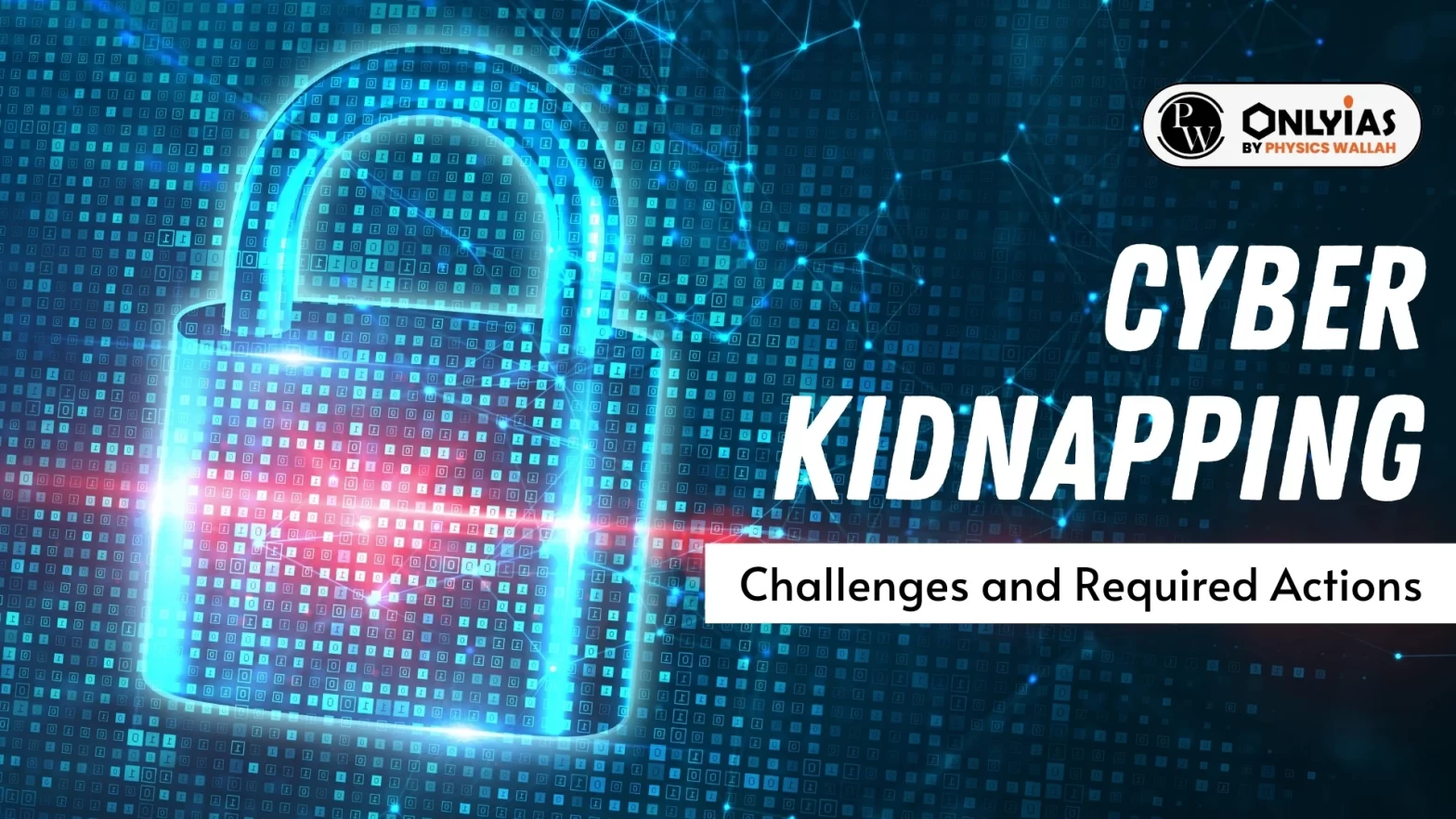
Context: This editorial is based on the news “Chinese boy ‘cyber kidnapped’ in Utah found safe: What is cyber kidnapping, how to protect yourself” which was published in the Indian Express. This article is highlighting the emerging challenge of ‘cyber kidnapping’. Recently, a Chinese student faced the threat of ‘cyber kidnapping’. By the time the police traced him, his parents back in China had paid $80,000 in ransom.
| Relevancy for Prelims: NCRB Data On Cyber Crime In India, Global Partnership On Artificial Intelligence – GPAI, and Deep Fakes.
Relevancy for Mains: Cyber Kidnapping- Challenges and Required Actions. |
|---|
With the advancement of technologies, associated threats are also advancing, which needs to be tackled at every level wherever possible like to tackle cyber kidnapping:
| Mains Question: What is Cyber Kidnapping ? Evaluate the measures needed to combat this transnational cybercrime effectively. (15 marks, 250 words) |
|---|
|
Must Read |
|
| NCERT Notes For UPSC | UPSC Daily Current Affairs |
| UPSC Blogs | UPSC Daily Editorials |


| Mon | Tue | Wed | Thu | Fri | Sat | Sun |
|---|---|---|---|---|---|---|
| 1 | 2 | 3 | 4 | 5 | ||
| 6 | 7 | 8 | 9 | 10 | 11 | 12 |
| 13 | 14 | 15 | 16 | 17 | 18 | 19 |
| 20 | 21 | 22 | 23 | 24 | 25 | 26 |
| 27 | 28 | 29 | 30 | |||


Connect with our experts to get free counselling & start preparing
Books & Magazines 
Prelims Wallah (Q&A Bank)
Udaan
Udaan 500+
Budget & Economic Survey
Monthly Current Wallah
Weekly Current Wallah
Editorial Summary
Editorial Q&A Compilation
NCERT Wallah
Prahaar (Mains Wallah)
Marks Booster
Mains Wallah (Q&A Bank)



<div class="new-fform">
</div>

 GS Foundation
 Crash Course
 Combo
Combo Optional Courses
 Degree Program