
Home / NCERT Notes / Coordination in Plants: Movements and Chemical Communication
Coordination in Plants: Movements and Chemical Communication
December 22, 2023
Understanding Coordination in Plants for Survival and Adaptation:
Coordination in plants involves the regulation of various physiological and developmental processes to ensure their survival and adaptation to the environment.
How does coordination in plants facilitate movements without a nervous system?
Lacks Nervous System: Plants lack a nervous system and muscles, yet they exhibit responses to stimuli.
Two types of plant movement are observed:
Immediate response to stimuli and
Movement due to growth.
How does coordination in plants drive rapid movements through electrical-chemical communication?
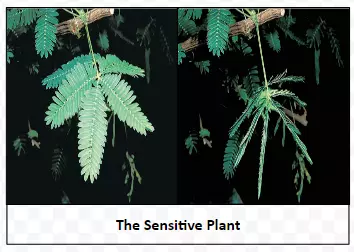
Rapid Movement in plants: Plants like the sensitive plants demonstrate rapid movement in response to touch.
Electrical-Chemical Communication and Cell Changes in Plants: Electrical-chemical means are used for communication between cells, even though there is no specialized tissue for information conduction.
Unlike animals, plant cells change shape by altering water content, leading to swelling or shrinking and subsequent movement.
Coordination in Plants Tropic Movements: Environmental Stimuli through Phototropism, Geotropism:
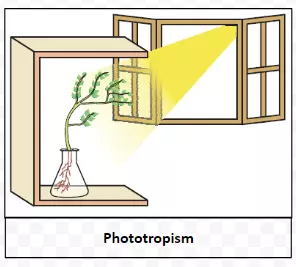
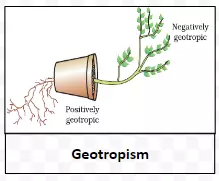
Tropic Movements in plants: Plants exhibit tropic movements, such as phototropism and geotropism, in response to environmental stimuli like light and gravity.
Phototropic movements: It involves shoots bending towards the light, while roots bend away from it.
Geotropism Movement: Itdictates the upward growth of shoots and the downward growth of roots in response to the Earth’s gravitational pull.
Additionally, plants display hydrotropism and chemotropism, responding to water and chemicals, respectively.
Example: Pollen tubes exhibit chemotropism as they grow towards ovules during reproduction.
Communication of Information in Multicellular Organisms: In multicellular organisms involves quick responses, like the sensitive plant’s rapid touch-induced movement, and slower responses, such as sunflowers adjusting to day and night.
In both plant and animal bodies, controlled directional growth occurs, emphasizing the need for rapid information transfer for swift responses to stimuli.
Coordination in Plants through Chemical Communication and Hormonal Regulation:
Multicellular organisms, including plants, use chemical communication for coordination.
Hormonal Coordination in Cells: They are diverse compounds, released by stimulated cells and diffuse to reach other cells, coordinating growth, development, and responses to the environment.
Examples of Plant Hormones: auxins, gibberellins, cytokinins, and abscisic acid.
Auxins promote cell elongation and bending towards light in growing shoots.
Gibberellin aids in stem growth.
Cytokinins stimulate cell division, particularly in areas of rapid growth like fruits and seeds.
Abscisic acid inhibits growth and is associated with effects like leaf wilting.
Plant hormones play a vital role in regulating various physiological processes in plants, ensuring a balanced response to stimuli and environmental conditions.
Comprehensive coverage with a concise format Integration of PYQ within the booklet Designed as per recent trends of Prelims questions हिंदी में भी उपलब्ध
Quick Revise Now ! UDAAN PRELIMS WALLAH
Comprehensive coverage with a concise format Integration of PYQ within the booklet Designed as per recent trends of Prelims questions हिंदी में भी उपलब्ध
<div class="new-fform">
</div>
Subscribe our Newsletter
Sign up now for our exclusive newsletter and be the first to know about our latest Initiatives, Quality Content, and much more.