
News in Shorts: 10 October 2024

10 Oct 2024

English

हिन्दी

Humsafar Policy

Humsafar Policy

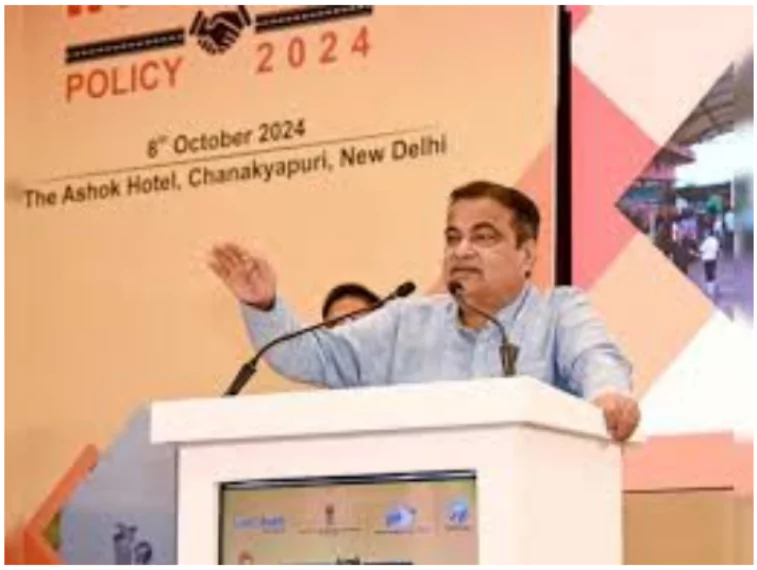
Context: The Union Minister of Road Transport & Highways launched the Humsafar Policy to improve infrastructure on national highways. 

About Humsafar Policy:

  • Aim: To enhance the travel experience on National Highways in India.
  • Nodal Ministry: Ministry of Road Transport and Highways.

Key Features of the Humsafar Policy

  • Sanitation Facilities: Clean and well-maintained toilets will be installed at regular intervals for travelers’ convenience.
  • Baby Care Rooms: Special rooms equipped with baby care essentials will be available for families with young children.
  • Accessibility: Wheelchair provisions will be made to ensure highways are accessible for differently-abled travelers.
  • EV Charging Stations: Electric vehicle (EV) charging stations will be installed to support eco-friendly travel.
  • Parking Facilities: Ample parking spaces will be provided at fuel stations and rest stops for a smooth flow of traffic.
  • Fuel Stations: More fuel stations will be set up along highways to ensure easy access to petrol, diesel, and other essential services.
  • Restaurants and Food Courts: Travellers can enjoy quality food at restaurants and food courts set up at regular intervals.
  • Dormitories for Drivers: Short-term accommodations will be provided at fuel stations for truck drivers and travellers needing rest during long journeys.

Benefits of the Policy

  • Boost to Local Economy: The policy will create employment opportunities at petrol pumps, restaurants, and rest stops, benefiting local businesses.
  • Enhanced Safety: By offering rest areas and clean facilities, the policy reduces driver fatigue, contributing to safer travel on highways.
  • Sustainable Travel: The inclusion of EV charging stations supports India’s transition to eco-friendly transport.

Major Atmospheric Cherenkov Experiment (MACE) Observatory

Major Atmospheric Cherenkov Experiment (MACE) Observatory

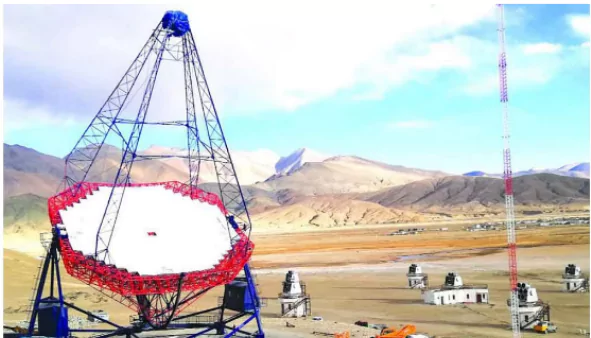
Context: India has taken a monumental step in astrophysics with the inauguration of the Major Atmospheric Cherenkov Experiment (MACE) Observatory in Hanle, Ladakh.

About MACE

  • MACE is the highest imaging Cherenkov telescope in the world.
  • It is a facility to detect Cherenkov radiation produced by high energy particles like gamma rays and cosmic rays. 
  • Scientific Goals: The telescope will study high-energy gamma rays, providing valuable insights into the most energetic phenomena in the universe.
  • Indigenous Development: MACE was built by the Bhabha Atomic Research Centre (BARC) with support from ECIL and other Indian industry partners, showcasing India’s technological capabilities.
  • Community Engagement: The project emphasizes community involvement and the socio-economic development of Ladakh.
  • Inspiration for Future Generations: MACE aims to inspire young scientists and astronomers to explore new frontiers in astrophysics.

The Significance of MACE

  • Scientific Breakthroughs: MACE will contribute to global efforts to understand the most energetic phenomena in the universe, such as supernovae, black holes, and gamma-ray bursts.
  • International Collaboration: The project aims to foster international collaborations, strengthening India’s position in the global scientific community.
  • Technological Advancement: MACE showcases India’s technological capabilities in the field of astronomy and astrophysics.

Malabar Exercise

Malabar Exercise

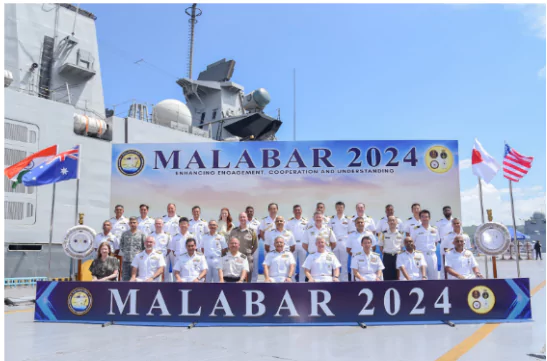
Context: The Opening Ceremony of MALABAR 2024 under the aegis of Eastern Naval Command was held onboard Indian Naval Ship Satpura at Visakhapatnam on 09 Oct 24.

About Malabar Exercise:

  • Malabar is a quadrilateral naval exercise between India, the United States, Australia and Japan.
  • It was initiated in 1992 as a bilateral exercise between India and the US, gained further traction as a significant maritime engagement, with Japan (2015) and Australia (2020) joining in subsequently.
  • The exercise focuses on enhancing maritime security, interoperability, and cooperation in the Indo-Pacific region.
  • The exercise is aligned with the Indian Government’s vision of Security & Growth for All in the Region (SAGAR) and reflects India’s growing engagement with like-minded nations.

About Security and Growth for All in the Region (SAGAR):

  • SAGAR is India’s foreign policy doctrine for maritime cooperation in the Indian Ocean region. 
  • The term was first used by Prime Minister Narendra Modi in 2015 at Port Louis. 
  • The goals of SAGAR are to: 
    • Increase cooperation: Strengthen ties with neighboring countries, especially in the Indian Ocean region 
    • Promote development: Support sustainable development and economic growth 
    • Ensure maritime security: Safeguard national interests and ensure maritime security and safety 
    • Build trust: Create a climate of trust and openness 
    • Resolve issues peacefully: Address regional concerns and resolve maritime issues peacefully 
    • Follow international rules: Ensure all countries in the Indian Ocean Region adhere to international maritime rules and norms 


Enroll now for UPSC Online Course

Archive Calendar

Mon Tue Wed Thu Fri Sat Sun
 1
2345678
9101112131415
16171819202122
232425262728  

Need help preparing for UPSC or State PSCs?

Connect with our experts to get free counselling & start preparing

Aiming for UPSC?

Download Our App

      
Quick Revise Now !
AVAILABLE FOR DOWNLOAD SOON
UDAAN PRELIMS WALLAH
Comprehensive coverage with a concise format
Integration of PYQ within the booklet
Designed as per recent trends of Prelims questions
हिंदी में भी उपलब्ध
Quick Revise Now !
UDAAN PRELIMS WALLAH
Comprehensive coverage with a concise format
Integration of PYQ within the booklet
Designed as per recent trends of Prelims questions
हिंदी में भी उपलब्ध

<div class="new-fform">


    </div>

    Subscribe our Newsletter
    Sign up now for our exclusive newsletter and be the first to know about our latest Initiatives, Quality Content, and much more.
    *Promise! We won't spam you.
    Yes! I want to Subscribe.