Books

The Government of India will implement four Labour Codes from 21 November 2025, merging 29 old labour laws into a single, simplified system. The new codes focus on universal social security, better working conditions, reduced compliance burden, and improved rights for workers across all sectors. This marks a major shift toward a modern and efficient labour ecosystem.
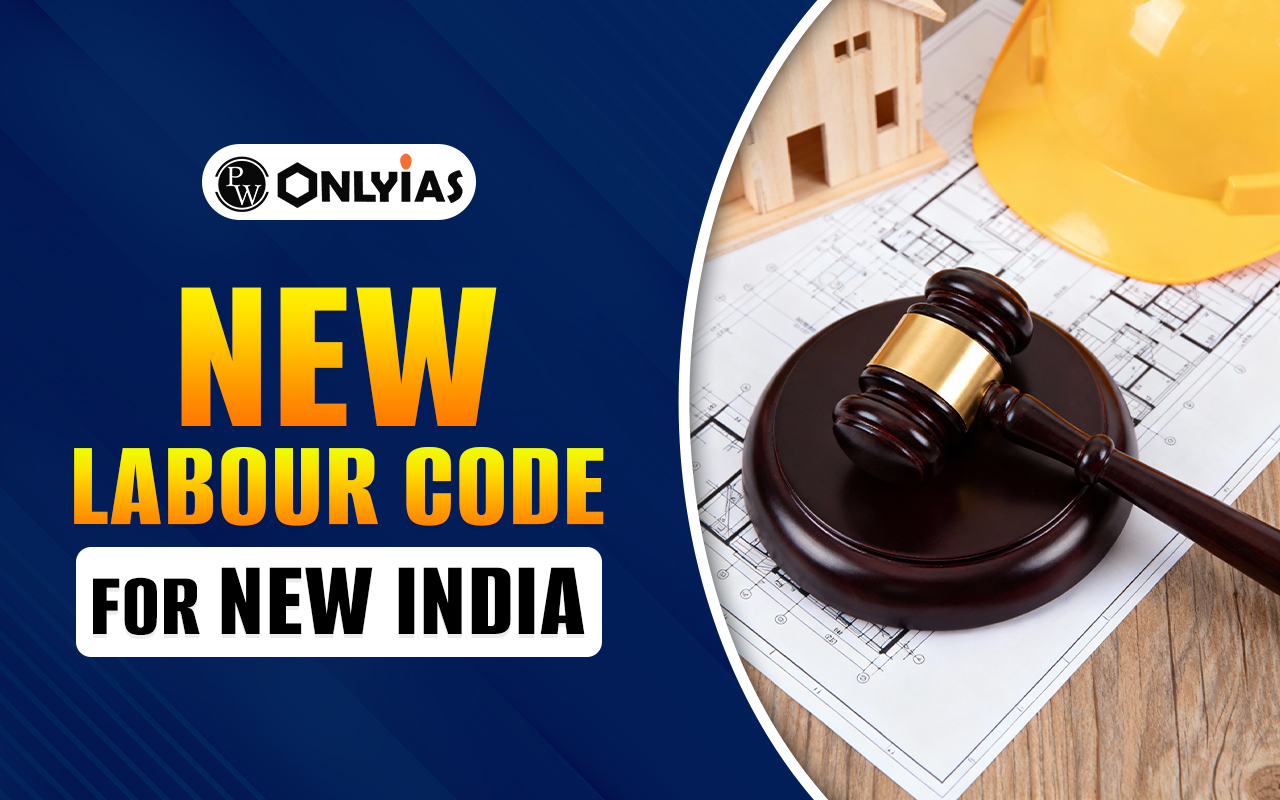
New Labour Codes 2025: The Government of India has stated that all four New Labour Codes, namely Code on Wages (2019), Industrial Relations Code (2020), Code on Social Security (2020) and OSHWC Code (2020) will be enforced with effect from 21 November 2025. All the four labour codes will subsume a total of 29 old labour laws, and will replace the old laws with a modern and simple system. The labour reforms will enhance the welfare of workers and ease the compliance burden of existing laws, and bring the country’s labour market in line with the needs of a new economy. This is a significant move towards a future-ready workforce and is another step in strengthening the idea of Aatmanirbhar Bharat.
The four New Labour Codes are Code of Wages (2019), Industrial Relations Code (2020), Code on Social Security (2020), and the Occupational Safety, Health and Working Conditions (OSHWC) Code (2020). The four Codes replace 29 old labour laws, and simplify them to create a single unified, modern, easily understandable, and easy to implement framework.
The Four Labour Codes are significant reforms in the Indian labour system, which enhance workers’ rights, extend social security, and ease compliance for employers. They aim to ensure safer workplaces, fair wages, and equal opportunities for all workers, including women, gig workers, and migrant workers.
Labour Codes extend social security to all workers in India, including those previously uncovered. Gig workers, platform workers and migrant workers are now legally recognized. ESIC facilities will expand to all districts, with Aadhaar-linked UAN enabling benefit portability.
Codes mandate every worker be paid minimum wages and salary punctually. A National Floor Wage ensures a minimum standard income for all workers across states. The wage structure has been revised to boost basic pay and strengthen PF and gratuity.
Women gain access to more job opportunities under stringent safety regulations. With consent, women can work night shifts and in mines and heavy machinery areas. Equal pay for equal work is guaranteed. Free annual health check-ups for workers above 40 years.
The rules governing fixed-term employment make it more secure and stable. FTE workers will receive the same wages, leave and medical benefits as permanent staff. FTE becomes eligible for gratuity after one year of continuous service.
Labour Codes reduce paperwork and simplify compliance for employers. A single registration, single licence and single return will replace multiple forms. Faster dispute resolution and national safety standards will facilitate smooth industry operations.
India’s existing labour laws were excessively numerous, complicated and outdated, and this created high compliance burden for industries and constrained their ability to create more jobs.
A comparison of the labour ecosystem, before and after the implementation of the Labour Codes, is as follows:
| Comparison of the Labour Ecosystem Before and After Labour Codes | ||
| Area | Before Labour Reforms | After Labour Reforms |
| Formalisation of Employment | No mandatory appointment letters. Workers often had no written proof of employment. | Mandatory appointment letters for all workers. Ensures transparency, job security, and clear employment terms. |
| Social Security Coverage | Limited coverage; gig and platform workers not included. | Under the Code on Social Security 2020, all workers including gig and platform workers get PF, ESIC, insurance, and other benefits. |
| Minimum Wages | Minimum wages applied only to scheduled industries; many workers were not covered. | Under the Code on Wages 2019, all workers get a statutory right to minimum wages and timely payment, ensuring financial security. |
| Preventive Healthcare | Employers were not legally required to provide free annual health check-ups. | Employers must provide a free annual health check-up to workers above 40 years, promoting preventive healthcare. |
| Timely Wages | No mandatory rule for timely wage payment. | Employers must pay wages on time, improving financial stability and reducing stress. |
| Women Workforce Participation | Women were restricted from night shifts and certain occupations. | Women can work at night and in all types of work with consent and safety measures, leading to equal opportunities and better income. |
| ESIC Coverage | ESIC limited to notified areas; establishments with fewer than 10 employees were mostly excluded. | ESIC extended pan-India; voluntary for establishments with fewer than 10 employees and mandatory even for one employee in hazardous units. |
| Compliance Burden | Multiple registrations, licenses, and returns under different laws. | Single registration, single pan-India license, and single return, reducing compliance burden and simplifying processes. |
The new Labour Codes seek to make the labour system in India more modern, to provide social security, fair wages and safer working conditions for workers, and to reduce the compliance burden for employers. The new Codes seek to ensure more equality, transparency and better protection for all workers.
Fixed-term employees (FTE) will now have access to almost all the rights and benefits of permanent employees. The changes provide stability in employment and discourage over-dependence on contractors. The reforms give workers better security and income protection.
Gig and platform workers, who work through apps and digital platforms, are now formally recognised. This gives delivery workers, drivers, and online service providers protection and welfare benefits. The earnings and rights of these workers become more secure.
Contract workers will now have better social security and health protection. The reforms reduce exploitation and ensure contract employment becomes fair and transparent. Workers receive benefits similar to permanent employees.
Women workers get stronger safeguards, equal opportunities, and better working conditions. They can now work in all sectors, including previously restricted ones, with necessary safety measures. Gender equality in the workplace is strengthened.
Reforms aim to provide young workers fair wages, formal employment status, and better working conditions. This helps fresh workforce entrants build secure employment histories and ensures their basic rights.
MSME workers receive enhanced protection and workplace facilities. These reforms will help small businesses improve work quality while ensuring workers are treated fairly. Payment and working hour rules will now be standardised.
Beedi and cigar workers, typically from unorganised industries, now have stronger rights. Working hours, wage rules, and bonus benefits are defined clearly to protect them from exploitation.
Plantation workers and their families will now have better safety, medical care, and education support. Safety training and protective equipment become mandatory to reduce workplace hazards.
Workers in digital media, film, TV, and online platforms now receive formal recognition and workplace protection. Contracts, wages, and job roles will be clearly defined for them.
Check Out UPSC CSE Books
Visit PW Store
New Labour Codes refer to the set of four significant laws, namely the Code on Wages, Industrial Relations Code, Social Security Code, and OSHWC Code.
The four Labour Codes are: Code on Wages, Industrial Relations Code, Code on Social Security and the Occupational Safety, Health and Working Conditions Code, or OSHWC Code.
Labour reforms India to simplify old and complex labour laws, make it easy for businesses to comply, boost formal employment and extend social security to gig, platform, migrant, MSME, and unorganised workers in the country.
The four labour codes will come into effect from 21 November 2025. The new labour codes will replace the 29 older labour laws in India with a single unified code that is simple to understand and implement.


Connect with our experts to get free counselling & start preparing
Books
Udaan (Prelims Wallah)
Prahaar (Mains Wallah)
Q&A Bank (Prelims & Mains)
Budget & Economic Survey
NCERT Wallah
Marks Booster
हिंदी माध्यम विशेष शृंखला
 Current Affairs
Monthly Current Wallah
Subject Wise Current Affairs
Editorial Analysis
Editorial PDFs
News of The Day
Download Our App



Download Our App
<div class="new-fform">
</div>



 GS Foundation
 Optional Course
 Combo Courses
 Degree Program