Books

Dr Rajendra Prasad was the first President of India. He was born in 1884 in Bihar, was a brilliant scholar, a reputable lawyer, and a very close associate of Mahatma Gandhi. He presided over the Constituent Assembly, assisted in drafting the Constitution, and was twice elected as President from 1950 to 1962.
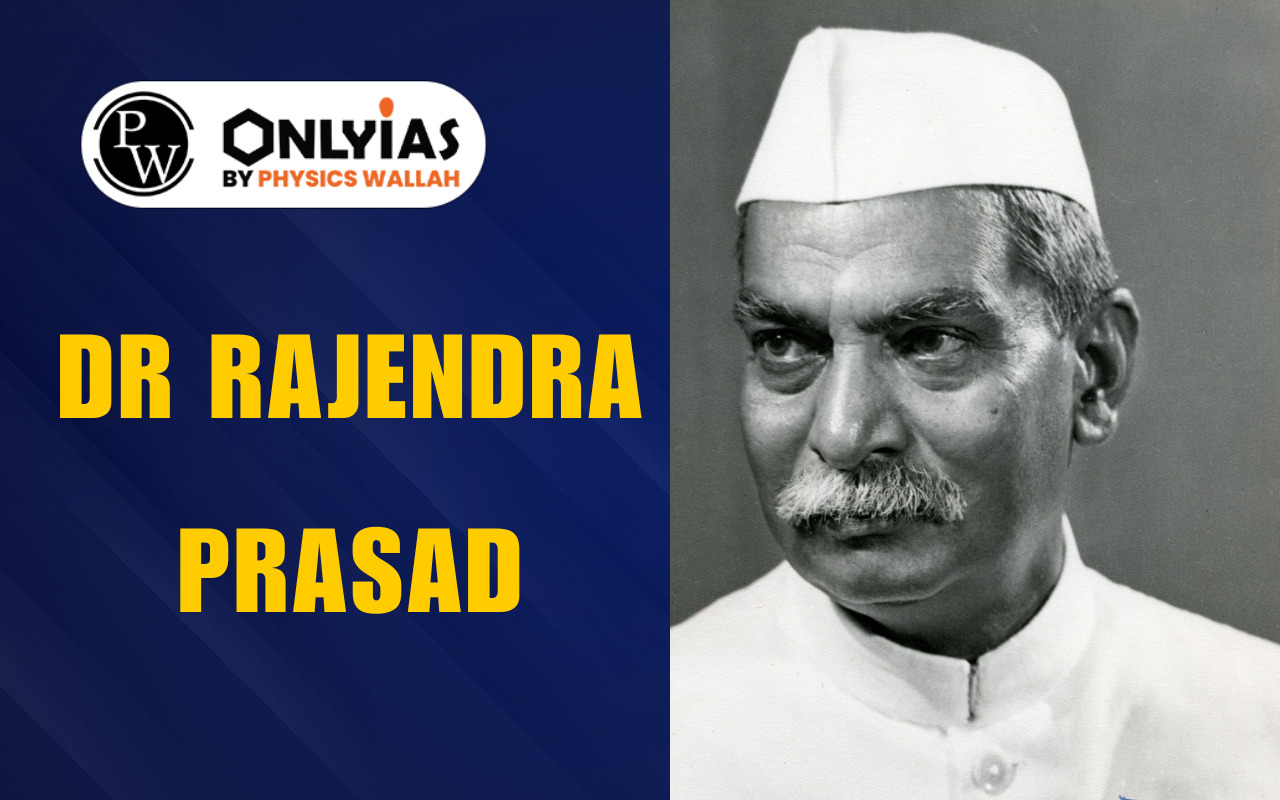
Dr Rajendra Prasad was the first President of India, serving from January 26, 1950, to May 13, 1962. He was born on December 3, 1884, in Ziradei, Bihar, and was one of the top leaders in the freedom struggle and a close associate of Mahatma Gandhi. Brilliant as a student and successful as a lawyer, he left his legal career to join the national movement.
He was highly instrumental in the Indian National Congress and eventually served as President of the Constituent Assembly when the Indian Constitution was drafted. A very humble man, he led a very simple life, and during his two terms as President, he set an exceptionally high standard for public service.
He stayed at Sadaqat Ashram in Patna after retirement and breathed his last on February 28, 1963. Dr Rajendra Prasad is remembered as a great freedom fighter, statesman, and a symbol of dedication and integrity.
Dr. Rajendra Prasad, the first President of India, was born on December 3, 1884. On his birth anniversary in 2025, we honor his remarkable contributions to India’s independence and nation-building. Known for his wisdom, humility, and dedication to the nation’s progress, Dr. Prasad’s leadership continues to inspire generations. His legacy as a statesman, educator, and freedom fighter remains an integral part of India’s history.
Dr Rajendra Prasad is remembered as the first President of India, and his memory is cherished as one of the most respected leaders of the freedom movement. His work shaped the early years of our nation. Many students still want to know who Dr. Rajendra Prasad was because his life is a model of honesty, courage, and service.
Gandhiji reposed immense confidence in Dr. Prasad and counted him as one of his most trusted lieutenants, together with Jawaharlal Nehru and Sardar Vallabhbhai Patel. A cool-headed leader, honesty of purpose, and non-violence engraved Dr Rajendra Prasad as one of the most respected figures in India’s political history.
Dr Rajendra Prasad was born on 3 December 1884 in the small village of Zeradai (now Jiradei) in Bihar. His childhood was simple, and his family followed strong cultural values. Dr Rajendra Prasad mother’s name was Kamleshwari Devi, and Dr Rajendra Prasad’s father name was Mahadev Sahai.
He was known for hard work from a young age. In fact, teachers and friends gave Dr Rajendra Prasad the nickname “Scholarman” because he always topped his class.
Dr Rajendra Prasad Biography shows how talent grows even in small villages. He was educated first in Bihar, then moved to Patna, and then to the University of Calcutta. Dr Rajendra Prasad education included studies in Arts, Science, and Law. He stood first in the entrance exam of Calcutta University. This made him one of the most educated leaders of his time.
Dr Rajendra Prasad entered national politics when he joined the Indian National Congress. His path changed fully after meeting Mahatma Gandhi. Dr Rajendra Prasad contribution to the freedom struggle grew stronger during the Non-Cooperation Movement. He supported the call for boycotting British goods and schools.
He edited journals, travelled across villages, and explained why India needed freedom. His speeches were simple and full of truth.
| Political Timeline of Dr Rajendra Prasad | |
| Year | Contribution |
| 1911 | Joined Indian National Congress |
| 1920 | Took part in Non-Cooperation Movement |
| 1930 | Joined Civil Disobedience Movement |
| 1942 | Arrested during Quit India Movement |
| 1946 | Elected President of Constituent Assembly |
He played a very significant role in the freedom struggle. He participated in protests, marches, and meetings organized by Congress. Equally, the work he did during natural calamities showed the strength of his character. He helped people during the 1914 floods in Bihar and the 1934 earthquake.
He believed implicitly in the ideals of Gandhi. He stood for non-violence, truth, and unity in society. And when people wonder who Dr Rajendra Prasad was, many of them immediately recall that he was a leader who breathed Gandhian ideals into his daily life.
In 1946 he became the President of the Constituent Assembly. It was a very special position since the Assembly was to write the Indian Constitution. Dr Rajendra Prasad guided members with calmness. He heard all opinions with respect.
| Role in Constituent Assembly | |
| Point | Details |
| Position | President of Constituent Assembly |
| Tenure | 1946–1950 |
| Key Role | Guided constitution-making process |
| Quality Shown | Patience, fairness, leadership |
When India became a Republic on 26 January 1950, Dr Rajendra Prasad was elected the first President of India. His simple nature made him a respected figure across the country. He continued as President until 1962, making his tenure one of the longest in Indian history.
He set strong values for the office. His decisions were always based on the Constitution. Students often search for Dr Rajendra Prasad as president because he helped define the powers and duties of the President in a young democracy.
During his presidency, India saw several important events. He supported social harmony and unity. He helped strengthen democracy and encouraged education. His work also supported agriculture because he believed development must reach villages.
| Major Achievements | |
| Area | Key Work |
| Democracy | Set high moral standards for the President’s office |
| Agriculture | Supported reforms and better farming systems |
| National Unity | Visited states to promote harmony |
| International Relations | Represented India in many global events |
Check Out UPSC CSE Books
Visit PW Store
Even though he held high positions, he lived a very simple life. He wore khadi, read many books, and respected all religions. His discipline inspired many young people. His values came from his childhood and his parents.
After retiring in 1962, Dr Rajendra Prasad spent his last years in Patna. He continued reading, writing, and meeting people. Dr Rajendra Prasad death took place on 28 February 1963. Dr Rajendra Prasad death place was Patna.
The whole nation mourned his death. Leaders across India praised his service, honesty, and sacrifice.
Dr Rajendra Prasad was not only a political leader but also a thinker, writer, and scholar. He believed in social justice and equal rights for all. He understood India’s culture and used that understanding to guide people.
His balanced approach made him both a strong leader and a kind human being. His life teaches us discipline, service, and unity.
Ready to boost your UPSC 2026 preparation? Join PW’s UPSC online courses today!

Dr Rajendra Prasad was the first President of independent India. He served from 1950 to 1962.
His most significant contribution was his leadership as the President of the Constituent Assembly. He played a crucial role in drafting the Indian Constitution.
Dr Rajendra Prasad was born in Ziradei, a village in Bihar.
His nickname was "Desh Ratna," meaning Jewel of the Country.
His birth anniversary is celebrated on December 3 every year.






Connect with our experts to get free counselling & start preparing
Books
Udaan (Prelims Wallah)
Prahaar (Mains Wallah)
Q&A Bank (Prelims & Mains)
Budget & Economic Survey
NCERT Wallah
Marks Booster
हिंदी माध्यम विशेष शृंखला
 Current Affairs
Monthly Current Wallah
Subject Wise Current Affairs
Editorial Analysis
Editorial PDFs
News of The Day
Download Our App



Download Our App
<div class="new-fform">
</div>


 GS Foundation
 Optional Course
 Combo Courses
 Degree Program