Urban Malaria Threatens India’s 2030 Elimination Goal

27 Dec 2025

Urban Malaria Threatens India’s 2030 Elimination Goal

The Malaria Elimination Technical Report 2025 highlights a rising threat from the invasive Anopheles stephensi, which thrives in urban environments and may derail India’s 2030 malaria elimination target.
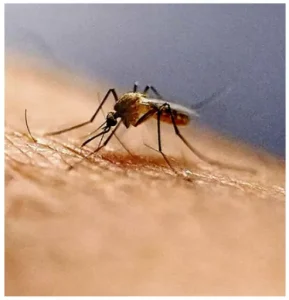
  • The Malaria Elimination Technical Report, 2025 was released by the Ministry of Health. 
  • Primary Vector: The invasive Anopheles stephensi mosquito is identified as the key vector driving urban malaria transmission.

About Anopheles stephensi

  • Vector of Malaria: Primary vector of urban malaria, transmitting Plasmodium falciparum and Plasmodium vivax.
    • Urban MalariaHighly efficient in densely populated human settlements.
  • Container Breeder: Efficiently breeds in artificial water containers (storage tanks, discarded tires, construction sites), bypassing traditional control methods focused on rural water bodies.
  • Geographic Distribution: It is native to South Asia and the Middle East.
    • Recently invaded parts of Africa (Horn of Africa), raising concerns of urban malaria spread.
  • Breeding Behaviour: Prefers clean or lightly polluted water. Eggs and larvae survive well in stored water, making control difficult.
  • Public Health Concern: Threatens malaria elimination goals due to:
    • Rapid urbanisation
    • Water storage practices
    • Insecticide resistance in some regions
  • WHO Classification: Listed by WHO as an invasive malaria vector of high public health importance.

India’s Target

  • Zero Indigenous Cases: India aims to achieve zero locally transmitted malaria cases by 2027.
  • Complete Elimination: : Eliminate malaria nationwide by 2030.

Current Progress

  • Major Reduction: Cases have fallen dramatically from 11.7 lakh in 2015 to ~2.27 lakh in 2024. Deaths have reduced by 78%.
  • Shift in Transmission: Malaria is no longer widespread but persists in limited, high-risk pockets influenced by local ecology and infrastructure.

Why Urban Malaria is Rising?

  • Urban Challenges: Container breeding, high density, informal settlements, and fragmented healthcare in cities.
  • High-Burden Regions: Districts in Odisha, Tripura, and Mizoram.
  • Cross-Border Transmission: Continued spread from Myanmar and Bangladesh into northeastern border districts.
  • Systemic Gaps: Inconsistent reporting from the private sector, shortages of tests/treatments, and operational difficulties in remote tribal areas.

National Strategy & Priorities

  • The report outlines a multi-pronged approach to tackle these evolving challenges.
  • Top Immediate Priorities:
    • Strengthen surveillance systems.
    • Enhance vector monitoring (especially for An. stephensi).
    • Improve supply chain reliability for diagnostics and medicines.
  • Intensified Surveillance: Focus on tribal/forest areas, border regions, and migratory population settings.
  • City-Specific Strategies: Recognizing that urban malaria requires tailored control plans for each metropolitan area.

About Malaria

  • Malaria is a life-threatening parasitic disease caused by Plasmodium species.
  • It is transmitted to humans through the bite of infected female Anopheles mosquitoes.
  • Causative Parasites: Major species infecting humans:
    • Plasmodium falciparum (most severe, highest mortality)
    • Plasmodium vivax (widespread, relapse-causing)
    • P. malariae, P. ovale, P. knowlesi
  • Symptoms: Common symptoms: fever, chills, headache, sweating, nausea.
    • Severe malaria can cause anaemia, cerebral malaria, organ failure, and death.
  • Transmission Cycle: Parasite alternates between human host (liver & red blood cells) and mosquito vector.
    • No direct human-to-human transmission (except rare cases like blood transfusion).
  • Geographic Distribution: Endemic in tropical and subtropical regions, especially Sub-Saharan Africa, South Asia, Southeast Asia.
  • The WHO Global Technical Strategy for Malaria 2016–2030 aims to reduce malaria case incidence and mortality rates by at least 90% by 2030.

Need help preparing for UPSC or State PSCs?

Connect with our experts to get free counselling & start preparing

Aiming for UPSC?

Download Our App

      
Quick Revise Now !
AVAILABLE FOR DOWNLOAD SOON
UDAAN PRELIMS WALLAH
Comprehensive coverage with a concise format
Integration of PYQ within the booklet
Designed as per recent trends of Prelims questions
हिंदी में भी उपलब्ध
Quick Revise Now !
UDAAN PRELIMS WALLAH
Comprehensive coverage with a concise format
Integration of PYQ within the booklet
Designed as per recent trends of Prelims questions
हिंदी में भी उपलब्ध

<div class="new-fform">


    </div>

    Subscribe our Newsletter
    Sign up now for our exclusive newsletter and be the first to know about our latest Initiatives, Quality Content, and much more.
    *Promise! We won't spam you.
    Yes! I want to Subscribe.