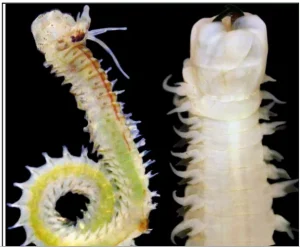
ZSI Discovers Pollution-Resilient Polychaete Worms

9 Feb 2026

ZSI Discovers Pollution-Resilient Polychaete Worms

Researchers from the Zoological Survey of India (ZSI), have discovered two new species of nereidid polychaete (marine) worms along the West Bengal Coast in the northern Bay of Bengal.

  • These worms are being described as “bio-warriors” because they thrive in polluted, extreme environments where most species cannot survive.

Polychaete Worms

  • Polychaete worms are marine segmented worms belonging to the phylum Annelida, and they are called “polychaetes” because they have many bristles (chaetae) on their body segments.
  • Ecological Importance:
    • Polychaetes improve seabed health because they mix and aerate sediments through burrowing, which supports nutrient cycling.
    • Polychaetes support marine food webs because they serve as food for fishes, crabs, and seabirds.

About the Discovered Species

Polychaete Worms

  1. Namalycastis solenotognatha:
    • Etymology and Unique Feature: The name derives from Greek words meaning “channeled jaw,” referring to its unusual jaw structure containing multiple canals.
    • Habitat Preference: It thrives in extreme environments such as sulfide-rich, foul-smelling mudflats.
    • Ecological Niche: It is commonly found on decomposing mangrove wood and hardened clay surfaces.
    • Adaptation and Resilience: Its survival in toxic habitats indicates high tolerance to harsh environmental conditions.
  2. Nereis dhritiae
    • Etymology : The species is named after Dr Dhriti Banerjee, the first woman director of ZSI.
    • Habitat and Behaviour: It is found inside wooden dock piles on sandy beaches submerged during high tide.
    • Coastal Adaptation: The species demonstrates specialised survival strategies in human-altered coastal zones

Check Out UPSC CSE Books

Visit PW Store

online store 1

Significance of the Species

  • Ecological Role of Nereidid Worms
    • Nutrient Cycling: These worms play an important role in recycling organic matter in coastal ecosystems.
    • Sediment Aeration: Their burrowing activity improves oxygen flow and sediment health.
    • Coastal Ecosystem Maintenance: They contribute to sustaining the productivity of mudflats and near-shore habitats
  • Indicator of Pollution Resilience
    • Survival in Polluted Zones: Both species were found in habitats heavily impacted by industrial pollution and human activity.
    • Bioindicator Potential: Their presence can serve as an ecological marker for monitoring coastal health and pollution levels.
    • Research Implication: Polychaetes are increasingly viewed as useful tools for environmental assessment.
  • Conservation and Policy Relevance: The discovery reinforces the importance of safeguarding fragile marine ecosystems despite degradation

Enroll in SRIJAN Prelims Crash Course

Need help preparing for UPSC or State PSCs?

Connect with our experts to get free counselling & start preparing

Aiming for UPSC?

Download Our App

      
Quick Revise Now !
AVAILABLE FOR DOWNLOAD SOON
UDAAN PRELIMS WALLAH
Comprehensive coverage with a concise format
Integration of PYQ within the booklet
Designed as per recent trends of Prelims questions
हिंदी में भी उपलब्ध
Quick Revise Now !
UDAAN PRELIMS WALLAH
Comprehensive coverage with a concise format
Integration of PYQ within the booklet
Designed as per recent trends of Prelims questions
हिंदी में भी उपलब्ध

<div class="new-fform">


    </div>

    Subscribe our Newsletter
    Sign up now for our exclusive newsletter and be the first to know about our latest Initiatives, Quality Content, and much more.
    *Promise! We won't spam you.
    Yes! I want to Subscribe.