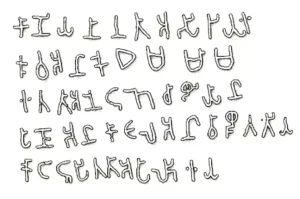
Tamil Brahmi Inscriptions Found in Egypt’s Valley of the Kings

12 Feb 2026

English

हिन्दी

Tamil Brahmi Inscriptions Found in Egypt’s Valley of the Kings

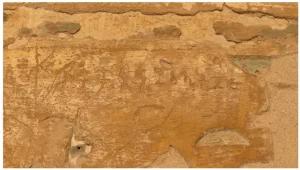
Nearly 30 Tamil Brahmi, Prakrit, and Sanskrit inscriptions have been identified inside tombs in Egypt’s Valley of the Kings.
About the Findings

  • Location: The inscriptions were found in six tombs of the Theban Necropolis, located in the Nile Valley region of Egypt.
  • Tamil BrahmiKey Discovery: Researchers have identified around 30 newly documented inscriptions inside the tomb complexes
  • Script and Language: The inscriptions were written in Tamil Brahmi, along with Prakrit and Sanskrit, showing the diverse origins of Indian visitors.
  • Chronology: The inscriptions have been dated to the 1st to 3rd Century CE, corresponding to the peak phase of Indo-Roman maritime exchanges.
  • Nature of Inscriptions:
    • Most inscriptions consist of personal names and short graffiti, carved on tomb walls, corridors, and entrances.
    • Indian visitors followed the Greek tradition of leaving names inside tombs as commemorative marks.

About Tamil Brahmi Script

Tamil Brahmi

  • Tamil Brahmi is an early adaptation of the Brahmi script used to write Old Tamil.
  • It was in use roughly between the 3rd century BCE and 3rd century CE.
  • Earlier Site: Mangulam in Tamil Nadu.
  • Other Major Sites: Pugalur, Jambai, Kodumanal, and Arikamedu.

  • Names Identified
    • Cikai Koṟṟaṉ: The name Cikai Koṟṟaṉ was repeated eight times across five tombs, suggesting a prominent Tamil presence.
      • The term Cikai is linked to the Sanskrit word śikhā, meaning a tuft or crown.
      • The term Koṟṟaṉ derives from Tamil koṟṟam (victory or slaying) and is associated with the goddess Koṟṟavai.
      • The name koṟṟaṉ appears in Koṟṟapumāṉ found on a sherd at Berenike (Red Sea port city) in 1995.
      • It also occurs in the Sangam corpus, including references to the Chera king Piṭtāṅkoṟṟaṉ in Purananooru.
      • Similar attestations exist in inscriptions from Pugalur, the ancient Chera capital, dated to the 2nd or 3rd century C.E
    • Kopāṉ:
      • Another inscription records the phrase “Kopāṉ varata kantan” (Kopāṉ came and saw), showing a visitor-style graffiti tradition.
      • The name Kopāṉ has also been found in inscriptions at Ammankovilpatti in Tamil Nadu, indicating continuity.
      • Other Tamil Names: Names such as Cātaṉ and Kiraṉ were also documented.

Key Tamil ports during the Sangam period

  • Muziris (Muchiri)
  • Korkai
  • Arikamedu
  • Kaveripattinam (Puhar)

Important Egyptian Red Sea ports:

  • Berenike
  • Myos Hormos

  • Trade and Mobility Linkages:
    • Indo-Roman Trade Network: The inscriptions reinforce evidence of maritime trade between ancient Tamilagam and the Roman Empire via Red Sea and Nile routes.
    • Merchant Mobility: Visitors likely included traders, sailors, or intermediaries travelling along established commercial circuits.
    • Sangam Correlations: Names resembling those in Sangam literature and Chera inscriptions strengthen literary-archaeological linkages
  • Historical Significance:
    • Cultural Interaction: The findings highlight cross-civilisational contact beyond trade, including pilgrimage-like visits and cultural curiosity.
    • Geographical Expansion: Research focus has expanded from Red Sea ports to the Nile Valley, broadening the spatial understanding of Indian mobility.
    • Tamil Maritime Legacy: The discoveries reaffirm the global reach of ancient Tamil traders from the Malabar and Coromandel coasts.
    • Epigraphic Importance: These inscriptions provide rare primary evidence of Indians physically present in Pharaonic tomb spaces during antiquity.

Check Out UPSC CSE Books

Visit PW Store

online store 1

About the Valley of the Kings

Tamil Brahmi

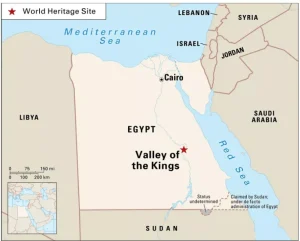
  • Location: The Valley of the Kings is a long and narrow burial valley located west of the Nile River in Upper Egypt (near modern-day Luxor).
  • Time Period: It served as the burial site for pharaohs of the 18th, 19th, and 20th dynasties (1539–1075 BCE).
  • UNESCO Recognition: In 1979, UNESCO recognized the valley as a World Heritage site as part of ancient Thebes complex.
  • Tomb Architecture:
    • The tombs were carved deep into mountain rock and typically contained descending corridors.
    • These corridors were often interrupted by deep shafts designed to confuse and deter robbers.
    • The layout also included pillared halls, vestibules, storage chambers, and a burial chamber containing a stone sarcophagus
  • Notable Tombs:
    • In addition to kings, the valley also contains tombs of queens, high-ranking officials, and several sons of Ramses II.
    • The longest tomb (Tomb 20) belongs to Queen Hatshepsut, extending nearly 700 feet into the rock.
    • The largest and most complex tomb (Tomb 5) was built for the many sons of Ramses II and contains dozens of chambers across two levels.

Need help preparing for UPSC or State PSCs?

Connect with our experts to get free counselling & start preparing

Aiming for UPSC?

Download Our App

      
Quick Revise Now !
AVAILABLE FOR DOWNLOAD SOON
UDAAN PRELIMS WALLAH
Comprehensive coverage with a concise format
Integration of PYQ within the booklet
Designed as per recent trends of Prelims questions
हिंदी में भी उपलब्ध
Quick Revise Now !
UDAAN PRELIMS WALLAH
Comprehensive coverage with a concise format
Integration of PYQ within the booklet
Designed as per recent trends of Prelims questions
हिंदी में भी उपलब्ध

<div class="new-fform">


    </div>

    Subscribe our Newsletter
    Sign up now for our exclusive newsletter and be the first to know about our latest Initiatives, Quality Content, and much more.
    *Promise! We won't spam you.
    Yes! I want to Subscribe.