Books

Indian States and Their Languages 2026 reflect the country’s rich cultural and linguistic diversity. From Hindi-speaking states in India to Dravidian and Indo Aryan language regions, this guide explains official languages, linguistic reorganisation of states, bilingual states, union territories, and more in a clear, student-friendly format.
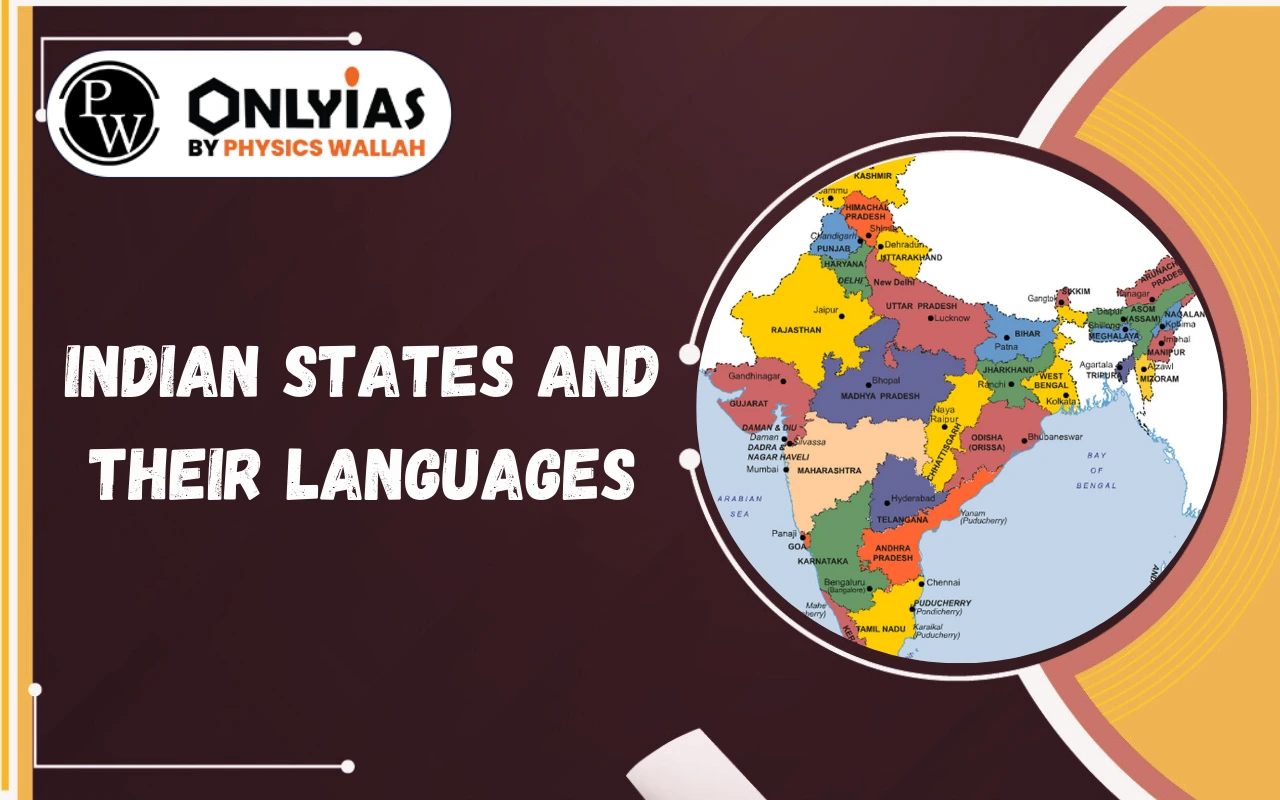
Indian States and Their Languages: India is home to immense linguistic diversity, with 28 states and 8 union territories speaking a wide range of official and regional languages. Most states have languages based on Indo-Aryan or Dravidian groups, such as Hindi in Uttar Pradesh, Tamil in Tamil Nadu, and Marathi in Maharashtra. The Constitution recognizes 22 scheduled languages under the Eighth Schedule.
The linguistic reorganisation of states was done to align boundaries with language demographics, strengthening regional identity and governance. Along with official languages, several regional dialects and classical languages like Tamil, Sanskrit, and Kannada reflect India’s rich cultural and historical heritage.
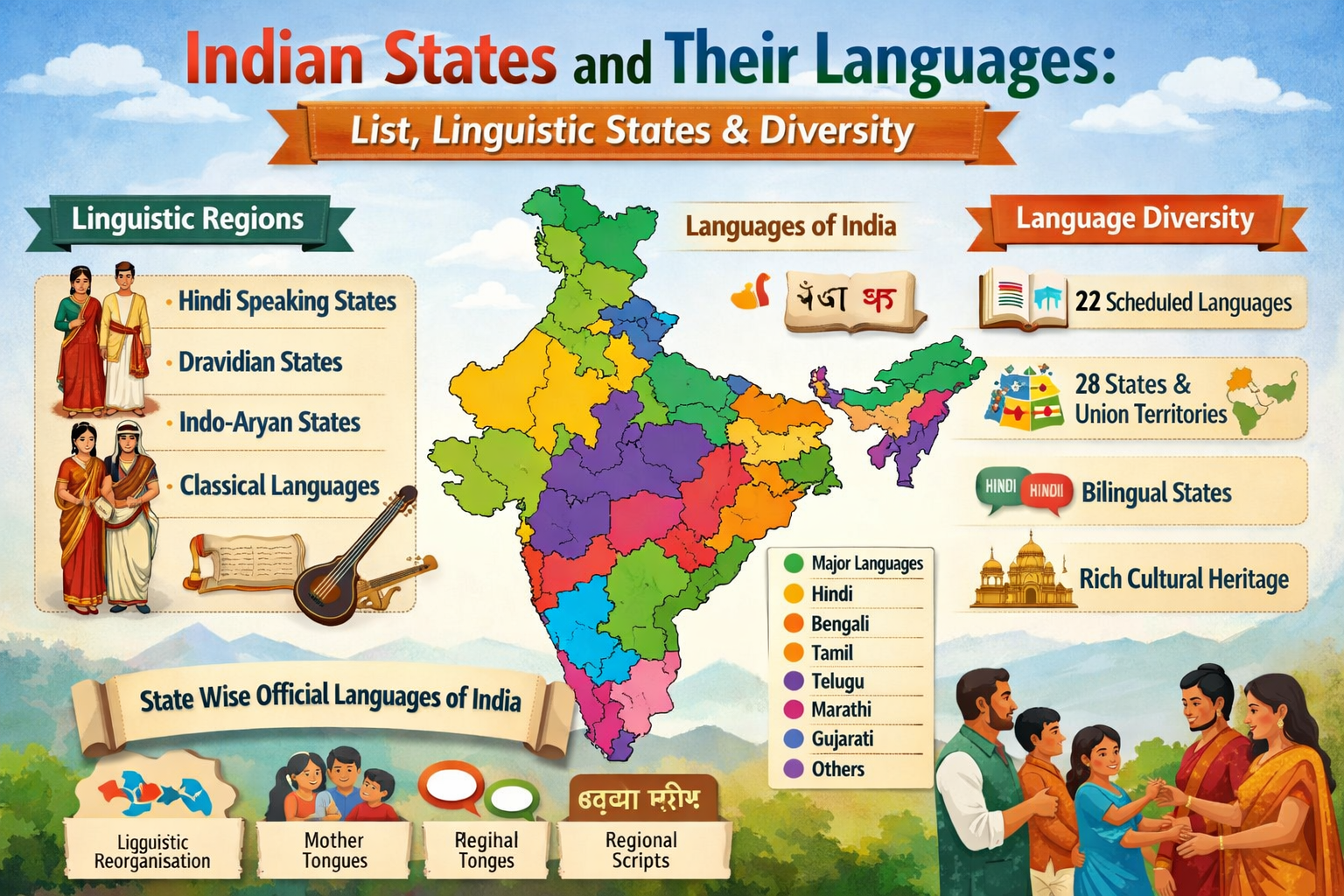
Below is the list of Indian states and languages, along with capitals, for better revision.
This Indian states and regional languages list is essential for quick revision.
Explore UPSC Foundation Courses Explore UPSC Foundation Courses
The concept of linguistic states of India developed after independence. Initially, states were not formed on a language basis. However, after public demand, especially the Andhra movement, the government passed the States Reorganisation Act, 1956.
This led to the linguistic reorganisation of states, where states were reorganized based on dominant regional languages. This created language based states in India, such as:
Thus, Indian states and their languages are directly linked to the political and cultural restructuring of the country.
Official Languages of Indian States and Bilingual States in India
Most states have one primary official language. However, some are bilingual states in India official languages, meaning they recognize more than one language officially.
Examples:
Similarly, the languages in union territories of India vary:
Understanding Indian states and their languages helps students answer questions on official and regional usage.
India’s strength lies in its regional languages of Indian states. These languages represent the mother tongue by Indian states and are deeply connected to culture, literature, and traditions.
For example:
In many states, the mother tongue by Indian states aligns with the official language, strengthening regional identity.
The Constitution recognizes 22 scheduled languages of India. These include:
Hindi, Bengali, Tamil, Telugu, Marathi, Gujarati, Kannada, Malayalam, Punjabi, Assamese, Odia, Urdu, Sanskrit, Konkani, Manipuri, Nepali, Bodo, Dogri, Maithili, Santali, Sindhi, and Kashmiri.
When studying Indian states and their languages, students must remember that not all scheduled languages are official in every state. Some languages are recognized constitutionally but may not be official at the state level.
A large portion of northern and central India consists of Hindi speaking states in India. These include:
These states fall under the Indo Aryan languages states in India, as Hindi belongs to the Indo-Aryan language family.
India’s languages are broadly classified into two major families:
Understanding this classification helps in analyzing language diversity in India.
Explore UPSC Prarambh Course Explore UPSC Prarambh Course
India has declared certain languages as classical languages in Indian states due to their ancient heritage. These include:
These classical languages contribute significantly to India’s historical and literary richness.
India is one of the most linguistically diverse countries in the world. The language diversity in India is visible in:
Students are also encouraged to study the Indian states and languages map, which visually represents how languages are distributed across regions. This helps in quick memorization and geographical understanding.
Indian states and their languages represent the cultural backbone of India. From the linguistic reorganisation of states to scheduled languages of India state wise, understanding this topic is essential for academic and competitive success.
By studying Indian states and their languages, students gain knowledge about state wise official language in India, regional languages, bilingual states, and language diversity in India. This topic not only enhances general knowledge but also strengthens constitutional and historical understanding.
Check Out UPSC CSE Books
Explore UPSC Test Series

There are 28 states and 8 union territories, each with its own official or regional language.
Linguistic states of India are states formed based on dominant regional languages after the linguistic reorganisation of states in 1956.
Uttar Pradesh, Bihar, Madhya Pradesh, Rajasthan, and Haryana are major Hindi speaking states in India.
Tamil, Sanskrit, Kannada, Telugu, Malayalam, and Odia are recognized as classical languages in Indian states.
Yes, some states and union territories recognize more than one official language, making them bilingual states in India official languages.



Explore SRIJAN Prelims Crash Course


Connect with our experts to get free counselling & start preparing
Books
Udaan (Prelims Wallah)
Prahaar (Mains Wallah)
Q&A Bank (Prelims & Mains)
Budget & Economic Survey
NCERT Wallah
Marks Booster
हिंदी माध्यम विशेष शृंखला
 Current Affairs
Monthly Current Wallah
Subject Wise Current Affairs
Editorial Analysis
Editorial PDFs
News of The Day
Download Our App



Download Our App
<div class="new-fform">
</div>

 GS Foundation
 Optional Course
 Combo Courses
 Degree Program