Global copper prices declined sharply in 2026 amid West Asia tensions, reflecting weakening demand and concerns about a slowdown in global economic growth.
UPSC Coaching Classes
About Copper
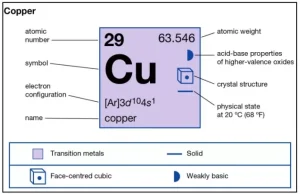
- Copper is a non-ferrous base metal essential to modern economies due to its conductivity, versatility, and widespread industrial and technological applications.
Properties of Copper
-
- High Conductivity: Copper has excellent thermal and electrical conductivity, making it ideal for power transmission and electronic applications.
- Malleability and Ductility: It is soft, malleable, and ductile, allowing easy shaping into wires, sheets, and complex components.
- Occurrence and Recyclability: Copper occurs in native metallic form and is highly recyclable with lower energy requirements than primary extraction.
- Applications of Copper
- Electrical and Electronics Industry: Widely used in cables, wiring, microcircuits, and power grids due to its superior conductivity.
- Construction Sector: Used in plumbing, fittings, roofing, and infrastructure components.
- Industrial and Transport Uses: Essential in machinery, automobiles, and equipment manufacturing.
- Alloys and Consumer Products: Used in alloys like brass and bronze, and in coins, utensils, and fixtures.
Distribution and Production of Copper
- Global Distribution: Chile (21%) leads global reserves, followed by Australia, Peru, Russia, and the USA.
- India’s Distribution: Rajasthan (52.25%), Madhya Pradesh (23.28%), and Jharkhand (15.14%) hold major copper reserves (Indian Minerals Yearbook 2022).
- Top producers are Madhya Pradesh (60%) followed by Rajasthan (39%) and Jharkhand (1 percent)
- Production Constraints in India: India is not self-sufficient and relies on imports and recycling and Hindustan Copper Limited is the only integrated PSU.
- Top Sources of India’s Copper import are Chile (highest), Indonesia, Australia, and Peru.
Copper as an Indicator of Economy
- Demand-Driven Indicator: Copper demand rises during industrial expansion and falls during economic slowdown.
- Price Trends Reflect Growth: Rising prices signal economic growth, while falling prices indicate weak demand and slowdown concerns.
- Link with Emerging Sectors: Copper demand is tied to renewable energy, electric vehicles, and infrastructure growth.
Click to Know UPSC Coaching Centres in India
Substitutes of Copper
- Aluminium Substitution: Used in power cables, radiators, and cooling systems due to lower cost and weight.
- Optical Fibre Replacement: Replaces copper in telecommunications due to higher data transmission efficiency.
- Plastics in Plumbing: Used instead of copper in pipes, fixtures, and structural applications.
Conclusion
Copper remains a critical industrial metal and economic indicator, with its demand trends closely reflecting global growth and technological transformation.