The State of the Global Workplace 2026 Report highlights a worrying decline in employee engagement globally, with South Asia—led by India—recording the steepest fall.
- The phenomenon of “quiet quitting” has emerged as a defining feature of contemporary workplaces.
Best Online Coaching for UPSC
Methodological Framework of the Report
- Long-Term Survey Base: The report is built on continuous global surveys conducted since 2005, enabling longitudinal analysis of workplace trends.
- Robust Global Sample: The 2025 dataset includes 141,444 employed individuals (15+ years), ensuring wide coverage and statistical strength.
- Randomized Sampling Approach: Use of randomly selected adult respondents enhances representativeness and reduces sampling bias.
- India-Specific Dataset: Insights for India are based on a rolling sample (2023–25) of 3,095 respondents, ensuring consistency over time.
- Unweighted Data Usage: Engagement findings are derived from unweighted survey responses, reflecting raw perceptions without statistical adjustments.
- Focus on Workforce Experience: The study exclusively captures currently employed individuals, providing direct insights into real-time workplace engagement.
|
Key Highlights of the Report
- Long-Term Progress with Recent Reversal: Over the past decade and a half, the proportion of engaged employees in India has increased significantly, indicating improvements in workplace practices.
- However, recent data shows a decline from peak engagement levels observed during 2020–22, pointing towards a loss of momentum in sustaining engagement gains.
- This suggests that while structural reforms have had an impact, emerging workplace challenges are reversing earlier progress.
- Persistence of a Large “Not Engaged” Workforce: A substantial proportion of employees continue to fall into the “not engaged” category:
- These employees constitute nearly three-fifths of the workforce, representing the largest segment.
- They are neither dissatisfied enough to leave nor motivated enough to contribute meaningfully.
- This indicates a crisis of latent disengagement, where indifference rather than dissatisfaction dominates.
- Decline in Managerial Engagement: The report highlights a significant reduction in engagement levels among managers:
- Managers, who traditionally acted as drivers of engagement, are themselves experiencing reduced motivation and increased stress.
- The erosion of the managerial “engagement premium” indicates that leadership is no longer insulated from workplace pressures.
- Since managers act as critical intermediaries between organisations and employees, their disengagement has a cascading effect.
- Deterioration in Employee Well-being: South Asia records the lowest levels of individuals classified as “thriving,” indicating widespread dissatisfaction with life conditions.
- High levels of sadness, anger, and stress point towards increasing psychological strain in professional environments.
- This underscores that economic participation alone is insufficient without corresponding improvements in quality of work life.
- Rising Emotional Distress Indicators: There is a noticeable increase in negative emotional experiences among employees:
- Higher incidence of daily anger, stress, and sadness reflects deteriorating mental health conditions.
- Such emotional states reduce productivity, impair decision-making, and weaken interpersonal relationships at the workplace.
- Emotional well-being is thus emerging as a central determinant of workforce efficiency.
- Transition from Active to Passive Disengagement: The proportion of actively disengaged employees has declined over time.
- However, this has been accompanied by a rise in passive disengagement, reflected in quiet quitting trends.
- This shift indicates that the workplace crisis is becoming less visible but more deeply entrenched.
- Broader Economic Implications: The report clearly establishes the link between engagement and economic performance:
- Low engagement reduces organisational profitability by limiting employee contribution and innovation.
- At a macro level, widespread disengagement can constrain productivity growth and economic expansion.
- Thus, employee engagement must be viewed as a strategic economic variable, not merely a human resource concern.
Conceptual Understanding- Workplace Engagement:
- Workplace engagement refers to the extent of an employee’s psychological, emotional, and cognitive attachment to their work, team, and organisation, shaping not only how they perform tasks but also how they perceive their role within a larger institutional framework.
- As emphasised in the State of the Global Workplace 2026, engagement is a dynamic and measurable construct that reflects the quality of the employee–organisation relationship.
Multidimensional Nature of Engagement:
Workplace engagement is inherently multidimensional, as it integrates several layers of human involvement in the work process:
- Emotional Dimension: Employees feel a sense of belonging, recognition, and value within the organisation, which fosters loyalty and commitment.
- Cognitive Dimension: Employees understand organisational goals, align their personal aspirations with institutional objectives, and remain mentally invested in outcomes.
- Behavioral dimension: Employees demonstrate proactive involvement by contributing beyond minimum requirements and showing initiative in problem-solving.
- Thus, engagement is not a singular attribute but a composite indicator of motivation, alignment, and participation.
Determinants of Engagement:
The level of engagement is shaped by a combination of organisational practices and interpersonal dynamics:
- Recognition and Appreciation: They create a sense of validation, reinforcing positive behaviour and motivating sustained performance.
- Supportive Leadership and Managerial Guidance: It ensures that employees feel heard, mentored, and guided in their professional journey.
- Opportunities for Learning and Career Progression: It provides a pathway for growth, preventing stagnation and enhancing long-term commitment.
- These determinants collectively influence the employee’s sense of purpose, growth trajectory, and emotional investment in the organisation.
|
About Quiet Quitting
- Refers: Quiet quitting represents a subtle yet significant shift in employee behaviour, wherein individuals consciously limit their contribution to the minimum required by their job roles, without formally disengaging from employment.
- Nature and Core Characteristics: Quiet quitting is characterised by a deliberate reduction in discretionary effort:
- Employees perform only those tasks that are formally assigned, avoiding any additional responsibilities or voluntary contributions.
- There is a visible decline in enthusiasm, initiative, and ownership of work outcomes.
- Employees disengage emotionally from organisational goals while continuing to remain physically present.
- It thus represents a state of functional participation but psychological withdrawal.
UPSC Online Coaching
Quiet Quitting vs Active Disengagement
- Quiet Quitting (Not Engaged Employees): It involves passive detachment, where employees neither harm nor actively contribute to organisational performance.
- Active Disengagement (Loud Quitting): It involves visible dissatisfaction, negativity, and sometimes counterproductive behaviour that can disrupt team dynamics.
- The current challenge lies primarily in the expansion of the passively disengaged workforce, which is less visible but more widespread.
Drivers of Quiet Quitting
- Structural Workload Imbalances and Occupational Burnout: Chronic overwork and energy depletion act as the primary catalysts for withdrawal.
- The “Always-On” Culture: The proliferation of digital tools has institutionalized a culture of continuous connectivity. This digital overload erodes the boundaries of hybrid and remote work, intensifying emotional exhaustion.
- Self-Preservation Strategy: In the absence of organizational safeguards for work-life balance, employees adopt quiet quitting as a defensive measure to conserve physical and mental energy.
- Organizational and Managerial Deficiencies: The quality of leadership remains a critical determinant of organizational trust.
- Managerial Spillover: According to the Gallup State of the Global Workplace Report (2026), declining managerial engagement has a direct negative impact on team morale. A lack of empathetic leadership and mentoring mechanisms accelerates detachment.
- Breakdown of Recognition: When discretionary effort is neither acknowledged nor incentivized, workers perceive a failure in the effort–reward equilibrium, leading to a cessation of extra-role contributions.
- Global Engagement Deficit and Psychological Detachment: There is a profound emotional disconnection between the global workforce and their employers.
- Cognitive Withdrawal: Quiet quitting represents a state of psychological disengagement, where employees fulfill contractual obligations but withdraw their organizational commitment.
- Productivity Losses: Gallup highlights that only a fraction of the workforce remains actively engaged, leading to significant macroeconomic productivity losses and reduced operational efficiency.
- Changing Workforce Aspirations and Generational Shifts: A fundamental shift in socio-cultural values has redefined the meaning of professional success.
- Well-being-Centric Values: Younger cohorts (Gen Z and Millennials) prioritize mental health and personal fulfillment over traditional metrics like hierarchical advancement.
- Assertion of Boundaries: This shift represents a transition from “work as identity” to “work as a component of life,” utilizing quiet quitting as a form of non-confrontational boundary-setting.
- Economic Uncertainty and Defensive Retention: Macroeconomic volatility forces workers into a state of passive participation.
- “Job Hugging”: In an environment of mass layoffs and technological disruptions, employees may retain their positions for security while minimizing effort—a paradox of physical retention but psychological disengagement.
- Automation Anxiety: Concerns regarding Artificial Intelligence and job displacement weaken long-term attachment, fostering a short-term, transactional approach to labor.
- Career Stagnation and Skill Underutilization: A lack of vertical mobility renders “going the extra mile” pointless in the eyes of the worker.
- Absent Growth Trajectories: Without clear upskilling pathways or promotion avenues, employees experience career plateauing, leading to minimalistic work behavior.
- Skill–Role Mismatch: The underutilization of human capital results in frustration, where the lack of challenge leads to a deliberate reduction in professional investment.
- Toxic Culture and the Erosion of Autonomy: The internal work environment heavily dictates the level of employee contribution.
- Micromanagement: Excessive surveillance destroys professional autonomy and intrinsic motivation, encouraging compliance rather than genuine commitment.
- Perceived Injustice: Organizational politics and a lack of distributive justice create a sense of alienation, prompting employees to withdraw to avoid the effects of a toxic organizational culture.
Multi-Dimensional Impacts of Quiet Quitting
- Erosion of Organizational Productivity and Performance: The transition from optimal engagement to minimum compliance creates a significant performance gap.
- Decline in Discretionary Effort: Organizations rely on extra-role behavior—taking initiative and creative problem-solving—to drive growth. The withdrawal of this effort leads to operational rigidity.
- Aggregate Productivity Loss: Low engagement (the core of quiet quitting) results in massive global productivity losses, estimated in trillions of dollars annually. This represents an inefficient utilization of human capital, where potential remains untapped.
- Deterioration of Workplace Culture and Cohesion: Quiet quitting transforms the office from a collaborative space into a transactional environment.
- Erosion of Collaborative Ethos: When employees avoid going beyond formal obligations, team cohesion and collective responsibility weaken. This replaces a culture of mutual trust with one of minimal compliance.
- Normalization of Mediocrity: Over time, “doing the bare minimum” can become institutionalized behavior, effectively lowering the performance benchmarks for the entire organization.
- Managerial and Leadership Challenges: Disengagement creates a significant supervisory burden for leadership.
- Contagious Disengagement: There is a notable spillover effect; when high-performers observe peers quietly quitting without consequence, their own morale declines, leading to a ripple effect of withdrawal.
- Diversion from Strategy: Leaders are forced to shift focus from strategic functions to basic monitoring and accountability enforcement, stifling long-term organizational development.
- Impact on Employee Well-being- The Dual Effect: The psychological impact on the employee is complex, offering a trade-off between short-term relief and long-term growth.
- Positive (Self-Preservation): It acts as a coping mechanism to restore work-life balance, reduce occupational stress, and mitigate burnout.
- Negative (The Purpose Deficit): In the long run, disengagement leads to a loss of professional purpose and career stagnation. This can result in long-term dissatisfaction despite the initial reduction in stress.
- Innovation and Growth Constraints: Quiet quitting acts as a barrier to organizational adaptability.
- Decline in Creativity: Innovation thrives on proactive engagement. Minimalist behavior undermines the generation of new ideas, reducing the firm’s competitive advantage in dynamic markets.
- Reduced Service Quality: In customer-facing roles, this translates to lower responsiveness, directly damaging customer satisfaction and brand reputation.
- Long-Term Economic and Structural Implications: At a macro level, the trend influences the stability of the labor market.
- Gradual Exit Behavior: Quiet quitting is often a precursor to actual resignation. This leads to higher attrition rates, escalating recruitment and training costs.
- Weakening of Loyalty: It marks a shift from emotional commitment to a purely contractual obligation, weakening the long-term bond between the employer and the employee.
Click to Know UPSC Coaching Centres in India
Actions & Initiatives Taken by India (2025–2026)
- Policy and Legal Framework for Employee Welfare: The Indian government is strengthening the legal architecture to balance industrial growth with worker protection.
- Labour Codes and Well-being: The implementation of the Four Labour Codes (e.g., Occupational Safety, Health and Working Conditions Code) has expanded the focus beyond wages to include social security, safe working conditions, and mandatory welfare provisions.
- The “Right to Disconnect” Discourse: Emerging legislative debates, inspired by proposals like Kerala’s Right to Disconnect Bill, aim to regulate after-work digital communication. This addresses the “always-on” culture and prevents digital encroachment on personal time.
- National Mental Health & Psychosocial Support: Recognizing occupational stress as a public health issue, India has integrated mental resilience into its national health framework.
- Tele-MANAS & DMHP: The National Tele-Mental Health Programme (Tele-MANAS) provides 24×7 psychological counseling. This is complemented by the District Mental Health Programme (DMHP), which scales stress management and counseling services across all districts.
- National Health Policy 2017: This policy continues to drive the integration of preventive and promotive healthcare, emphasizing workplace wellness as a pillar of national productivity.
- Promotion of a Workplace Wellness Ecosystem: There is a shift from treating wellness as a peripheral benefit to a compliance priority.
- Institutionalizing EAPs: Indian organizations are increasingly adopting Employee Assistance Programmes (EAPs), providing structured support for crisis intervention and emotional counseling.
- Legal Push for Wellness: Recent reforms are making workplace wellness a priority, encouraging firms to embed mental health support into their organizational policy and ESG (Environmental, Social, and Governance) reporting.
- Corporate HR Innovations and Industry Best Practices: The private sector is pioneering flexible and inclusive models to combat burnout.
- Hybrid Models & “Silent Hours”: Companies like CEAT Tyres have introduced “silent hours”—designated periods with no work communication—to protect employee downtime. Flexible working hours and hybrid models are now standard in the IT and services sectors.
- Progressive Leave Policies: The introduction of menstrual leave and “no-questions-asked” leave reflects a move toward an employee-centric work culture.
- Real-Time Recognition: Firms like EY GDS have deployed instant recognition platforms, ensuring that discretionary effort is immediately validated to maintain employee motivation.
- Skill Development and Career Progression Initiatives: To address career stagnation, India is leveraging digital public infrastructure.
- Skill India Mission & Digital India: These national missions enhance career mobility and employability, ensuring that workers do not feel trapped in static roles.
- AI-Driven Career Mapping: Organizations are utilizing AI platforms for career guidance and skill-based rewards, aligning individual growth with organizational objectives.
- Social Security and Financial Safety Nets: Enhancing the economic security of workers reduces the “defensive” nature of quiet quitting.
- ESIC Initiatives: The Employees’ State Insurance Corporation (ESIC) has expanded programs for preventive healthcare and inclusion of informal workers, broadening the safety net.
- Financial Wellness: There is an increasing adoption of group health insurance and accident cover, improving overall job satisfaction and long-term organizational loyalty.
- Digital Interventions and Sentiment Analysis: Technology is being used as a diagnostic tool rather than a surveillance mechanism.
- Feedback Analytics: Deployment of AI-based HR Tech allows for the real-time monitoring of employee sentiment. This enables proactive intervention by leadership before disengagement turns into actual turnover.
- Leadership Training: There is a renewed focus on empathy-based management, training leaders to foster an inclusive culture that values human capital over mere output.
Global Actions & Best Practices to Address Quiet Quitting
- Legal and Policy Innovations: Institutionalizing Rest: Governments are increasingly codifying the “Right to Rest” to combat the “always-on” culture and digital burnout.
- The Right to Disconnect: France pioneered the Right to Disconnect Law (2017), mandating that firms define norms for after-hours communication.
- Ireland introduced a Code of Practice (2021) ensuring employees are not penalized for disengaging post-work.
- Strict Working Time Regulations: In Germany, rigorous labor laws enforce maximum working hours and rest periods. Similarly, the European Union Working Time Directive institutionalizes weekly hour caps and mandatory paid leave as legal rights.
- Progressive Workplace Models and Experiments: The global workforce is shifting from “hours logged” to “output achieved” via flexible structural models.
- Four-Day Workweek Trials: Pilot programs in the United Kingdom, Iceland, and South Africa have demonstrated that a 32-hour week (with no pay cut) leads to higher productivity, improved mental health, and significant reductions in disengagement.
- Autonomy via Hybrid Models: Post-pandemic, the global adoption of remote work and flexible scheduling has enhanced employee autonomy, acting as a direct counter-measure to the stress of rigid office environments.
- Organizational Culture and Engagement Reforms: Global best practices now prioritize real-time sentiment analysis and recognition ecosystems.
- Data-Driven Strategies: Leading firms utilize analytics from organizations like Gallup to track employee sentiment and engagement levels, enabling proactive interventions before disengagement sets in.
- Continuous Feedback Loops: Moving away from annual reviews, global firms are institutionalizing peer recognition platforms and continuous feedback to reinforce discretionary effort.
- Institutionalizing Mental Health Support: Mental resilience is being integrated into the core of Occupational Safety and Health (OSH).
- National Standards: Canada’s National Standard for Psychological Health and Safety in the Workplace serves as a global benchmark for protecting mental well-being.
- Global Norm-Setting: The World Health Organization (WHO) and International Labour Organization (ILO) have jointly declared that a safe and healthy work environment is a fundamental right, pushing for mental health to be part of all occupational safety policies.
- Leadership Transformation and Human-Centric Management: Since management is a key driver of engagement, global firms are redesigning leadership training.
- Empathetic Leadership: Organizations are training managers in Emotional Intelligence (EQ) and inclusive practices to build trust.
- Decentralized Decision-Making: Empowering employees with greater autonomy and participatory roles enhances their sense of ownership, reducing the “cog in the machine” feeling that triggers quiet quitting.
- Lifelong Learning and Internal Mobility: To prevent career stagnation, nations and firms are investing in continuous upskilling.
- National Skill Ecosystems: Singapore’s SkillsFuture initiative promotes lifelong learning, facilitating career mobility and addressing skill-role mismatches.
- Transparent Career Pathing: Global corporations increasingly offer cross-functional mobility and transparent promotion systems to sustain long-term commitment.
- Technological and Inclusive Interventions: Technology and social equity are being leveraged to build psychological safety.
- Predictive AI Analytics: HR departments use predictive tools to identify “at-risk” engagement levels and intervene with targeted support.
- DEI as an Engagement Tool: Global Diversity, Equity, and Inclusion (DEI) practices ensure gender-sensitive and inclusive workplaces, fostering a sense of belongingness that discourages passive withdrawal.
- Global Reporting and Accountability: Employee well-being has moved from HR to the Boardroom.
- ESG Frameworks: Environmental, Social, and Governance (ESG) standards now increasingly include employee well-being indicators and satisfaction metrics. This makes human capital management a critical component of a company’s global valuation.
Critical Challenges in Addressing Quiet Quitting
- Conceptual Ambiguity and Measurement Constraints: Quiet quitting is a behavioral nuance, not a binary status like resignation.
- Quantification Paradox: Unlike absenteeism or attrition, quiet quitting is a “silent” withdrawal of discretionary effort. Traditional performance metrics often fail to distinguish between steady performance and deep-seated disengagement.
- Lack of Standardized Indicators: Without a universally accepted framework to measure “effort-to-role” alignment, organizations struggle with delayed interventions and evidence-based policymaking.
- Entrenched “Cultural Debt” and Management Rigidity: Structural reforms often clash with legacy organizational mindsets.
- Persistence of Toxic Cultures: Many organizations remain tethered to hierarchical, output-centric models. Issues like micromanagement and a lack of organizational trust are deeply embedded, making cultural transformation slow and resistant.
- Short-termism: Leadership frequently views employee well-being initiatives as cost centers rather than strategic productivity drivers, leading to underinvestment in long-term engagement.
- Managerial Engagement and Capacity Gaps: The “middle management” is often the weakest link in the engagement chain.
- The Ripple Effect: As highlighted by Gallup (2026), when managerial engagement declines, it creates a top-down contagion. A manager who is “quiet quitting” cannot inspire extra-role behavior in their team.
- Skill Deficits: There is a significant gap in empathy-based leadership. Managers often lack the emotional intelligence (EQ) required to diagnose burnout or handle sensitive conflict resolution.
- Policy Implementation and Enforcement Gaps: Legislative progress often lacks the “teeth” required for real-world impact.
- Mental Health Oversight: Most labor laws focus on physical safety and wages. Occupational stress and psychological distress remain under-regulated within statutory frameworks.
- Weak Enforcement: Even where “Right to Disconnect” codes or working hour caps exist, “informal pressure” and weak monitoring dilute their effectiveness, especially in high-pressure sectors.
- Economic Pressures and “Defensive Retention”: Macroeconomic volatility creates a climate of psychological withdrawal.
- “Job Hugging”: In an environment of mass layoffs and AI disruptions, employees may retain their positions for financial security while emotionally detaching from the work—a state of physical presence but mental absence.
- Real Wage Stagnation: When inflation eats into real earnings, employees experience a perceived injustice. They naturally reduce their input to match the diminishing “real value” of their salary.
- Informal Sector Dominance: In the Indian context, the scale of the informal economy presents a unique hurdle.
- Limited Policy Reach: A significant portion of the workforce operates without formal HR structures or legal safety nets. In the informal sector, quiet quitting is often a silent struggle against subsistence-level employment, making traditional engagement strategies irrelevant.
- The Technological Surveillance-Trust Dilemma: Technology has become a “double-edged sword” in the modern workplace.
- Digital Encroachment: The “Always-On” culture facilitates digital overload, making it nearly impossible for employees to achieve true cognitive recovery.
- Erosion of Autonomy: The use of monitoring technologies (Bossware) to track productivity often backfires. It destroys professional autonomy and fuels resentment, pushing employees further into a compliance-only mindset.
Click to Explore UPSC Offline Coaching
PWOnlyIAS Extra Edge:
Gendered Dimension of Quiet Quitting
Quiet quitting is not gender-neutral; it is shaped by structural inequalities in the labour market.
- Double Burden of Work: Women balance paid employment with unpaid care work, leading to fatigue and emotional exhaustion.
- Glass Ceiling & Recognition Gap: Limited career advancement and lack of recognition reduce discretionary effort.
- Workplace Exclusion & Harassment: Bias and unsafe work environments weaken psychological attachment.
- Flexible Work Paradox: Hybrid work may increase unpaid labour expectations, reinforcing disengagement.
- Thus, quiet quitting often reflects a coping mechanism against structural inequality rather than simple disengagement.
Informal Sector & Gig Economy Perspective (India-Specific):
In India, quiet quitting manifests differently due to informal sector dominance:
- Survival-Driven Compliance: Minimal effort reflects economic compulsion, not choice.
- Absence of HR Structures: Lack of grievance redressal, career pathways, and formal engagement systems.
- Platform/Gig Workers: Algorithmic control creates silent disengagement without commitment.
- Precarity & Vulnerability: Weak social security leads to transactional labour relationships.
- This highlights India’s labour market dualism.
Social & Societal Implications:
Quiet quitting has broader societal consequences:
- Family & Social Strain: Workplace disengagement affects personal relationships and social cohesion.
- Erosion of Work Ethic: Rise of minimal compliance weakens collective responsibility.
- Youth Alienation: Growing disillusionment among aspirational youth.
- Mental Health Burden: Leads to psychological stress and reduced life satisfaction.
- Thus, it is a social phenomenon, not just an organisational issue.
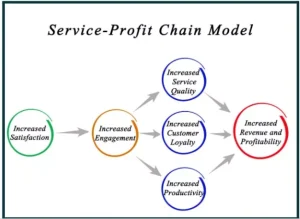
Service-Profit Chain Perspective:
The Service-Profit Chain Model explains the systemic impact:
- Employee Satisfaction → Employee Engagement
- Engagement → Service Quality, Productivity, Customer Loyalty
- Outcomes → Revenue Growth & Profitability
- Quiet quitting disrupts this chain, reducing organisational efficiency.
Ethical & Philosophical Perspective:
Quiet quitting raises key normative questions:
- Work-Life Balance Assertion: Shift away from overwork culture.
- Resistance to Exploitation: A form of non-confrontational protest.
- Dignity of Labour: Questions human-centric work environments.
- It is both a challenge to productivity and a demand for humane work conditions.
Social Justice Link:
Quiet quitting reflects broader societal transformations:
- Shift from industrial work culture → knowledge economy pressures
- Rising urban alienation
- Emphasis on mental well-being over material success
- Inequality in access to dignified employment
- Thus, it is linked to quality of work and social justice.
|
Way Forward
- Reimagining Culture: From Control to Trust: Organizations must dismantle the “always-on” work culture and transition toward human-centric models.
 Institutionalizing Balance: Formalize “Right to Disconnect” policies and hybrid work systems that combine remote flexibility with meaningful in-person collaboration.
- Psychological Safety: Foster an environment where open communication and employee voice mechanisms allow workers to express concerns without fear of career penalties.
- Strengthening Leadership & Managerial Effectiveness: Since manager quality is the primary determinant of engagement, the role of the supervisor must be redefined.
- Empathetic Leadership: Shift managerial training toward Emotional Intelligence (EQ), active listening, and conflict resolution.
- Broadening Accountability: Evaluate managers not just on output, but on team well-being indicators, retention rates, and employee satisfaction scores.
- Integrating Mental Health into the Ecosystem: Mental resilience must be treated as a core strategic pillar rather than a peripheral benefit.
- Mainstreaming Support: Institutionalize Employee Assistance Programmes (EAPs) and stress management initiatives aligned with WHO and ILO guidelines.
- Destigmatizing Support: Launch awareness campaigns to ensure seeking help is viewed as a sign of professional maturity rather than weakness.
- Redesigning Jobs for Meaning and Growth: To combat career stagnation, roles must be recalibrated to offer clarity and a sense of progress.
- Enhancing Role Clarity: Redesign jobs to ensure clear responsibilities and alignment with the organizational purpose, strengthening intrinsic motivation.
- Continuous Learning: Provide AI-driven upskilling and transparent career progression pathways, ensuring employees see a viable future within the firm.
- Strengthening Recognition & Reward Systems: The effort–reward equilibrium must be restored through transparency and fairness.
- Linking Effort with Outcomes: Develop systems that explicitly recognize discretionary effort. Move toward real-time feedback loops and peer-recognition platforms to enhance the sense of belonging.
- Relational Contracts: Shift toward models where employees feel their personal growth is directly tied to the organization’s success.
- Leveraging Technology Responsibly: Technology should be a facilitator of autonomy, not a tool for surveillance.
- Data-Driven HR: Utilize AI-driven analytics and engagement surveys to identify early signs of disengagement, allowing for proactive human intervention.
- Trust-Based Digital Environments: Avoid excessive monitoring (“bossware”), as it erodes trust. Instead, promote digital tools that empower employees to manage their own productivity.
- Policy and Institutional Reforms (India-Specific Focus): For an emerging economy like India, the “Way Forward” requires statutory backing.
- Legislative Safeguards: Expand Labour Codes to explicitly include mental health safeguards and workplace stress management provisions.
- Informal Sector Inclusion: Develop innovative policy mechanisms to bring the informal workforce under social security nets and basic workplace protections.
- Strengthening Compliance: Ensure strict enforcement of working hour regulations, particularly in high-pressure sectors like IT, the gig economy, and services.
Conclusion
Quiet quitting is both a symptom of workplace distress and a signal of changing societal expectations. It highlights the importance of dignity, well-being, and work-life balance. Addressing it requires a shift from extractive productivity models to human-centric organisational cultures based on trust, inclusion, and meaningful engagement. Sustainable growth depends not just on job quantity, but on the quality and dignity of work.


 11 Apr 2026





.png)






 Current Affairs




 GS Foundation
 Optional Course
 Combo Courses
 Degree Program