Udaan, Prahaar, Q&A Bank etc.
CA Magazines & Editorials
The Anti-Paper Leak Bill 2026 proposes amendments to the Public Examination (Prevention of Unfair Means) Act, 2024, to introduce stricter punishments for paper leaks. It proposes higher fines, faster investigations, special courts, and stronger accountability for service providers to improve the integrity of public examinations.
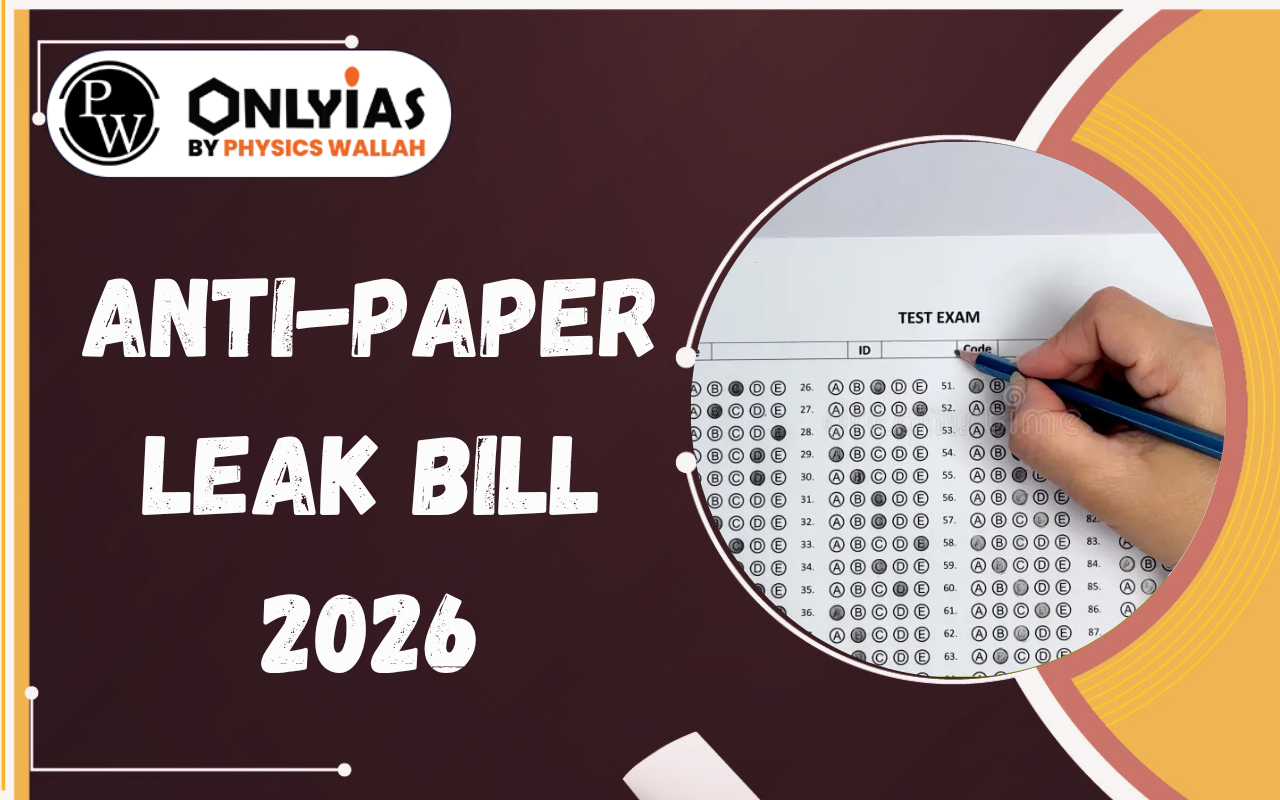
The Anti-Paper Leak Bill seeks to strengthen the Public Examination (Prevention of Unfair Means) Act, 2024, by introducing stricter punishments and faster investigations for paper leak cases. It aims to improve the fairness and credibility of public examinations.
The proposed amendments increase jail terms and fines for offenders, bring service providers under stricter accountability, and provide for fast-track courts and time-bound investigations. The bill applies to major central examinations, including UPSC, SSC, RRB, IBPS, and NTA-conducted exams such as NEET.
The Government of India has introduced an Anti-Paper Leak Bill in Parliament. This bill aims to amend the existing Public Examination (Prevention of Unfair Means) Act, 2024. The objective is to make punishments more stringent and establish a stronger deterrence against future paper leaks, addressing public concerns raised by incidents like the NEET paper leak.
Note: The Anti-Paper Leak Bill 2026 is a proposed amendment to the Public Examination (Prevention of Unfair Means) Act, 2024. The provisions discussed below will come into effect only after the bill is passed by Parliament and receives Presidential assent.
The new bill introduces several significant changes to the Public Examination (Prevention of Unfair Means) Act, 2024, enhancing the penalties and strengthening the investigative framework. These changes are crucial for tackling unfair means in public examinations.
| Anti-Paper Leak Act 2024 vs. New Bill Provisions | ||
| Feature | Public Examination (Prevention of Unfair Means) Act, 2024 (Original) | New Bill (Proposed Amendments) |
| Punishment for Convicted Individuals | Up to 3 years of imprisonment | 5 to 10 years of imprisonment |
| Maximum Fine (Individual) | Up to ₹1 Lakh | Up to ₹50 Lakh |
| Organized Paper Leaks | Lower punishment provisions | Increased punishment, including a fine of up to ₹1 Crore |
| Investigation Timeline | Not explicitly defined | Investigation must be completed within 2 months |
| Fast Track Courts | Not mentioned | Provision for establishing Fast Track Courts in States and Union Territories for expedited trials |
| Special Task Force / Investigation Agency | Not mentioned | The government may form a Special Task Force or a Special Investigation Agency to investigate selected paper leak cases |
The bill covers a broad range of unfair practices and applies to various examinations and authorities, ensuring comprehensive coverage against malpractices. The bill specifically targets Service Providers involved in conducting examinations, who are often implicated in corruption.
The bill identifies 15 offenses categorized as unfair means. These include:
The law applies to examinations conducted by:
Section 12A and 12B have been introduced to govern probes and trials. These sections mandate that central investigation agencies or special investigation teams must complete their investigations within 2 months, ensuring swift justice.
Despite the existence of laws, paper leaks and corrupt practices persist. Understanding the reasons behind this persistence is crucial for effective policy-making.
Q. With reference to the distribution of legislative powers under the Seventh Schedule of the Constitution of India, consider the following statements regarding education:
Which of the statements given above is/are correct?
(a) 1 and 2 only
(b) 2 and 3 only
(c) 1 and 3 only
(d) 1, 2 and 3
Check Out UPSC CSE Books
Visit PW Store
The main objective of the Anti-Paper Leak Bill is to amend the existing Public Examination (Prevention of Unfair Means) Act, 2024, to introduce more stringent punishments and establish a stronger deterrence against future paper leaks in public examinations.
Under the new bill, the punishment for convicted individuals has significantly increased from up to 3 years of imprisonment to 5 to 10 years of imprisonment, along with a maximum fine of up to ₹50 Lakh.
The bill covers examinations conducted by bodies like UPSC, SSC, RRB, IBPS, NTA (e.g., NEET), various Central Government Ministries, Departments, and Offices, and any other authority notified by the Central Government.
Service providers involved in unfair practices face punishment, a fine of up to ₹5 Crore, recovery of the entire examination cost, and debarment from participating in future public examination processes.
Paper leaks persist primarily due to a lack of deterrence. Existing laws have not been effectively implemented, leading to a diminished fear among offenders, who perceive the benefits of illegal activities as outweighing the risks. Societal and family pressure also contribute by pushing individuals towards unfair practices.






Connect with our experts to get free counselling & start preparing
Join India’s trusted platform for expert guidance, quality content, proven success.
Learn anytime, anywhere.



India's leading UPSC coaching platform helping aspirants prepare for IAS, IPS, IFS and other Civil Services examinations with the best faculty and proven strategies.
<div class="new-fform">
</div>