Art and Culture PYQs Last 30 Years Analysis for UPSC Prelims 2026

Art and Culture questions consistently appear in UPSC Prelims even though the syllabus does not clearly mention them. Analysis of the last 30 years of PYQs shows that 3–5 questions are asked every year, mainly from Buddhism & Jainism, architecture, literature, paintings, and dance forms. A detailed explanation of all questions is available in the YouTube session.
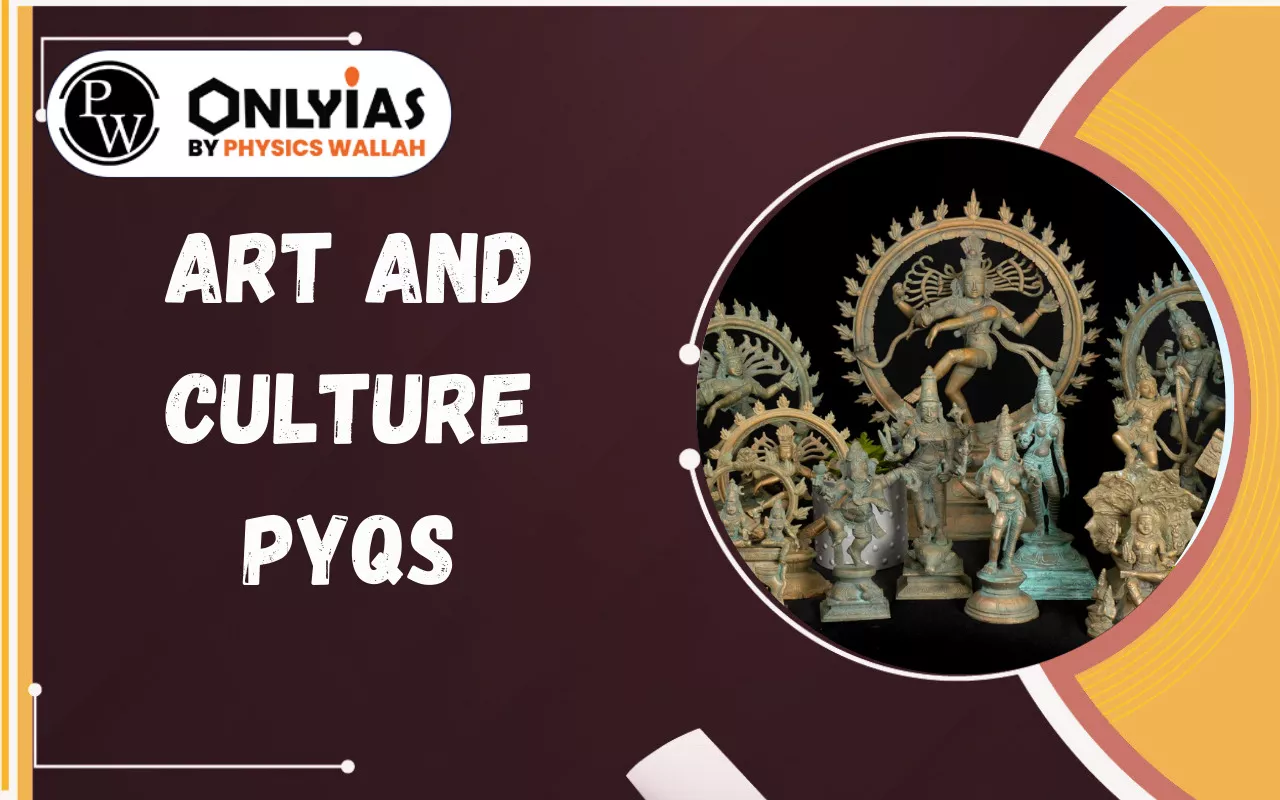
Art and Culture PYQs Last 30 Years Analysis for UPSC Prelims 2026

Indian Art and Culture is one of the most important yet often misunderstood areas of the UPSC Prelims syllabus. While the official syllabus only mentions “History of India and the Freedom Struggle”, the actual exam consistently includes questions from cultural topics such as architecture, paintings, literature, dance forms, Buddhism, and Jainism.

This is why analysing Art and Culture Last 30 Years PYQs becomes extremely important. PYQ analysis helps aspirants understand the real scope of the syllabus and the topics UPSC repeatedly focuses on.

Over the past three decades, around 88–90 questions have been asked from Art and Culture. This means that on average 3–5 questions appear every year, making it a small but highly scoring section.

Indian Art and Culture 

Indian Art and Culture, though not explicitly detailed in the UPSC Prelims syllabus, consistently forms a vital component of the History section. Analyzing 30 years of Previous Year Questions (PYQs) is crucial for decoding core themes and question patterns, enabling aspirants to prioritize study areas and prepare strategically for this high-scoring segment.

Why Analysing Art and Culture PYQs Last 30 Years is Important

Analyzing Art and Culture Last 30 Years PYQs across all subjects, with a specific focus on Indian Art and Culture, reveals its critical importance:

1. Understanding the Real UPSC Syllabus

The official UPSC syllabus does not clearly mention Art and Culture topics. However, PYQ analysis reveals that this section consistently appears in the exam.

2. Identifying Important Themes

When aspirants analyse questions from previous papers, it becomes easier to identify recurring themes such as architecture, Buddhism, literature, and paintings.

3. Strategic Preparation

Instead of studying everything randomly, PYQ trends help candidates focus on high-probability topics that UPSC prefers.

Also Read | UPSC Result 2025

4. Understanding Question Patterns

UPSC often repeats themes but changes the framing of the question. By analysing PYQs, aspirants can understand how the exam tests conceptual clarity.

Key Topics in Art and Culture PYQs Last 30 Years 

Based on 30 years of UPSC PYQs, the following important themes effectively define the Art and Culture syllabus:

  • Indian Architecture: Covers Ancient, Medieval, and Modern Indian architecture.
  • Temple Architecture: Deliberately separated due to its significant weightage.
  • Indian Paintings
  • Indian Music
  • Indian Dance Forms
  • Martial Arts of India
  • Cultures in India (Generic): A broad category for regional languages, literature, calendars, and coins.
  • Literature
  • Buddhism & Jainism: Highly important due to overlap with Ancient and Medieval History.
  • Science & Technology in Ancient India
  • Sculptures

Priority Topics: Question Count (Last 30 Years)

The number of questions asked from each topic shows which areas are most important.

Priority Topics: Question Count (Last 30 Years)
Topic Questions Asked
Buddhism & Jainism 27
Cultures in India (Generic) 18
Literature 10
Indian Architecture 8
Temple Architecture 6
Indian Paintings 5–6
Indian Dance Forms 5
Science & Technology in Ancient India 2–3
Sculptures 2
Indian Music 2
Martial Arts of India 1

  • Total Questions in 30 Years: Approximately 88–90
  • From this distribution, it becomes clear that Buddhism and Jainism is the most important topic in this section.

Also Read | UPSC Optional PYQs

Indian Architecture PYQ Analysis

UPSC frequently asks questions on specific architectural sites, their features, and locations.

  • Ashoka’s Major Rock Edicts: Questions test knowledge of correct matching of edicts with their locations (e.g., Dhauli – Odisha, Eragudi – Andhra Pradesh).
  • Somnath Temple (2022): Important facts include its status as a Jyotirlinga and historical descriptions by Al Biruni. The Pran Pratishtha of the present temple was done by Dr. Rajendra Prasad.
  • Cave Locations: Aspirants must know the specific locations of caves and stupas (e.g., Ajanta Caves in the gorge of the Waghora River, Sanchi Stupa west of Betwa River, Pandulena Caves on Gomati River, Amaravati Stupa on Krishna River).
  • Building Materials in Architecture: Questions can focus on the primary building materials of monuments. For example, Buland Darwaza is primarily of red sandstone, not white marble. Bada Imambara is constructed using bricks, not marble.
  • Ajanta and Mahabalipuram Comparison: Both are famous for rock-cut monuments. However, they were built in different periods (Ajanta from 2nd Century BCE, Mahabalipuram from 7th-8th Century CE) and belong to different religious denominations (Ajanta – Buddhism, Mahabalipuram – Shaivism and Vaishnavism).
  • Famous Sculptures and Sites: Knowledge of where specific sculptures are located is tested (e.g., Buddha’s Mahaparinirvana at Ajanta, Arjuna’s Penance or Descent of Ganga at Mahabalipuram). The Varaha Avatar sculpture is at Udaygiri, not Mount Abu.
  • Ibadatkhana at Fatehpur Sikri: It was The Hall in which Akbar held discussions with scholars of various religions. Akbar, an illiterate monarch, established it to understand different faiths and foster harmony.
  • History of Indian Rock-Cut Architecture: The earliest rock-cut architecture in India began in the Mauryan Period (3rd Century BCE) with Ashoka and Dasharatha for Ajivikas (Barabar and Nagarjuni Hills). The caves at Badami date to 6th Century CE. Ellora Caves were made for different faiths (Hinduism, Buddhism, and Jainism).
    • Ashoka and Akbar are two very important personalities whose architectural contributions and developments should be studied carefully.

Temple Architecture: PYQ Analysis

  • 64 Yogini Temple, Morena: This is a circular temple constructed during the Kachchhapaghata Dynasty. It is not the only circular temple in India and was a Shaktipeeth, not for the Vaishnava cult. Its design inspired the Indian Parliament’s old building.
  • Kalyan Mandapa: These mandapas, used for divine marriages, were a notable feature of Vijayanagara Empire temple architecture.
  • Sun Temples in India: Arasavalli in Andhra Pradesh is a Sun Temple. Amarkantak and Omkareshwar (both in Madhya Pradesh) are not Sun Temples.
  • Chronology of Ancient Indian Structures: The Rock-cut Elephant at Dhauli (3rd Century BC, Ashoka) is earlier than Lingaraja Temple (11th Century AD), Mahabalipuram Monuments (7th-8th Century AD), and Varaha Temple at Udayagiri (5th Century AD).
  • Panchayatana Style of Temple Construction: In this Nagara style of temple construction, a chief shrine is in the center, surrounded by four subsidiary shrines.
  • Major Styles of Temple Architecture:
    • Nagara Style: Prevalent in North India.
    • Dravida Style: Prevalent in South India.
    • Vesara Style: A synthesis of both, found in Central India.

Indian Paintings and Sculptures PYQs Analysis

  • Bani Thani Painting: Belongs to the Kishangarh School of Painting (Rajput school). The artist is Nihal Chand. It is an Indian miniature art form, depicting a “Fashion Lady” with elongated eyes.
  • Bodhisattva Padmapani Painting: One of the most famous illustrations, found in Ajanta Cave Number 1.
  • Kalamkari Painting: Refers to hand-painted cotton textiles from Andhra Pradesh and Telangana. (Memory Tip: “Kalam” means “pen,” referring to the drawing technique.)
  • Mural Paintings vs. Miniature Paintings: Mural paintings are large-scale artworks on solid surfaces like rocks or walls (e.g., Ajanta, Lepakshi). Miniature paintings are small-scale artworks. Sanchi Stupa is known for sculptures, not paintings.
  • Gupta Period Cave Paintings: The two known examples are Ajanta Caves and Bagh Caves. Ellora Caves were developed during the Rashtrakutas period.
  • Gandhara Sculpture: Invariably used green schist as the medium and is famous for Greco-Roman influences.
  • Chola Bronze Icons (Nataraja): Lord Shiva (Nataraja) is depicted with four hands, symbolizing creation (damaru), destruction (flame), and preservation (reassurance gesture).

Indian Music and Dance Forms PYQs Analysis

  • Tyagaraja’s Kritis: Mostly devotional songs in praise of Lord Rama. Tyagaraja created several new ragas.
  • Dhrupad Tradition: Has a Vedic origin, stemming from Samaveda hymns. It is primarily devotional and spiritual, with its alap utilizing Sanskrit syllables from mantras.
  • Manipuri Sankirtana: A song and dance performance using cymbals, tabla, and drums, performed to narrate the life and deeds of Lord Krishna.
  • Sattriya Dance: A combination of music, dance, and drama, a centuries-old living tradition of the Vaishnavites of Assam, based on devotional songs by Shankar Deva and Mahadeva.
  • Indian Dance Forms and Their Origins: Garba (Gujarat), Mohiniattam (Kerala), Yakshagana (Karnataka).
  • Tribhanga Pose: A pose in dance with three bends in the body, exemplified by the Dancing Girl from the Indus Valley Civilization.
  • Distinguishing Kuchipudi and Bharatanatyam: Kuchipudi dancers occasionally speak dialogues and dance on brass plate edges, unlike Bharatanatyam.

Martial Arts of India PYQs Analysis

  • Kalaripayattu: An ancient martial art and living tradition primarily practiced in Kerala.

Literature in Ancient India PYQs Analysis

  • Sangam Literature: Explores themes of love and war, contains references to material culture and social classification (Varna), and refers to warrior ethics. Aham and Puram poems are significant forms.
  • Yogavasistha Translation: Translated into Persian by Nizamuddin Panipati during the reign of Akbar.
  • Malavikagnimitram: An ancient Indian book by Kalidasa, a drama narrating the love story of Agnimitra and Malavika, exploring love and morality.
  • Mrichchhakatika (The Little Clay Cart): Written by Shudraka, a love story of Charudatta and Vasantasena, depicting urban life.
  • Mudrarakshasa: Written by Vishakhadatta, focuses on court intrigues during Chandragupta Maurya’s time, detailing Chanakya’s role in overthrowing Dhana Nanda.
  • Important Authors and Texts:
    • Śūdraka: Mṛcchakaṭika
    • Ashvaghosha: Buddhacharita
    • Vishakhadatta: Mudrarakshasa
    • Banabhatta: Harshacharita
    • Varahamihira: Brihat Samhita
    • Bilhana: Vikramankadeva Charita
  • Ancient Indian Scripts: Kharosthi Script is written from right to left, notable in Ashokan inscriptions.
  • Upanishads: Kathopanishad: Features the dialogue between Nachiketa and Yama, part of the Yajurveda, exploring the nature of death and the soul.
  • Buddhist Texts: Milindapanho: A dialogue between King Menander and the Buddhist monk Nagasena.
  • Ancient Indian Law and Governance: Arthashastra: By Kautilya (Chanakya), a treatise on statecraft, allowing a wife the right to divorce if deserted.
  • Bijak: A composition of the teachings of Sant Kabir.
  • Pushtimarg Philosophy: Propounded by Vallabhacharya.
  • Satyameva Jayate: The national motto, derived from the Mundaka Upanishad. (Memory Tip: Differentiate Mundaka Upanishad from Mandukya Upanishad.)

Ancient Indian Philosophy PYQs Analysis

  • Six Systems of Indian Philosophy: Mimamsa, Vedanta, Nyaya, Vaisheshika, Samkhya, Yoga. Lokayata and Kapalika are not part of these orthodox systems.
  • Samkhya Philosophy: Accepts the theory of rebirth and believes self-knowledge leads to liberation.
  • Mimamsa Philosophy: Liberation is possible through karma and performance of rituals.

Buddhism and Jainism PYQs Analysis

  • Buddhism: The Eightfold Path: From Buddha’s first sermon at Sarnath, it is the “middle path” to Nirvana (salvation), overcoming suffering (Four Noble Truths).
  • Buddhist Philosophy: Paramitas: States of perfection that lead to Nirvana or the Bodhisattva path. Bodhisattvas delay their Nirvana to help others.
  • Buddhist Schools: Mahasanghika is a precursor to Mahayana Buddhism, characterized by the deification of Buddha. Sthaviravada is a precursor to Hinayana Buddhism.
  • Mahayana Buddhism: Core Features: Influenced by Hinduism, it involves deification of Buddha, the Bodhisattva Path (savior concept), and image worship with rituals.
  • Buddhism: The Future Buddha: In Mahayana Buddhism, the future Buddha is Maitreya.
  • Buddhist Schools: Sarvastivadin Philosophy: Contradicts original Buddhist philosophy, holding that constituents of phenomena exist forever in a latent form, implying permanency.
  • Buddhism: The Bodhisattva Concept: Central to Mahayana Buddhism, where a compassionate being delays achieving their own Nirvana to help others.
  • Life of Buddha: Associated Kingdoms: Directly associated with Kosala and Magadha.
  • Buddhist Monasteries and Caves: Chaityas and Viharas: Viharas were residential dwellings, while Chaityas were rock-cut places of worship.
  • Buddhism: The Concept of Nirvana: The extinction of the flame of desire, a state of perfection leading to liberation from suffering, as desire causes suffering (dukkha).
  • Buddhist Iconography: Bhumisparsha Mudra: Buddha sits with his right hand touching the earth, symbolizing his calling the Earth as a witness to his purity and enlightenment against Mara’s temptations.
  • Buddhist Monastic Practices: Pavarana: A ceremony where monks confess offenses committed during the monsoon retreat for purification.
  • Buddhist Councils: Fourth Buddhist Council: Held in Kashmir during Kanishka’s reign, presided by Vasumitra, with Ashvaghosha as vice-president. (Memory Tip: Mnemonic for Buddhist Council Presidents: M-S-M-V-A for the first four councils.)
  • Jain Doctrine: Karma, Soul, and Asceticism: The surest way to annihilate karma (considered a bondage) is through penances (asceticism). Jainism believes every object possesses a soul.
  • Jain Philosophy: Concept of God and Universe Creation: Jainism does not accept God as the creator of the universe, believing it is created and maintained by universal laws.
  • Jain Philosophy: Anekantavada and Syadvada: Anekāntavāda is a theory of plurality and non-absolutism, stating a single thing can have multiple perspectives.
  • Jainism: Anuvrata and Mahavrata: Anuvrata (Lesser Vows) are for lay followers; Mahavrata (Great Vows) are stricter and for Jaina monks. Both include non-violence, truthfulness, non-stealing, and non-possession.
  • Jainism and Agriculture: Non-violence Principle: Jainism’s extreme emphasis on non-violence (Ahimsa) prevented agriculturalists from embracing it, as farming involves killing microorganisms.
  • Jainism’s Spread in South India: Primarily under Bhadrabahu during a famine in Magadha, leading to the Digambara (sky-clad) sect. Jains who remained in Magadha under Sthulabhadra became Śvetāmbaras (white-clad).
  • Common Elements between Buddhism and Jainism: Both show indifference to the authority of the Vedas, deny the efficacy of rituals, and emphasize non-injury to animals (Ahimsa). However, Buddhism advocates a middle way, while Jainism emphasizes rigorous asceticism.

Check Out UPSC CSE Books

Visit PW Store

online store 1

Ancient Indian Science & Technology PYQs Analysis

  • Mathematics: Baudhayana Sulbasutras: Relates to the lengths of the sides of a right-angled triangle, outlining principles similar to the Pythagorean theorem, predating Pythagoras.
  • Authors and Fields:
    • Vishakhadatta: Drama
    • Varahamihira: Astronomy
    • Charaka: Medicine
    • Brahmagupta: Mathematics
  • Medicine: Sushruta: An ancient Indian physician, regarded as the Father of Surgery.

Ready to boost your UPSC 2026 preparation? Join PW’s UPSC online courses today!

 

Frequently Asked Questions

What is the significance of PYQ analysis for Indian Art and Culture in UPSC Prelims?

PYQ analysis is crucial for decoding the unstated UPSC syllabus for Art and Culture, identifying consistent themes and question patterns, and strategically prioritizing high-weightage topics like Architecture, Buddhism, Jainism, Paintings, and Dance Forms for effective preparation.

Which topics within Indian Art and Culture have the highest priority based on UPSC PYQs?

Based on 30 years of PYQs, Buddhism & Jainism is the most important section with 27 questions. Other high-priority themes include Cultures in India (Generic), Literature, Indian Architecture, Temple Architecture, Indian Paintings, and Indian Dance Forms.

What was the purpose of the Ibadatkhana built by Emperor Akbar?

The Ibadatkhana at Fatehpur Sikri was a hall where Emperor Akbar held discussions with scholars from various religions. Its purpose was to understand different faiths, find common ground, and foster harmony among communities.

What are the three major styles of Indian temple architecture?

The three major styles are the Nagara Style (prevalent in North India), the Dravida Style (prevalent in South India), and the Vesara Style (a synthesis of both, found primarily in Central India).

What is the core concept of the Bhumisparsha Mudra in Buddhist iconography?

The Bhumisparsha Mudra, where Buddha's right hand touches the earth, symbolizes his calling the Earth as a witness to his purity and enlightenment. It signifies his victory over temptations and attainment of ultimate knowledge under the Bodhi tree.

Art and Culture PYQs Last 30 Years Analysis for UPSC Prelims 2026

Need help preparing for UPSC or State PSCs?

Connect with our experts to get free counselling & start preparing

Aiming for UPSC?

Download Our App

      
Quick Revise Now !
AVAILABLE FOR DOWNLOAD SOON
UDAAN PRELIMS WALLAH
Comprehensive coverage with a concise format
Integration of PYQ within the booklet
Designed as per recent trends of Prelims questions
हिंदी में भी उपलब्ध
Quick Revise Now !
UDAAN PRELIMS WALLAH
Comprehensive coverage with a concise format
Integration of PYQ within the booklet
Designed as per recent trends of Prelims questions
हिंदी में भी उपलब्ध

<div class="new-fform">


    </div>

    Subscribe our Newsletter
    Sign up now for our exclusive newsletter and be the first to know about our latest Initiatives, Quality Content, and much more.
    *Promise! We won't spam you.
    Yes! I want to Subscribe.