Books

 11 Apr 2026

Rising sea surface temperatures in March 2026 indicate increasing probability of El Niño, signalling potential global warming and weather disruptions.
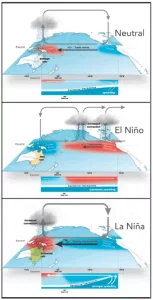
| Aspect | El Niño | La Niña |
| Ocean Temperature | Warmer than normal | Cooler than normal |
| Trade Winds | Weakened | Strengthened |
| Indian Monsoon | Generally weaker | Generally stronger |
| Impact on India | Heatwaves, droughts | Floods, cyclones |
| Fisheries (Peru coast) | Decline due to reduced upwelling | Increase due to strong upwelling |
Check Out UPSC CSE Books
Visit PW Store
Explore UPSC Test Series



.png)


Explore SRIJAN Prelims Crash Course



Connect with our experts to get free counselling & start preparing
Books
Udaan (Prelims Wallah)
Prahaar (Mains Wallah)
Q&A Bank (Prelims & Mains)
Budget & Economic Survey
NCERT Wallah
Marks Booster
हिंदी माध्यम विशेष शृंखला
 Current Affairs
Monthly Current Wallah
Subject Wise Current Affairs
Editorial Analysis
Editorial PDFs
News of The Day
Download Our App



Download Our App
<div class="new-fform">
</div>

 GS Foundation
 Optional Course
 Combo Courses
 Degree Program