India–Iran relations, established on 15 March 1950 through a Treaty of Friendship, entered their 75th year in 2026.
- The January 2026 visit of Iranian Foreign Minister Abbas Araghchi to India inaugurated year-long anniversary celebrations.
Background of India–Iran Relations
- Civilisational Foundations- Pre-1947 Period: India–Iran relations are rooted in deep civilisational links, marked by shared Indo-Iranian heritage, sustained cultural exchange, and people-to-people contacts that predate modern nation-states by centuries.
- Common Indo-Iranian Heritage: Both societies trace their origins to Aryan civilisation. Strong similarities between the Rigveda (India) and the Avesta (Iran) show shared linguistic and religious roots.
- Persian Cultural Influence in India: For nearly 800 years, Persian was the language of administration, courts, and culture in India. This shaped literature such as Sabk-e-Hendi and influenced Urdu, Hindi, and Punjabi.
- Architectural and Artistic Exchange: During the Mughal period, Persian and Indian styles blended, seen in monuments like the Taj Mahal, symbolising cultural integration.
- Parsi Connection: The Parsi (Zoroastrian) community, which migrated from Persia to India, continues to act as a cultural and social bridge between the two countries.
- Formal Diplomatic Phase- 1950–1979: This phase marked the start of modern state-to-state relations, shaped by Cold War politics.
- Treaty of Friendship (1950): India and Iran formally established diplomatic relations on 15 March 1950 through a Treaty of Friendship.
- Cold War Differences: Iran joined the Central Treaty Organisation (CENTO) led by the United States, while India followed the policy of Non-Alignment and maintained close ties with the Soviet Union, creating diplomatic distance.
- Central Treaty Organisation (CENTO): A Cold War security alliance formed in 1955 (as the Baghdad Pact) to check Soviet expansion in West and South Asia.
- It comprised Turkey, Iran, Pakistan, and the UK, with the US as a key supporter. Lacking a strong military structure, it weakened after Iraq’s exit (1959) and dissolved in 1979 after Iran’s withdrawal.
- Pakistan Factor: Iran’s closer relations with Pakistan during this period sometimes caused friction with India.
- Early Economic Cooperation: Despite political differences, Prime Minister Indira Gandhi’s 1974 visit to Iran helped initiate cooperation in the energy sector.
- Post-Revolution Reset-: 1979–2000s: The 1979 Islamic Revolution in Iran changed the nature of bilateral relations.
-
- Early Recognition by India: India was among the first countries to recognise the new Iranian government, helping maintain continuity in relations.
- Convergence on Afghanistan: In the 1990s, both countries opposed the Pakistan-backed Taliban and supported the Northern Alliance, leading to closer strategic cooperation.
- Strategic Agreements:
- Tehran Declaration (2001): Signed during Prime Minister Atal Bihari Vajpayee’s visit, it described the relationship as a strategic partnership.
- New Delhi Declaration (2003): Signed during Iranian President Mohammad Khatami’s Republic Day visit, it expanded cooperation in energy, trade, and connectivity, including the early vision of Chabahar Port.
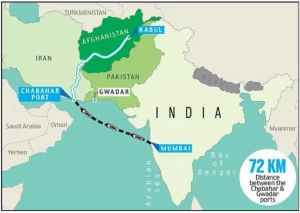
- Chabahar Port and its Role in Countering CPEC:
- Chabahar Port serves as a functional alternative to the China–Pakistan Economic Corridor (CPEC), a project strategically important for India to bypass Pakistan, ensuring direct access to Afghanistan and Central Asia.
- This reduces India’s dependence on overland routes through Pakistan, offering a reliable and secure trade route
|
- Contemporary Phase- Strategic Pragmatism in the 21st Century: Recent relations reflect practical cooperation despite global challenges.
-
- Managing International Sanctions: India continued engagement through oil imports, alternative payment systems, and diplomatic balancing.
- Connectivity and Trade: The 2016 Trilateral Agreement between India, Iran, and Afghanistan developed Chabahar Port as a gateway to Central Asia and Eurasia, bypassing Pakistan.
- Multilateral Cooperation: India supported Iran’s entry into the Shanghai Cooperation Organisation (SCO) and BRICS (Brazil, Russia, India, China, South Africa) during 2023–24, aligning with India’s Act West Policy.
Significance of India–Iran Bilateral Relations
- Geostrategic Importance- India’s Gateway to Eurasia: Iran’s geography is central to India’s continental and connectivity strategy, especially due to the lack of land access through Pakistan.
 Chabahar Port: After the 10-year operational agreement signed in May 2024, Chabahar has emerged as a functional alternative to the China–Pakistan Economic Corridor (CPEC).
- By 2026, it serves as a key hub for Indian exports to Afghanistan and Central Asia, strengthening India’s regional presence.
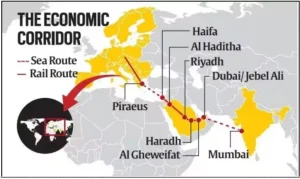
- International North–South Transport Corridor (INSTC): Iran is the core node of the 7,200-kilometre multimodal INSTC, connecting Mumbai (India) to Moscow (Russia).
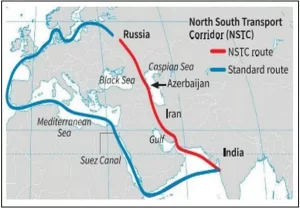 The INSTC improves India’s competitiveness in Eurasian markets, reducing freight transit time by nearly 40% compared to the Suez Canal route, enhancing India’s connectivity to Europe and Russia.
- Strategic Depth in Afghanistan: Access through Iran enables India to bypass Pakistan, deliver humanitarian assistance, and retain strategic engagement in Afghanistan to counter radicalism and instability.
- Energy Security and Economic Resilience: Despite constraints due to United States sanctions, the relationship has adapted towards long-term resilience, especially during the 75th year of ties (2025–26).
- Diversified Trade Basket: India has emerged as one of Iran’s top five trading partners. Indian exports include Basmati rice, tea, sugar, and pharmaceuticals, while imports focus on chemicals, fertilisers, and dry fruits.
- Alternative Financial Mechanisms: To reduce dependence on the United States dollar, both sides have strengthened Rupee–Rial trade and explored local payment systems, including the proposed Unified Payments Interface (UPI)–Shetab linkage, enhancing sanction-proof trade.
- Natural Gas Potential: Iran holds the world’s second-largest natural gas reserves. India views Iran as critical for its clean energy transition, with renewed interest in the Farzad-B gas field.
- Multilateral Cooperation and Global South Leadership: India–Iran engagement has expanded through shared platforms beyond the Western-led order.
- BRICS and Shanghai Cooperation Organisation (SCO): With India’s support, Iran became a full member of BRICS (Brazil, Russia, India, China, South Africa) and the Shanghai Cooperation Organisation (SCO). These platforms allow both countries to advocate multipolarity, Global South interests, and reduced reliance on the dollar.
- Counter-Terrorism Cooperation: Through the SCO Regional Anti-Terrorist Structure (RATS), India and Iran coordinate against threats from groups such as Islamic State–Khorasan Province (ISIS-K) and Al-Qaeda.
- Strategic Autonomy and Diplomatic Balancing: Perhaps the most important significance lies in India’s ability to manage complex geopolitics.
- Independent Foreign Policy: Celebrating 75 years of relations with Iran, despite close partnerships with the United States and Israel, reflects India’s commitment to strategic autonomy and issue-based diplomacy.
- Regional Stabilising Role: India often plays a bridge role between Iran and Western powers, while consistently advocating maritime security in the Strait of Hormuz, a vital chokepoint for India’s energy imports.
- Also, India balances relations with Iran, Israel, Saudi Arabia, and Pakistan, ensuring strategic cooperation without compromising regional security.
Challenges in India–Iran Bilateral Relations
- Geoeconomic Constraints: The primary hurdle remains the extraterritorial impact of the US “Maximum Pressure” Policy (2025).
- The “Maximum Pressure” policy denotes the US strategy of intensified extraterritorial sanctions, revived in 2025, to economically isolate Iran and compel policy change.
- By targeting banking, energy, and trade networks, it disrupts third-country engagement, constraining India–Iran economic cooperation despite limited exemptions.
- Energy Trade Erosion: Iran’s share in India’s oil basket has dropped from 11% (2018-19) to near zero. This has weakened the economic interdependence that once anchored the relationship.
- Banking & Payment Bottlenecks: The absence of a robust Rupee-Rial mechanism has caused payment delays of 6–8 months for Indian exporters (Basmati rice/pharma), discouraging private sector engagement.
- Chabahar Uncertainty: Despite a 10-year operational contract (signed May 2024), the port remains under short-term sanction waivers (valid till April 2026). This creates “sanction fatigue” among global shipping lines and insurers.
- Strategic Dilemma: India is increasingly caught in a diplomatic tightrope between its strategic partners.
- The Israel-Iran Escalation (2025-26): Rising tensions force India to balance its deep defense-tech partnership with Israel against its connectivity and energy interests in Iran.
- Strait of Hormuz Vulnerability: With 80% of India’s crude imports transiting this maritime chokepoint, India’s energy security is tied to regional stability.
- India’s Operation Sankalp, deployed in the Strait of Hormuz, is critical for securing vital energy routes, as nearly 80% of India’s crude imports pass through this maritime chokepoint.
- This naval presence reflects India’s regional leadership in maritime security, ensuring stability in the Persian Gulf.
- Nuclear Diplomacy: While India supports Iran’s peaceful nuclear energy, it remains committed to global non-proliferation, which is key to maintaining the India-US Strategic Partnership.
- The “China Factor”: China’s growing footprint in the region threatens India’s “Extended Neighbourhood” outreach.
- Strategic Asymmetry: The China-Iran 25-Year Strategic Agreement ($400 billion) provides Iran with a financial lifeline that India, constrained by sanctions, cannot match.
- Gwadar vs. Chabahar: Iran’s willingness to link its infrastructure with the China-Pakistan Economic Corridor (CPEC) risks diluting India’s strategic advantage of bypassing Pakistan.
- Implementation Gaps: India’s regional credibility is often tested by glacial project implementation.
- Railway Setbacks: India’s exit from the Chabahar-Zahedan railway due to “sanction risks” signaled a lack of strategic risk-taking.
- Administrative Inertia: Slow fund disbursal and equipment supply from Indian agencies have caused periodic friction, leading Iran to occasionally seek alternative partners like China.
- Domestic Instability: Iran’s internal situation has emerged as a major operational risk.
-
- Economic Crisis: With the Rial’s collapse and inflation exceeding 40%, widespread protests have shifted Iran’s focus to internal security rather than regional projects.
- Operational Disruptions: Security restrictions and internet shutdowns have physically slowed work at the Shahid Beheshti Terminal, impacting trade logistics.
Areas of Cooperation between India & Iran
- Energy and Natural Resources Cooperation:
- Crude Oil and Gas: Iran has historically been a key crude oil supplier to India. India continues to explore long-term energy engagement, including prospects linked to the Farzad-B gas field (over 21 trillion cubic feet reserves), aligning with India’s energy diversification and cleaner fuel transition.
- Fertilisers and Minerals: Iran supplies fertilisers, petrochemicals, chemicals, and minerals, which are critical inputs for India’s agriculture and food security, especially amid global supply disruptions.
- Joint Ventures in Petrochemicals: Collaboration in urea and petrochemical plants leverages Iran’s abundant natural gas, helping India secure affordable fertiliser inputs and reduce import vulnerability.
- Trade and Economic Cooperation:
- Bilateral Trade Profile: India remains among Iran’s top trading partners, exporting Basmati rice, pharmaceuticals, tea, sugar, and agricultural products, while importing essential raw materials.
- Shift towards Non-Oil Trade: Recent years have seen growth in non-oil and essential goods trade, reflecting a gradual diversification away from hydrocarbons.
- Alternative Payment Mechanisms: To ensure sanctions-resilient trade, both sides have strengthened the Rupee–Rial mechanism and are exploring UPI–Shetab integration, reducing dependence on dollar-based systems.
- Private Sector Engagement: Indian private firms contribute to technology transfer, infrastructure development, pharmaceuticals, IT services, and consumer goods, sustaining economic ties despite external constraints.
- Connectivity and Strategic Infrastructure:
- Chabahar Port: A cornerstone of cooperation, Chabahar provides India direct access to Afghanistan, Central Asia, and Eurasia, bypassing Pakistan. Its integration into a Special Economic Zone (SEZ) is expected to attract Indian manufacturing and logistics investments.
- International North–South Transport Corridor (INSTC): The eastern route via Iran connects Indian ports to Russia and Europe, cutting transit time by nearly 40% compared to the Suez route, enhancing India’s continental connectivity strategy.
- Rail and Road Connectivity: Projects such as the Chabahar–Zahedan railway and associated road networks improve trade efficiency, regional integration, and hinterland access.
- Trilateral and Alternative Corridors: Initiatives like the India–Iran–Armenia corridor explore access to Europe via the Black Sea, bypassing geopolitically sensitive zones.
- Strategic and Defence Cooperation:
- Maritime Security: Cooperation in the Strait of Hormuz and Gulf of Oman safeguards critical sea lanes, energy flows, and Indian diaspora interests.
- Counter-Terrorism and Regional Stability: Both countries share concerns over terrorism, radicalisation, and regional instability, particularly emanating from Afghanistan.
- Afghanistan Coordination: India and Iran work to stabilise Afghanistan, prevent it from becoming a terror safe haven, and facilitate humanitarian assistance through the Chabahar–Milak–Zaranj corridor.
- Strategic Dialogues: Regular high-level consultations reinforce convergence on West Asian security architecture and regional balance.
- Science, Technology, and Education Cooperation:
- Capacity Building: Collaboration spans pharmaceuticals, space technology, higher education, and scientific research, supporting knowledge transfer and innovation.
- Technology and Space Cooperation: Potential areas include satellite launches, IT infrastructure, digital technologies, and space research, aligning with India’s growing technological footprint.
- Academic Exchanges: Scholarships, joint research projects, and university partnerships strengthen institutional and people-centric cooperation.
- Cultural and Civilisational Diplomacy:
- Language and Literary Ties: Recognition of Persian (Farsi) as a Classical Language under India’s National Education Policy (2020) has led to new Persian studies centres, reviving historic intellectual linkages.
- Parsi and Zoroastrian Heritage: Engagement on shared Zoroastrian roots strengthens civilisational diplomacy and promotes heritage tourism and research.
- People-to-People Exchanges: Initiatives such as reciprocal visa facilitation, cultural festivals, and academic collaboration deepen societal links.
- 75th Anniversary of Diplomatic Relations (2026): Celebrations emphasise soft power diplomacy, cultural exchange, and historical continuity.
- Humanitarian and Educational Cooperation:
- Humanitarian Assistance: India supports Iran during natural disasters and humanitarian crises, reinforcing trust and goodwill.
- Education Support: Scholarships and facilitation for Iranian students in Indian institutions strengthen long-term people-centric ties.
- Multilateral and Global Engagement:
-
- BRICS and SCO Cooperation: India supported Iran’s full membership in BRICS and the Shanghai Cooperation Organisation, enhancing coordination on Global South priorities, multipolarity, and de-dollarisation.
- Regional and Global Forums: Both engage in platforms addressing energy security, connectivity, regional peace, and economic resilience.
- Global Governance Reform: India and Iran advocate reforms in multilateral institutions such as the UN Security Council and international financial institutions, reflecting shared interests of the developing world.
Way Forward
- Embed Sanctions‑Resilient Trade Mechanisms:
- Fortify Financial Infrastructure: Institutionalize and scale up innovative payment arrangements such as the UPI–Shetab linkage and develop a robust Rupee–Rial settlement channel for essential non-restricted goods (e.g., medicines, agricultural inputs), reducing reliance on the US dollar system.
- Non‑US‑Exposed Entity: Conceptualize a dedicated trade vehicle or financial unit insulated from US jurisdiction, focused on facilitating bilateral exchange and mitigating exposure to secondary sanctions.
- Operationalize Strategic Connectivity:
- Complete Priority Corridors: Expedite the Chabahar–Zahedan rail link and integrate it fully into Iran’s national rail grid and onward to the International North–South Transport Corridor (INSTC), solidifying India’s overland access to Central Asia and beyond.
- Expand Alternative Routes: Strengthen multilateral land-sea connections, including cooperation with Armenia and other partners, to diversify transit pathways to Europe and Central Asia, regardless of maritime bottlenecks.
- Diplomatic and Regional Calibration:
- Proactive Diplomacy: In the face of regional tensions, sustain high-level dialogue and quiet diplomacy to protect long-term infrastructure commitments, while staying responsive to shifting security dynamics.
- Multilateral Advocacy: Harness India’s voice in BRICS+ and the Shanghai Cooperation Organisation (SCO) to promote the idea of connectivity as a shared global good, insulated from unilateral economic coercion.
- Broaden Partnership Scope:
- Trade Diversification: Move beyond traditional commodity exchanges to deepen cooperation in advanced sectors such as pharmaceutical R&D, biotechnology, and high-value agro outputs, generating resilient export streams.
- Joint Research and Innovation: Initiate collaborative science and technology projects, knowledge exchange platforms, and industry–university programs to build sustained economic complementarities.
- Cultural Bridges and Soft Power:
- Civilisational Engagement: Deploy cultural diplomacy by expanding Persian language initiatives, inter-university collaborations, and shared digital archiving projects, strengthening long-term societal linkages.
- Facilitated People-to-People Ties: Explore simplified visa regimes or reciprocal travel facilitation to enhance educational, research, and tourism engagement between the two societies.
- Geopolitical Balancing and Risk Management:
- Sanctions Navigation: While preserving strategic autonomy, maintain open channels with the US and other powers to negotiate durable arrangements that safeguard critical projects like Chabahar.
- China and Regional Balancing: Use multilateral platforms to balance external influences, ensuring India’s connectivity and energy interests are not undermined by geopolitical rivalries.
- Protect Operational Continuity: Proactively monitor social and political developments in Iran to secure Indian interests, personnel, and investments during internal instability.
- Institutionalize Strategic Cooperation:
-
- Strategic Council: Establish a joint bilateral strategic council tasked with annual reviews, performance tracking, and coordinated action across trade, transport, energy, and security domains.
- Regular High-Level Engagement: Institutionalize mechanisms for ministerial consultations and working-group meetings to sustain momentum and resolve operational bottlenecks.
Conclusion
India–Iran relations, rooted in civilisational ties and strengthened by strategic connectivity, energy cooperation, and regional engagement, remain vital despite sanctions, regional tensions, and domestic instability, requiring pragmatic diplomacy and long-term strategic planning.
PWOnlyIAS Extra Edge:
About Iran
- Location: Iran is a West Asian country situated in the Northern and Eastern Hemispheres.
- It lies at the crossroads of Central Asia, the Caucasus, and the Middle East, with extensive coastlines along the Persian Gulf to the south and the Caspian Sea to the north.
- Capital: Tehran
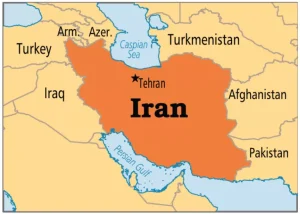 Borders: Borders:
- Turkey – West
- Iraq – West
- Armenia – Northwest
- Azerbaijan – Northwest
- Turkmenistan – Northeast
- Afghanistan – East
- Pakistan – Southeast
- Physical Geography:
- The Zagros Mountains form a major mountain range running along the western edge of the country.
- Mount Damavand is the highest peak in Iran and the highest volcano in Asia.
- The Euphrates River flows through the western regions, while the Karun River is the longest river in Iran.
- Iran is also home to large desert regions, including the Dasht-e Kavir (Great Salt Desert) and Dasht-e Lut (Lut Desert), both of which dominate the central and eastern parts of the country.
- Significant Features:
- Iran’s strategic location places it at the heart of global energy trade, controlling vital maritime chokepoints such as the Strait of Hormuz, through which nearly one-third of global oil shipments pass.
- Rich in historical heritage, Iran has been a pivotal player in the Persian Empire and continues to influence the region politically, economically, and culturally.
- Iran plays a central role in regional geopolitics, especially in issues concerning energy security, military influence, and regional stability.
|


 9 Jan 2026





.png)






 Current Affairs




 GS Foundation
 Optional Course
 Combo Courses
 Degree Program