India–Germany Bilateral Relations

14 Jan 2026

India–Germany Bilateral Relations

The German Federal Chancellor Friedrich Merz visited India for a two-day official trip.
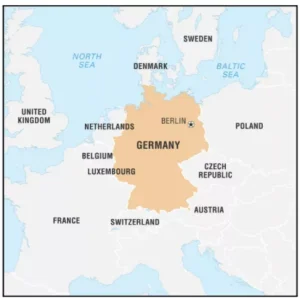
  • During the visit, both countries signed and exchanged key agreements in Ahmedabad.
  • The visit coincided with India and Germany marking 25 years of strategic partnership and 75 years of diplomatic relations.

Key Outcomes of the Visit

  • Defence Industrial Cooperation Roadmap: A key joint declaration focusing on co-development and co-production of military hardware
    • Track 1.5 Foreign Policy and Security Dialogue was also established
    • PM Modi emphasized simplifying defence trade and enhancing Indo-Pacific cooperation.
  • India–Germany Bilateral RelationsTechnology and Industrial Cooperation:
    • Semiconductors: Joint Declaration of Intent signed to strengthen cooperation in semiconductor ecosystems
    • Critical Minerals: Agreement to enhance cooperation in critical minerals, vital for clean energy and strategic industries.
  • Clean Energy and Climate Action: 
    • Germany announced €1.24 billion in fresh funding in Green and Sustainable Development.
    • Centre of Excellence:Decision to establish an India–Germany Centre of Excellence for green technologies, innovation and climate action.
  • Mobility, Talent and Education
    • Visa-Free Transit: Germany announced a visa-free transit facility for Indian passport holders transiting through Germany.
    • Skills and Talent Mobility: Special focus on skills cooperation and mobility of professionals
    • Higher Education Roadmap: A comprehensive Roadmap on Higher Education was exchanged to deepen institutional academic cooperation.
  • Cultural and People-to-People Ties:
    • Maritime Heritage: Agreement signed for the development of the National Maritime Heritage Complex at Lothal in collaboration with the German Maritime Museum.
    • Youth and Sports: New agreement announced for Youth Hockey development, strengthening sports cooperation
  • New Indo-Pacific consultation mechanism announced to institutionalise regional dialogue.

Areas of Cooperation between India and Germany

  • Political & Diplomatic Cooperation
    • India was one of the first nations to recognise the Federal Republic of Germany in 1951.
      • Both countries came into existence as states at a similar time (India in 1947  & Germany in 1949) after World War II, the two countries entered into diplomatic relations in 1951.

The G4 grouping is a coalition of four countries—India, Germany, Japan, and Brazil—that support each other’s bids for permanent membership in the United Nations Security Council (UNSC).

    • Strategic Partnership (2000): institutionalized through Inter-Governmental Consultations (IGC) since 2011.India is among the few countries with which Germany holds cabinet-level dialogues
    • Germany and India support each other’s candidature for UNSC reforms under the G4 grouping.
    • The India–Germany partnership supports Germany’s “China+1” strategy by reducing excessive dependence on China amid rising EU–China trade tensions
  • Trade and Investment Linkages
    • Germany is India’s largest trading partner in Europe, accounting for about one-fourth of India’s trade with the European Union, with bilateral trade amounting to about USD 51.23 billion in 2024-25. 
      • Indo-German services trade grew by 12.5% in FY 2024-25, reaching a record of USD 16.65 billion.
    • FDI: It is  India’s 9th largest foreign direct investor, with cumulative FDI inflows of around USD 15.40 billion in cumulative FDI from April 2000 to June 2025
      • German investments in India in FY 2024-25 amounted to USD 469 million
    • Fast Track Mechanism operational in both countries to resolve investor issues
  • Defence and Security Partnership
    • Anchored in the 2006 Defence Cooperation Agreement and its 2019 Implementation Arrangement.
    • Structured dialogues include the High Defence Committee, Military Cooperation Sub-Group, and Defence Technical Sub-Group
    • Security Cooperation: Guided by the 2015 MoU on Security Cooperation, covering counterterrorism, cyber security, intelligence sharing, and law-enforcement collaboration.
    • Germany has recently expressed strong interest in participating in India’s Project 75I programme for building six conventional submarines.
    • Regular joint military engagements, including exercises such as MILAN, PASSEX, and TARANG SHAKTI-1, Exercise Pitch Black, enhance interoperability and maritime security cooperation.

Project 75-I (India)

  • Project 75-I is an extension of the earlier Project 75 and aims to strengthen the Indian Navy’s capabilities by acquiring six advanced conventional, diesel-electric attack submarines.
  • Project 75-I improves upon the design and technology of its predecessor, Project 75, to meet the evolving demands of naval warfare. This includes advanced sonar systems, enhanced stealth capabilities, and improved combat management systems.
  • Background: Under Project 75, India successfully constructed six Scorpene-class submarines (also known as the Kalvari-class). 
    • These submarines were built indigenously at Mazagon Dock Shipbuilders Limited (MDL), Mumbai, with Transfer of Technology (ToT) from Naval Group, a French defense company.

  • Climate Action and Sustainability Cooperation
    • Green and Sustainable Development Partnership: launched in 2022, Germany has committed €10 billion to support India’s climate transition through initiatives such as solar energy partnerships and agro-ecology projects. 
      • Germany is part of s International Solar Alliance (ISA) and the Coalition for Disaster Resilient Infrastructure (CDRI).
    • Joint Project: Joint projects include Green Energy Corridors, Nagpur Metro, and urban transport modernization.
  • Technology and Innovation Collaboration:
    • India and Germany mark 50 years of S&T cooperation (1974–2024).
    • The Indo-German Science and Technology Centre (IGSTC) funds joint projects in priority sectors like clean energy, health, waste management, and advanced manufacturing.
    • These include targeted initiatives such as Women in Science and Engineering Research (WISER), highlighting inclusivity.
  • Migration & Mobility
    • The Migration and Mobility Partnership Agreement (2022) provides a framework for movement of students, apprentices, and skilled workers.
    • Germany faces labour shortages in healthcare, engineering, and technical trades, creating opportunities for Indian professionals.
    • State-level agreements (Kerala, Telangana, Maharashtra) further facilitate structured migration for nursing and technical sectors.
    • Germany’s liberalised Skilled Immigration Act (2023) enhances mobility opportunities.

Check Out UPSC CSE Books

Visit PW Store

online store 1

Challenges in Bilateral Relations

  • Strategic Differences:
    • India follows a doctrine of strategic autonomy, emphasizing flexibility in external relations and resisting formal military alliances while Germany is deeply integrated within NATO and EU security frameworks, which shape its defense policies and threat perceptions
    • India’s neutral stance on the Russia-Ukraine conflict contrasts with Germany’s firm opposition to Russian aggression, creating a divergence in their foreign policy approaches.
  • Trade Barriers:
    • Indian companies encounter non-tariff barriers in Europe, such as the Carbon Border Adjustment Mechanism (CBAM), which adds complexities to trade.
  • China’s Influence:
    • Germany’s economic dependence on China limits its ability to fully back India’s position against China, unlike the support seen from the USA and Japan within the QUAD.
  • Human Rights Criticism:
    • Germany has frequently criticized India’s internal policies, including issues related to Kashmir and press freedoms, which have created diplomatic tensions between the two nations.
  • Climate Action: 
    • India insists on a “phase-down” approach, allowing continued coal usage to eliminate energy poverty before transitioning completely while Germany pushes for quicker emissions reductions and stricter climate standards.

Way Forward

  • Strengthening Defence and Strategic Ties: Expanding defense cooperation, particularly through joint military exercises and submarine projects, will help solidify strategic trust between the two countries.
  • Accelerating the India–EU FTA: India and Germany should push for the early conclusion of the India–EU Free Trade Agreement (FTA) to reduce tariff and non-tariff barriers, improve market access, and provide regulatory certainty for businesses.
  • Enhanced Climate Action Cooperation: India and Germany should deepen their climate cooperation by ensuring that ambitious goals are matched with adequate finance, technology transfer, and capacity building.
  • Enhancing Trade and Investment Linkages: Overcoming trade barriers such as the Carbon Border Adjustment Mechanism (CBAM) will help unlock more trade opportunities, and efforts to resolve investment-related issues via the Fast Track Mechanism should be prioritized.
  • Deepening Cooperation in Clean Energy and Climate Action: Germany’s continued support for India’s green energy transition should be expanded, especially in solar energy and green technology innovation, in line with global sustainability goals.
  • Promoting People-to-People and Cultural Ties: Strengthening youth exchanges, sports cooperation, and educational collaboration, as well as expanding the Migration and Mobility Partnership, can further solidify people-to-people ties and open more opportunities for mutual understanding

Also Read | Project 75I
 

Need help preparing for UPSC or State PSCs?

Connect with our experts to get free counselling & start preparing

Aiming for UPSC?

Download Our App

      
Quick Revise Now !
AVAILABLE FOR DOWNLOAD SOON
UDAAN PRELIMS WALLAH
Comprehensive coverage with a concise format
Integration of PYQ within the booklet
Designed as per recent trends of Prelims questions
हिंदी में भी उपलब्ध
Quick Revise Now !
UDAAN PRELIMS WALLAH
Comprehensive coverage with a concise format
Integration of PYQ within the booklet
Designed as per recent trends of Prelims questions
हिंदी में भी उपलब्ध

<div class="new-fform">


    </div>

    Subscribe our Newsletter
    Sign up now for our exclusive newsletter and be the first to know about our latest Initiatives, Quality Content, and much more.
    *Promise! We won't spam you.
    Yes! I want to Subscribe.