Recently, the NITI Aayog released a policy brief on internationalisation of higher education, using the National Education Policy (NEP) 2020 to reverse India’s outbound-heavy mobility pattern and reclaim its Vishwa Guru legacy.
- Viksit Bharat 2047 Vision: Internationalisation is identified as a defining force for shaping India’s human capital and global leadership capacity in a changing geopolitical and knowledge order.
 Global Opportunity Window: Retreat of traditional Global North education hubs and Asia’s emergence as a new knowledge axis offers India a leapfrog opportunity.
Key Highlights of the NITI Aayog Report
- Civilisational Continuity and Strategic Reversal: India historically functioned as an inbound and inclusive knowledge hub, exemplified by Nalanda and Takshashila, attracting scholars along the Silk Road.
- The report argues for reversing the current outbound-heavy, exclusionary model.
- Mobility Gap and Economic Implications: Nearly 13.35 lakh Indian students study abroad while India hosts only ~50,000 foreign students, creating a stark inbound–outbound ratio of 1:28 with significant brain drain and foreign exchange costs.
- Data-Driven Targets and Long-Term Vision: Using the Global Benchmarking Model and Internationalisation Intensity Model, the report projects ~1–1.5 lakh inbound students by 2030, further expansion by 2035, and 7.89–11 lakh international students by 2047, aligning with Viksit Bharat goals and correcting the mobility imbalance.
 Geographic Diversification Imperative: With nearly 30% of inbound students from Nepal, the report highlights risks of concentration and calls for diversification towards Africa, Central Asia, Southeast Asia, and the Global South.
- Internationalisation at Home Priority: Emphasises embedding global curricula, standards, and academic collaborations within Indian campuses to benefit the 97% domestic student base, beyond elite outbound cohorts.
- Comprehensive Policy Architecture: Proposes 22 policy recommendations, operationalised through 76 action pathways and 125 performance indicators, covering strategy, regulation, finance, branding, outreach, curriculum, and institutional culture.
- Institutional and Regulatory Innovation: Recommends a Brownfield Investment Approach via the “Campus-within-Campus” model, allowing foreign universities to operate within Indian HEIs under a 10-year Sunset Clause, balancing global integration with local sustainability.
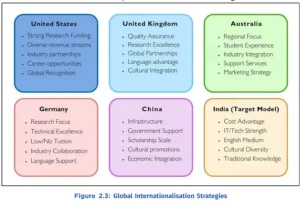
- Global Lessons and Benchmarking: Draws lessons from China, Germany, and Australia, which have leveraged inbound international education for economic growth and academic diplomacy.
Key Recommendations of the NITI Aayog Report
- Whole-of-Government Governance: Establish an Inter-Ministerial Task Force comprising the Ministry of Education, Ministry of External Affairs, Ministry of Home Affairs, and Ministry of Finance to ensure policy coherence, strategic coordination, and faster decision-making.
- Regulatory and Administrative Simplification: Create a National Foreign Degree Equivalence Portal and implement single-window digital clearances to reduce approval delays, enhance transparency, and improve predictability for foreign institutions and students.
 Visa and Mobility Reforms: Rationalise student and research visa regimes, streamline Foreigners Regional Registration Office (FRRO) processes, and introduce study-linked internships to enhance India’s attractiveness as a global study destination.
- Innovative Institutional Collaboration Models: Promote campus-within-campus arrangements with a 10-year sunset clause, along with global education hubs and offshore/onshore campuses, enabling phased and regulated entry of foreign universities.
- Financing Research and Global Engagement: Operationalise the Bharat Vidya Kosh (USD 10 billion) to fund frontier research, international scholarships, and global collaborations, leveraging strong diaspora participation.
- Talent Attraction and Retention: Launch Vishwa Bandhu Scholarships for international students and Vishwa Bandhu Fellowships for global faculty to promote inbound mobility and long-term academic engagement.
- Global Branding and Outreach: Institutionalise Bharat ki AAN (Alumni Ambassador Network) to leverage the global Indian academic diaspora, and reposition Study in India as a flagship global education brand.
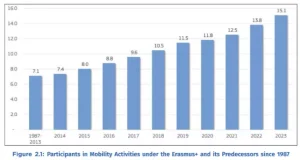
- Curriculum Integration and Internationalisation at Home: Introduce Erasmus-like exchange programmes, robust credit-transfer systems, joint curricula, and deeper integration of Indian Knowledge Systems (IKS) to embed global exposure within Indian campuses.
- Quality Assurance and Accountability: Expand the National Institutional Ranking Framework (NIRF) to include internationalisation indicators and establish independent quality monitoring mechanisms to prevent degree mills and safeguard institutional reputation.
About Internationalisation of Higher Education in India
- Concept and Philosophy: Internationalisation involves the systematic integration of global perspectives into teaching, research, governance, and campus life, while safeguarding national priorities, cultural integrity, and knowledge sovereignty.
 India-Centric Approach: India emphasises global engagement without cultural dilution, projecting Indian values, philosophical traditions, and intellectual heritage within global academia.
- Core Instruments: Key components include student and faculty mobility, joint and dual degree programmes, credit-transfer systems, international research collaborations, and global benchmarking frameworks.
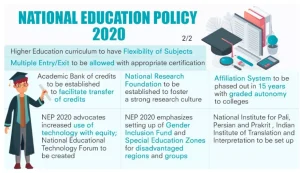
- Policy Orientation under NEP 2020: The National Education Policy 2020 prioritises internationalisation at home, ensuring global exposure for the 97% domestic student population, rather than limiting benefits to elite outbound cohorts.
Factors Responsible for Internationalisation of Higher Education in India
- Global Knowledge Economy and Workforce Mobility: The expansion of cross-border labour markets and knowledge-intensive industries necessitates globally competitive, mobile graduates, pushing Indian higher education towards international standards.
- Outbound Pressure, Forex Loss, and Brain Circulation: High overseas enrolment has resulted in a ₹2.9 lakh crore foreign exchange outflow (2023–24), projected to reach ₹6.2 lakh crore by 2025 (nearly 2% of GDP), necessitating a strategic shift from brain drain to brain circulation and brain gain.
- Research, Innovation, and Knowledge Networks: International research collaborations enhance research quality, citations, and access to frontier funding, embedding India within global knowledge and innovation ecosystems.
- Soft Power and Academic Diplomacy: Higher education serves as an instrument of academic diplomacy, strengthening India’s leadership role among developing and emerging economies, particularly in the Global South.
- Demographic Dividend and Talent Retention: Sustained talent outmigration threatens to dilute India’s demographic dividend, making domestic internationalisation essential for skill retention, value creation, and long-term economic growth.
Strategic Rationale for the Internationalisation of India’s Higher Education System
- Macro-Economic and Talent Imperative: With outbound student expenditure nearing 2% of GDP, internationalisation is a fiscal necessity to shift from brain drain to brain circulation.
- Positioning India as a Global Education Hub can arrest the projected ₹6.2 lakh crore capital outflow by 2025, convert a services trade deficit into a surplus, expand education exports, strengthen talent circulation, and enhance economic resilience.
- Constitutional, Normative, and Global Commitments: Internationalisation advances Article 51 (international cooperation) and Article 51A (global harmony) of the Constitution, while aligning India’s higher education strategy with SDG 4 (Quality Education) and SDG 17 (Global Partnerships).
- Institutional Competitiveness and Quality Assurance: Integrating internationalisation metrics into the National Institutional Ranking Framework (NIRF) incentivises global benchmarking, research collaboration, and institutional excellence across Indian HEIs.
- Equity, Inclusion, and Social Justice: Internationalisation-at-home and targeted scholarships ensure global exposure does not become elitist, safeguarding SC/ST/OBC/EWS inclusion and preserving the inclusive character of India’s higher education system.
- Research and Knowledge Sovereignty: Anchoring global collaborations in national priorities strengthens indigenous R&D capacity, reduces technological dependence, and preserves strategic autonomy in critical and emerging knowledge domains.
- Education as Soft Power and Vishwa Bandhu Diplomacy: By delivering world-class education at scale and lower cost, India democratises access for the Global South (Africa, Central Asia, Southeast Asia), positions itself as a provider of “Affordable Excellence”, strengthens academic diplomacy, and reinforces its leadership in the G20 and beyond.
Challenges to Internationalisation of Higher Education in India
- Regulatory and Governance Fragmentation: Multiple approvals, absence of single-window mechanisms, and education in the Concurrent List lead to uneven state capacity, policy misalignment, and delayed global partnerships.
- Regulatory asymmetry risks a dual-tier system, where elite foreign campuses enjoy autonomy while public State Universities remain constrained.
- Equity and Social Justice Concerns: Foreign branch campuses lack a constitutional mandate for reservations, raising risks of educational elitism and undermining the inclusive fabric of Indian higher education unless safeguards are built in.
- Quality Assurance and Monitoring Gaps: Rapid expansion without robust oversight increases risks of degree mills, reputational erosion, and weak accountability for foreign campuses and collaborations.
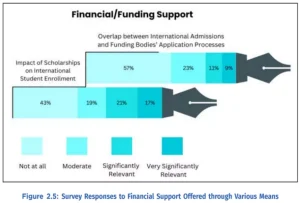
 Administrative and Mobility Bottlenecks: Delays in student and research visas, FRRO processes, weak International Student Offices, and poor scholarship–admission coordination adversely affect student experience and inbound mobility.
- Infrastructure and Student Experience Deficit: Many HEIs lack adequate hostels, laboratories, language support, housing, placement services, and cultural integration mechanisms to manage a ten-fold rise in international enrolment.
- Cultural and Academic Risks: Over-reliance on English-medium instruction may marginalise vernacular languages and Indian Knowledge Systems (IKS), risking cultural homogenisation.
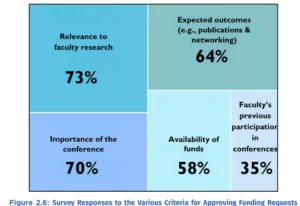
- Faculty Internationalisation Constraints: Ad-hoc funding, lack of long-term strategies, and weak institutional support limit faculty mobility and sustained international research engagement.
India’s Multi-Dimensional Strategy for Internationalising Higher Education
- Strategic and Unified Governance: India has proposed an Inter-Ministerial Task Force involving the Ministry of Education, Ministry of External Affairs, Ministry of Home Affairs, and Ministry of Finance to ensure a whole-of-government approach.
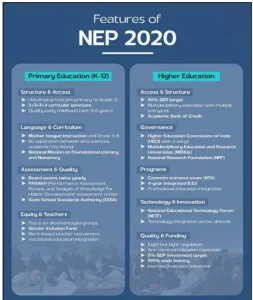
- The Viksit Bharat Shiksha Adhishthan Bill, 2025 operationalises NEP 2020’s “Light but Tight” regulatory framework by establishing the Viksit Bharat Shiksha Adhishthan (VBSA), replacing fragmented regulators such as UGC, AICTE, and NCTE.
- Regulatory Architecture and Graded Autonomy: The VBSA introduces a functional triad—the Regulatory Council (Viniyaman Parishad), Accreditation Council (Gunvatta Parishad), and Standards Council (Manak Parishad)—along with a technology-driven single-window system that grants graded autonomy to high-performing institutions for international collaborations.
- Opening Indian Higher Education to Global Institutions: The UGC Regulations, 2023 permit Top-500 global universities to establish campuses in India.
- This is complemented by innovative institutional models such as the campus-within-campus framework with a 10-year sunset clause, enabling phased and accountable foreign entry.
- Global Education Zones and Flagship Campuses: GIFT City IFSC has emerged as a Global Education Zone, hosting offshore campuses of Deakin University and the University of Wollongong.
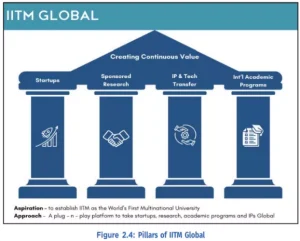
- Simultaneously, India has expanded its academic footprint abroad through IIT Madras (Zanzibar) and IIT Delhi (Abu Dhabi).
- Talent Mobility and Academic Exchange: Initiatives such as Vishwa Bandhu Scholarships, Vishwa Bandhu Fellowships, Study in India, ICCR Scholarships, and the Global Initiative of Academic Networks (GIAN) aim to attract international students and faculty while promoting sustained academic engagement.
- Digital and Institutional Enablement: The Study in India portal is being revamped into a single integrated digital platform covering admissions, visas, scholarships, and student support.
- Internationalisation efforts are being anchored through Top-100 NIRF institutions and Institutes of National Importance to ensure quality-led scaling.
- Curriculum and Knowledge Sovereignty: Indian institutions are integrating Indian Knowledge Systems (IKS)—including culture, philosophy, democracy, federalism, and governance—into globally benchmarked curricula, ensuring global relevance without cultural dilution.
- Financing Global Research Leadership: The proposed Bharat Vidya Kosh (USD 10 billion) functions as a National Research Sovereign Wealth Impact Fund, leveraging a 1:1 matching model where contributions from the 3.5-crore Indian diaspora and philanthropy are matched by the Central Government.
- South–South Academic Architecture: The proposed Tagore Academic Mobility Framework—a Global South alternative to Erasmus+—envisions a multilateral credit-recognition system for ASEAN, BIMSTEC, and BRICS, positioning India as a primary knowledge provider for emerging economies.
Way Forward
- Strategic Implementation Framework: The NITI Aayog (2025) recommends a phased, time-bound roadmap under NEP 2020, backed by institutional accountability, dedicated funding, and outcome-based monitoring, to operationalise a coherent National Internationalisation Strategy.
- Linguistic and Digital Inclusion: Ensure technical and professional education in Indian languages with AI-driven translation support, while maintaining global English standards.
- Upgrade Digital Public Infrastructure in State universities to enable SWAYAM Plus, hybrid learning, and up to 40% credit transfer from global OERs, prioritising the 97% domestic student base.
- Short-Term Priorities (0–3 years): Launch the National Foreign Degree Equivalence Portal, streamline student and research visas and FRRO processes, and expand twinning, joint, and dual degree programmes to quickly improve India’s global attractiveness.
- Legislative and Regulatory Transition: Fast-track implementation of the Viksit Bharat Shiksha Adhishthan (VBSA) Bill, 2025, operationalising the “Light but Tight” regulatory regime with a focus on graded autonomy, allowing high-performing institutions to pursue international collaborations, joint degrees, and faculty recruitment without prior approvals.
- Medium-Term Actions (3–7 years): Institutionalise Bharat ki AAN (Alumni Ambassador Network), expand global fellowships and faculty exchange programmes, and introduce Erasmus-like mobility frameworks to convert brain drain into brain circulation.
- Activating the Global South Architecture: Operationalise the Tagore Academic Mobility Framework—a multilateral credit-recognition system for ASEAN, BIMSTEC, and BRICS—to facilitate seamless talent circulation within the Global South, positioning India as a regional knowledge anchor.
- Education Hub Development: Develop regional and global education hubs to position India as a preferred study destination, integrating research, innovation, skilling, and industry linkages.
- Long-Term Vision (2047): Fully operationalise the Bharat Vidya Kosh (USD 10 billion) as a sovereign research and education fund, using a 1:1 matching grant mechanism. Mobilising the 3.5-crore Indian diaspora through Bharat ki AAN will be critical for funding frontier research, global fellowships, and academic leadership.
-
- Global Thought Leadership: Institutionalise Bharat Vidya Manthan as an annual global education and research summit, supported by a robust quality assurance ecosystem, to anchor India’s emergence as a Global Knowledge Power.
Conclusion
A globally engaged yet locally grounded system can turn Indian universities into engines of research, innovation, and entrepreneurship. Internationalisation is an imperative for knowledge sovereignty, economic resilience, and soft power. By aligning NEP 2020, G20 outcomes, and inclusive reforms, India can revive the spirit of Nalanda and emerge as a global knowledge superpower by 2047.


 23 Dec 2025





.png)






 Current Affairs




 GS Foundation
 Optional Course
 Combo Courses
 Degree Program