Iron deficiency remains one of India’s most persistent nutritional challenges, reducing work capacity, impairing child development, and burdening public health systems.
About Iron as Nutrition
- Iron is a vital micronutrient essential for oxygen transport, energy metabolism, and normal growth.
About Iron
- Iron is a vital chemical element (Ferrum ) and the most abundant metal on Earth by mass, essential for industrial development and biological survival.
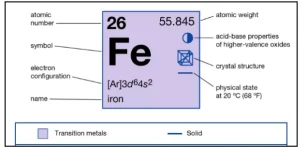
- Properties: Iron is a strong, malleable, and magnetic metal with good electrical conductivity and multiple oxidation states, making it highly versatile in chemical reactions.
Uses
- Industrial Uses: Iron is the backbone of modern industry, used in steel production for construction, transportation, machinery, and infrastructure development.
- Biological Uses: In living organisms, iron is a key component of haemoglobin and enzymes, enabling oxygen transport, energy metabolism, and cellular growth.
|
- It forms a core component of haemoglobin and supports multiple cellular functions necessary for human survival.
- A normal adult male has 50 mg/kg of iron, while females have 40 mg/kg.
- Role of Iron in the Human Body
- Oxygen Transport: Iron is a key constituent of haemoglobin, enabling red blood cells to carry oxygen from lungs to tissues.
- Energy Metabolism: It supports enzymes involved in cellular respiration and energy production.
- Growth and Immunity: Adequate iron is required for cellular proliferation, brain development, and immune competence.
Excess Iron in the Human Body and Its Impact
- Limited Iron Excretion: The human body lacks an active mechanism to eliminate excess iron, leading to accumulation when intake or blood transfusions are excessive.
- Organ Deposition and Damage: Excess iron accumulates in the liver, heart, and endocrine glands, causing cirrhosis, cardiomyopathy, and hormonal dysfunction.
- Causes of Iron Overload: Repeated blood transfusions and genetic haemochromatosis are major causes of iron overload.
- Chelation Therapy: Chelation therapy uses agents that bind excess iron, forming stable complexes excreted mainly through urine, preventing irreversible tissue damage.
|
Minimum Requirement (as per WHO)
- Adult men: ~8–10 mg/day
- Adult women (non-pregnant): ~18–20 mg/day (higher due to menstrual losses)
- Pregnant women: ~27 mg/day to support fetal growth and increased blood volume.
Causes of Iron Deficiency
- Nutritional: Inadequate intake of iron in the diet (in rare cases failure to absorb oral iron).
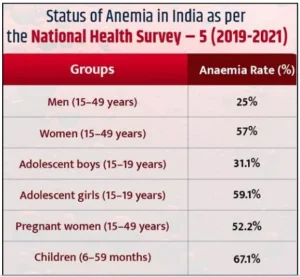 Blood loss: In females with heavy periods during menstrual cycle , iron can be depleted.
-
- Gastrointestinal blood loss in elders can also cause iron deficiency.
- Older patients must be evaluated for malignancy of the stomach or colon.
Impact of Iron Deficiency
- Anaemia and Fatigue: Anemia is a condition where the blood has a lower-than-normal amount of healthy haemoglobin.
- Reduced haemoglobin leads to weakness, breathlessness, and reduced physical productivity.
- Child Development: Chronic deficiency causes stunted growth, impaired cognitive development, and poor academic performance.
- Economic and Social Impact: At the population level, iron deficiency significantly lowers workforce efficiency and economic output.
Sources of Iron
- Dietary Sources
- Heme iron (better absorbed): Meat, fish, poultry.
- Non-heme iron: Millets, unpolished rice, pulses, green leafy vegetables, milk and curd (absorption enhanced with vitamin C).
- Less Absorption: Only a small fraction of dietary iron (around 10%) is absorbed, making adequate intake crucial.
- Supplements
- Oral iron: First-line therapy; inexpensive and effective when taken for at least three months.
- Intravenous iron: Used when oral iron is not tolerated or absorption is poor.
Government Interventions to Address Iron Deficiency
- Anaemia Mukt Bharat (AMB): Targets reduction of anaemia through prophylactic iron–folic acid supplementation, behaviour change communication, and testing-based treatment.
- It has a target of annual reduction of 3 percentage points in children, adolescents, and women of reproductive age (15-49 years).
- POSHAN Abhiyaan: Aims to improve nutritional outcomes for children, pregnant women, and lactating mothers through convergence, monitoring, and community engagement.
- National Iron Plus Initiative (NIPI): Provides age-specific iron and folic acid supplementation to children, adolescents, and women of reproductive age.
Conclusion
Iron deficiency is both a medical and developmental challenge. Addressing it requires dietary diversification, effective supplementation, and strengthened public health delivery systems.


 16 Jan 2026





.png)






 Current Affairs




 GS Foundation
 Optional Course
 Combo Courses
 Degree Program