“Recent soil tests in Kuttanad, the rice bowl of Kerala, have found alarmingly high concentrations of aluminium in paddy fields, as reported by the State Pest Surveillance Centre/KCPM.
Key Findings
- “Tests by the Kerala Centre for Pest Management (KCPM) found aluminium levels ranging from about 77 to 330 ppm.”
- This is 39 to 165 times higher than the safe limit of 2 ppm for rice cultivation.
Causes of High Aluminium Levels in Kuttanad Soils
- “Soil pH in Kuttanad’s acid sulphate soils frequently falls below 5, greatly increasing aluminium solubility and toxicity.”.
- “Below sea-level farming with prolonged waterlogging and constrained drainage aggravates acid sulphate soil conditions and favours the release of soluble aluminium.”
- Oxidation of sulphides: Drainage of wetland soils exposes iron sulphides (pyrite) to air, forming sulphuric acid that sharply lowers soil pH.
- “Long-term use of ammonium-based fertilisers can increase soil acidity, thereby mobilising aluminium, especially in already acidic soils.”
- “Inadequate or irregular liming and soil conditioning in recent years has likely allowed acidity to build up over time.”
- Flooding and leaching: Recurrent floods wash away basic nutrients (calcium, magnesium) that normally neutralise acidity.
- “Climate change‑induced extreme floods and prolonged dry spells are expected to accelerate soil acidification cycles.”
Impacts on Agriculture
- “Aluminium toxicity severely damages rice root systems, impairing their ability to absorb water and nutrients.”
- “Aluminium interferes with the uptake of key nutrients such as phosphorus, calcium, potassium, and magnesium, aggravating nutrient deficiencies.”
- Secondary Toxicity: In the highly acidic soils of Kuttanad, iron is also present in quantities that are harmful to plants, compounding the problem.
- “The combined effect of root damage and nutrient lockup leads to a significant reduction in paddy yields.”
- Threat to a Specific Season: The problem is contributing to a threat against the Puncha season, a key cultivation period, which is already under strain from a fertilizer shortage.
- Food Security Risk: As Kerala’s “rice bowl,” a prolonged drop in Kuttanad’s productivity threatens regional food security.
Kuttanad Wetland Agricultural System
- Location: Situated in Kuttanad, Kerala; spans Alappuzha, Kottayam and Pathanamthitta districts, around Vembanad Lake.
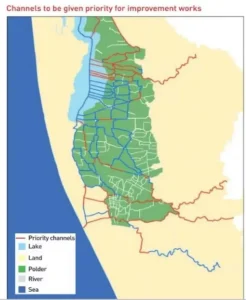 “One of the world’s few farming systems located about 1–2 m below mean sea level, protected by bunds and embankments.”
- FAO Recognition: Declared a Globally Important Agricultural Heritage System (GIAHS) by Food and Agriculture Organization (2013).
- Traditional Water Management: Uses polders (Padasekharams), manual sluice operations, and seasonal drainage to control floods and salinity.
- Cropping System: Predominantly rice (paddy) cultivation; synchronized community farming practices.
- Integrated Livelihoods: Combines agriculture, fisheries, livestock, and inland navigation, enhancing resilience and incomes.
- Ecological Significance: Part of the Vembanad wetland ecosystem; supports biodiversity, nutrient cycling, and flood buffering.
- Community Institutions: Strong collective action via farmer cooperatives and padasekharam committees for maintenance and cropping decisions.
- Climate Relevance: A living model of climate adaptation to floods, sea-level rise, and salinity intrusion.
- Conservation Focus: Need for sustainable intensification, eco-friendly practices, wetland restoration, and policy support.
Globally Important Agricultural Heritage Systems (GIAHS)
- GIAHS is an initiative of the Food and Agriculture Organization to recognise traditional, sustainable agricultural systems shaped by communities over centuries.
- Launch: Initiated in 2002 by FAO to conserve living agricultural heritage.
- Objective: Protect agro-biodiversity, traditional knowledge, and cultural landscapes, and promote sustainable livelihoods and food security.”
- Key Features:
- Rich agro-biodiversity
- Indigenous knowledge systems
- Climate-resilient farming practices
- Strong human–nature interaction
- Approach: Focuses on balancing conservation with socio-economic development of local communities.
- Difference from UNESCO Sites: GIAHS focuses on living, productive systems, unlike UNESCO World Heritage Sites which emphasise preservation.


 23 Dec 2025





.png)






 Current Affairs




 GS Foundation
 Optional Course
 Combo Courses
 Degree Program