PM Modi paid tribute to Netaji Subhash Chandra Bose, recalling the historic hoisting of the Indian Tricolour at Port Blair on December 30, 1943, symbolising India’s first liberated territory from British rule.
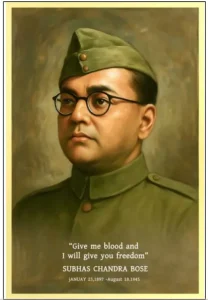
About Netaji Subhash Chandra Bose

- Subhash Chandra Bose (1897–1945) was one of the most assertive leaders of India’s freedom struggle, advocating complete independence through revolutionary and military means.
- Early Life and Education: Born on 23 January 1897 in Cuttack (Odisha) to Janakinath Bose and Prabhabati Dutt, Bose was educated at Ravenshaw Collegiate School and Presidency College, Kolkata.
- He later went to Cambridge University, cleared the Indian Civil Services (ICS) exam in 1920, but resigned in 1921, inspired by nationalism and the Jallianwala Bagh massacre.
- Contribution to Freedom Struggle: Bose believed that freedom could not be achieved through constitutional means alone. His slogan “Give me blood, and I will give you freedom” captured his revolutionary zeal. He sought international alliances and armed resistance to overthrow British rule.
- Role in Indian National Congress (INC)
- Participation: Joined the INC in 1921, worked closely with Chittaranjan Das, participated in the Non-Cooperation Movement, and emerged as a prominent youth leader.
- Presidentship: Elected Congress President at Haripura (1938) and re-elected at Tripuri (1939), where he advocated economic planning and radical action.
- Tripuri Crisis: Differences with Gandhian leadership over strategy and authority led to Bose’s resignation from the Congress presidency in 1939.
- Dr. Rajendra Prasad was appointed to fill the vacancy for the remainder of the term.
- Political Party: Founded the Forward Bloc (1939) to unite radical nationalist forces demanding immediate independence.
- Role in Indian National Army (INA): Took command of the INA in 1943 reorganising it as Azad Hind Fauj.
- The foundation of the Azad Hind Fauj (Indian National Army – INA) was laid by Captain Mohan Singh in 1942 from Indian prisoners of war in Malaya.
- India Liberation : He established the Provisional Government of Free India (Azad Hind Sarkar) in Singapore on October 21, 1943, as a government-in-exile during World War II, with support from Japan and other Axis powers
- As Head of the Provisional Government, Bose declared war on Britain in 1943 and proclaimed the Andaman and Nicobar Islands as liberated Indian territory.
- Led military campaigns towards India and hoisted the Tricolour at Moirang and Port Blair.
- Literary Contributions
-
- The Indian Struggle (1935) – Analysis of India’s freedom movement (1920–1934).
- Edited newspapers like Forward and Swaraj (1921–22).
- Death: Bose reportedly died in a plane crash in Taiwan on August 18, 1945, though the circumstances remain debated.
- Legacy: Netaji remains a symbol of courageous nationalism and uncompromising patriotism, inspiring generations; January 23 is celebrated as Parakram Diwas in his honour.