New Dragonfly Species Discovered in Kerala: Lyriothemis keralensis

10 Feb 2026

New Dragonfly Species Discovered in Kerala: Lyriothemis keralensis

A new dragonfly species, Lyriothemis keralensis, has been identified in Kerala, highlighting hidden biodiversity within plantation landscapes of the Western Ghats.
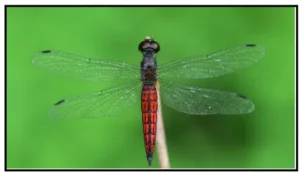
Lyriothemis keralensis

Known to be found in Kerala since 2013 but it remained misidentified for over a decade as Lyriothemis acigastra, a species previously thought to be restricted to northeast India.

About Lyriothemis keralensis

  • It is a newly discovered dragonfly species named in recognition of Kerala’s rich biodiversity.
    • It was earlier misidentified for over a decade as Lyriothemis acigastra.
  • Distribution: Recorded from Varapetty near Kothamangalam, Ernakulam district, Kerala.
  • Habitat: Inhabits vegetated pools and irrigation canals within shaded rubber and pineapple plantations.
    • They are seasonally visible during the Southwest monsoon (May–August) and persists as larvae the rest of the year.
  • Key Characteristics:
    • Shows sexual dimorphism.
      • Males: bright blood-red with black markings.
      • Females: yellow with black markings, bulkier body.
    • Distinguished by slender abdomen and unique anal appendages/genitalia.
  • Conservation Concerns
    • The majority of populations lie outside protected areas.
    • Vulnerable to land-use change in plantation-dominated landscapes.
    • Emphasises need for biodiversity-sensitive agricultural practices.

Check Out UPSC CSE Books

Visit PW Store

online store 1

About Dragonflies

  • Dragonflies are predatory insects of the order Odonata and suborder Anisoptera, characterized by large compound eyes, four transparent wings, three pairs of legs and a slender body.
    • There are roughly 3,000 species, typically found near freshwater habitats.
  • Life Cycle: they have three stages: egg → larva (nymph) → adult.
    • Larvae breathe through internal gills and the adults through spiracles
  • Habitat: Adults live around streams, ponds, lakes and wetlands.
    • Larvae are aquatic, living among plants and rocks.
  • Diet: They are specialized aerial predators, eating mosquitoes, flies, and other insects with a 95% hunting success rate.
    • Larvae feed on aquatic insects, worms, and small aquatic organisms.
  • Indicator Species: Sensitive to water quality, making them indicator species of freshwater health.
  • Ecological Role: Help control insect populations and support aquatic–terrestrial food webs.

Enroll in SRIJAN Prelims Crash Course

Need help preparing for UPSC or State PSCs?

Connect with our experts to get free counselling & start preparing

Aiming for UPSC?

Download Our App

      
Quick Revise Now !
AVAILABLE FOR DOWNLOAD SOON
UDAAN PRELIMS WALLAH
Comprehensive coverage with a concise format
Integration of PYQ within the booklet
Designed as per recent trends of Prelims questions
हिंदी में भी उपलब्ध
Quick Revise Now !
UDAAN PRELIMS WALLAH
Comprehensive coverage with a concise format
Integration of PYQ within the booklet
Designed as per recent trends of Prelims questions
हिंदी में भी उपलब्ध

<div class="new-fform">


    </div>

    Subscribe our Newsletter
    Sign up now for our exclusive newsletter and be the first to know about our latest Initiatives, Quality Content, and much more.
    *Promise! We won't spam you.
    Yes! I want to Subscribe.