White Phosphorus
Context: Human Rights Watch has alleged that the Israeli military used artillery-fired white phosphorus munitions over residential areas in Yohmor, southern Lebanon.
About White Phosphorus
- Chemical Characteristics: White phosphorus is a waxy chemical substance, pale yellow or white in appearance, with a distinctive smell often compared to garlic.
- Combustion Property: It ignites spontaneously on contact with oxygen at temperatures above roughly 30°C, producing intense heat and thick white smoke.
- Delivery Mechanism: It is commonly delivered through artillery shells or bombs, which can burst mid-air and scatter burning fragments over a wide area.
- Military Uses: It is used to create smoke screens, mark targets, signal, and attack enemy personnel or equipment.
- Militaries often employ it for screening manoeuvres and tactical battlefield illumination.
- Hazards: When used as an airburst projectile, it disperses around 116 burning felt wedges over a radius of approximately 125 to 250 metres, depending on height and angle.
- Health and Environmental Hazards
- Severe Chemical Burns: When white phosphorus particles contact human skin, they can cause deep chemical burns that may continue to burn until deprived of oxygen.
- Tissue Damage: Burning fragments may penetrate muscle tissue and reach bone, making injuries extremely difficult to treat.
- Toxic Smoke Exposure: The smoke can irritate the eyes, lungs, and skin, and in severe cases may damage organs such as the liver and heart.
- Risk of Reignition: Residual phosphorus fragments can reignite when exposed to air, complicating medical treatment
- Not Completely Banned: White phosphorus itself is not prohibited under international law, and several countries maintain and use such munitions.
- Restrictions on Use: International humanitarian law prohibits weapons from being used in ways that indiscriminately harm civilians.
- Permitted Military Uses: Uses such as smoke generation, target marking, and illumination are generally allowed.
National e‑Vidhan Application (NeVA)
Context: Twenty-one State and Union Territory legislatures are functioning digitally through the NeVA platform, while 28 assemblies have signed MoUs with the Centre for its implementation.
About National e‑Vidhan Application
- The National e-Vidhan Application (NeVA) is a digital platform designed to transform State and Union Territory legislatures into paperless, efficient and transparent legislative institutions.
- Launch: NeVA was launched in 2022 under the Digital India Programme to modernise legislative functioning and promote paperless governance.
- Funding: It is a Centrally Sponsored Scheme with centre and state sharing the funding.
- North Eastern and Hilly States: 90% (Centre) : 10% (State)
- Union Territories (with Legislature): 100% (Centre)
- All Other States: 60% (Centre) : 40% (State)
- Budget: Total cost outlay approved by the Public Investment Board (PIB) of ₹673.94 crore.
- Nodal Ministry: The platform is implemented by the Ministry of Parliamentary Affairs in collaboration with State legislatures and governments.
- Key Features
- NeVA provides mobile and web-based applications enabling legislators to access legislative documents, proceedings, and official records digitally.
- The platform allows electronic submission of questions, notices, and bills, enabling seamless digital management of legislative business.
- It includes a public portal and e-book modules that provide digital access to debates, bills, and the List of Business, improving transparency.
- Adoption: Twenty-one State/UT legislatures are already functioning digitally through NeVA, while 28 legislatures have signed MoUs with the Centre for implementing the system.
- The Punjab Legislative Assembly became the first fully digital House after adopting NeVA in September 2023.
Significance
- NeVA reduces paper usage and administrative delays, improving efficiency and sustainability in legislative functioning.
- The platform enhances transparency, accessibility and digital governance in legislative institutions across India.
Savitribai Phule
Context: The Union Home Minister paid tribute to Savitribai Phule on her death anniversary, highlighting her contribution to women’s education.
About Savitribai Phule
- She is widely regarded as India’s first female teacher and a pioneer of social reform against caste and gender discrimination.
- Born: 1831 in Naigaon, Maharashtra to a marginalized Mali community .
- Married at a young age to Jyotirao Phule, a reformer who educated her at home.
- Contributions:
- Became India’s first female teacher and later the first woman headmistress of a girls’ school.
- First Girls’ School: Established India’s first school for girls in 1848 at Pune.
- Education Movement: Promoted education for women, Dalits, and marginalized communities.
- Women’s Rights: Campaigned against child marriage, caste discrimination, and gender inequality.
- Balhatya Pratibandhak Griha: Shelter for pregnant widows and victims of social oppression.
- Satyashodhak Marriage: Initiated the first Satyashodhak marriage, a marriage without a dowry, Brahmin priests or Brahminical rituals in 1873.
- Water Rights (1868): Moved by the treatment of the untouchables, who were refused drinking water meant for the upper caste, the Phule couple opened the well in their own house in 1868 for these communities.
- Literary Works: Authored poems such as Kavya Phule and Bavan Kashi Subodh Ratnakar.
- Death: 10 March 1897 while serving plague patients in Pune.
UNSC Resolution Condemning Iran attacks on Gulf
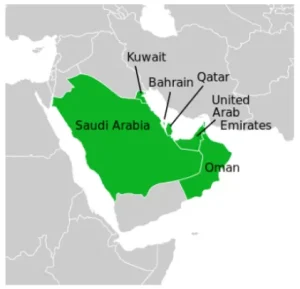
Context: India co-sponsored a United Nations Security Council resolution led by the Gulf Cooperation Council, backed by over 130 countries, demanding Iran immediately halt attacks on Gulf states and Jordan.
About UNSC Resolution
- The resolution condemned any actions or threats by Iran to close or obstruct international navigation through the Strait of Hormuz, a critical global maritime route.
- The resolution was passed with 13 UNSC members voting in favour while Russia and China abstained.
- The resolution strongly denounced Iran’s “egregious attacks” and demanded an immediate cessation of hostilities.
India’s Rationale Behind Supporting Resolution
India justified its support citing
- Large Indian diaspora in GCC countries (about 10 million people).
- Energy security, as nearly 50% of India’s crude oil and 90% of LPG imports come from the region.
Gulf Cooperation Council
- It is a regional, intergovernmental, political, and economic union established on 25 May 1981, with formal signing of the Charter of the GCC.
- Member states: It comprise of 6 national monarchies of the Gulf region ie. The Kingdoms of Bahrain, Kuwait, Oman, Qatar, Saudi Arabia, and the United Arab Emirates.
- Headquarters: Riyadh, the capital of Saudi Arabia
- Military arm: The Peninsula Shield Force is the military arm of the GCC, formed in 1984.
- Objectives: To effect coordination, integration and inter-connection between member states in all fields in order to achieve unity between them.
NXT Summit
Context: Prime Minister Narendra Modi addressed the NXT Summit, highlighting India’s progress toward “Viksit Bharat” and linking it symbolically with the historic Dandi March.
About NXT Summit
- The NXT Summit is a policy and leadership forum where political leaders, industry experts, and policymakers discuss India’s development trajectory and emerging global challenges.
- Organised By: The summit is organised by the iTV Network, bringing together national and international stakeholders to deliberate on governance, economy, technology, and global affairs.
- Key Highlights
-
- Vision of Viksit Bharat: The Prime Minister emphasised that India’s collective national goal is to achieve “Viksit Bharat” (Developed India) through sustained reforms and inclusive growth.
- India as a Global Growth Engine: Global leaders increasingly view India as a key driver of the future world order and economic growth, especially amid global crises.
- Digital and Technological Leadership: India has become a global leader in real-time digital payments through the Unified Payments Interface, strengthening the digital economy.
- Energy Security and Self-Reliance: The government is expanding renewable energy, ethanol blending, and domestic energy infrastructure to reduce import dependence and strengthen energy security.
About Dandi March
- The Dandi March, also known as the Salt March, began on 12 March 1930 under the leadership of Mahatma Gandhi.
- Key Objective: To protest the British monopoly on salt production and taxation, symbolising resistance against colonial economic exploitation.
- Key Participants: The march started from Sabarmati Ashram in Ahmedabad with Mahatma Gandhi and 78 volunteers, gradually mobilising thousands of Indians along the route to Dandi.
- Impact: The movement triggered mass civil disobedience, led to the arrest of over 60,000 people including Gandhi, gained global attention, and resulted in the Gandhi–Irwin Pact (1931) permitting salt production.
Global Engagement Scheme
Context: The Ministry of Culture informed Parliament about the implementation of the Global Engagement Scheme to promote India’s cultural heritage internationally.
About Global Engagement Scheme
- The Global Engagement Scheme is a cultural diplomacy initiative designed to showcase India’s diverse cultural heritage globally and strengthen international cultural cooperation.
- Nodal Ministry: The scheme is implemented by the Ministry of Culture, with support from Indian missions abroad for organising cultural activities and events.
- Launch: 2025
- Objectives: The scheme aims to strengthen cultural ties with foreign nations, promote bilateral cultural exchanges, project India’s cultural identity globally, and encourage inbound tourism.
- Key Components
- Festival of India (FoI): Organises large-scale cultural festivals abroad featuring Indian music, dance, folk traditions, and art forms to showcase India’s cultural diversity.
- Grant-in-Aid to Indo-Foreign Friendship Cultural Societies: Provides financial support to cultural organisations that promote India’s heritage and foster people-to-people cultural exchanges.
- Contributions to Inter-Governmental Organisations: Supports international cultural bodies to enhance India’s participation in global cultural initiatives.
- Significance
- Strengthening Cultural Diplomacy: The scheme enhances India’s soft power and global cultural presence by promoting Indian arts and traditions worldwide.
- Promoting Tourism and Cultural Exchange: By showcasing India’s heritage abroad, it encourages tourism, cross-cultural understanding, and international collaboration in arts and culture.
Concentrated Solar Thermal (CST)
Context: Rising tensions around the Strait of Hormuz exposed India’s gas import vulnerability, highlighting the need to incorporate Solar industrial heat for thermal independence.
Potential of Solar Heating in Industry
- Reducing Fossil Fuel Dependence: Solar-based heating technologies can reduce reliance on imported gas in energy-intensive sectors such as textiles, ceramics, and food processing.
- Enhancing Energy Efficiency: Direct solar thermal heating avoids intermediate combustion processes, reducing energy losses common in gas-fired boilers.
- Lowering Industrial Energy Costs: With rising gas prices, solar heat systems can shorten investment payback periods and provide stable long-term energy costs.
- According to the Ministry of New and Renewable Energy, India has a Concentrated Solar Thermal (CST) potential of 6.4 GW but the adoption remains low.
About Concentrated Solar Thermal (CST)
- Concentrated Solar Thermal (CST) technology uses mirrors to focus sunlight onto a receiver, generating high-temperature heat for industrial processes.
- Examples: Miraah Solar Thermal Project (Oman) and Solatom (Spain)
- Working Mechanism
- Mirrors such as parabolic troughs concentrate sunlight onto a central receiver.
- The receiver heats a working fluid (water, oil, or molten salt) to high temperatures.
- The heated fluid produces steam or thermal energy directly used in industrial operations.
- Applications
- Textile Industry: Steam generation for bleaching, scouring, and dyeing processes.
- Ceramic Manufacturing: High-temperature heating for tile and material processing.
- Food and Chemical Processing: Industrial drying, sterilisation, and heat-intensive manufacturing processes.
GLP-1 Drugs
Context: The Government of India has banned pharmaceutical companies from advertising GLP-1 drugs due to growing concerns about their misuse for diabetes and weight-loss treatments.
What are GLP-1 Drugs?
- Glucagon-like peptide-1 (GLP-1) receptor agonists are medicines used to treat Type-2 diabetes and obesity by regulating blood sugar and appetite.
- How They Work: They mimic the hormone Glucagon-like peptide-1, which helps increase insulin release, slow digestion, and reduce hunger.
- Examples: Popular GLP-1 drugs include Semaglutide (sold as Ozempic) and Tirzepatide (sold as Mounjaro).
Reason for Ban on Advertising
- Misuse Concerns: Growing misuse of GLP-1 drugs for weight loss without medical supervision.
- Public Health Risk: Ads claiming guaranteed weight loss or exaggerated benefits could encourage unnecessary drug use.
WHO Guidelines on GLP-1 Medicines for Obesity
- GLP-1 therapies are recommended for long-term treatment of obesity in adults, but not for pregnant women.
- The recommendation is conditional due to limited long-term safety data, high costs, and health system preparedness issues.
- Medicines should be used along with lifestyle interventions, including healthy diet, physical activity, and medical supervision.
- Obesity is recognized as a chronic, relapsing disease linked to conditions like Type 2 Diabetes and Cardiovascular diseases.
Glucagon-like peptide-1 Receptor
- GLP-1 receptor is a protein receptor in the body that responds to the hormone GLP-1 and helps regulate blood sugar levels.
- Location: It is mainly found in the pancreas, brain, stomach, and intestines.
- Function: When activated, it stimulates insulin release, reduces glucagon secretion, and slows stomach emptying.
- Role in Appetite Control: It also acts on the brain to reduce hunger and increase feelings of fullness.


 13 Mar 2026





.png)






 Current Affairs




 GS Foundation
 Optional Course
 Combo Courses
 Degree Program