Green Steel
Context: India plans more ambitious Nationally Determined Contributions (NDCs) , making decarbonisation of hard-to-abate sectors like steel central to achieving climate goals and sustaining long-term economic growth.
About Steel Production in India
- Production Level: India produces ~125 million tonnes of steel annually; demand is projected to exceed 400 million tonnes by mid-century to support infrastructure and industrial growth.
- Economic Role: Steel is a core driver of GDP growth, employment, and infrastructure development.
- Carbon Contribution: The steel sector contributes around 12% of India’s total carbon emissions, mainly due to coal-based blast furnace routes.
- Climate Challenge: Continued investment in coal-intensive technologies risks carbon lock-in, economic inefficiency, and loss of global competitiveness.
- Need for Green Steel: Transitioning to low-carbon steel is essential to meet India’s climate commitments, avoid future trade barriers (e.g., EU CBAM), and remain competitive in global markets.
About Green Steel
- Green steel refers to steel produced using low- or near-zero carbon technologies, such as green hydrogen, renewable energy, increased scrap recycling, and carbon capture, instead of coal-based processes.
- Green Steel in India
- Policy initiatives include the Greening Steel Roadmap, Green Steel Taxonomy (2024), National Green Hydrogen Mission, and carbon intensity targets under Carbon Credit Trading Scheme (CCTS).
- Companies like Tata Steel, JSW Steel, SAIL, and JSPL are piloting hydrogen use, renewables, and low-carbon pathways.
- Advantages of Green Steel
- Green steel enables a substantial reduction in CO₂ emissions by replacing coal-based processes with renewable energy, green hydrogen, and scrap recycling.
- It helps Indian industry future-proof against carbon taxes and trade barriers such as the EU’s Carbon Border Adjustment Mechanism (CBAM).
- Adoption of green steel improves access to premium global markets and aligns industrial growth with India’s Net Zero 2070 target and enhanced NDCs.
Global Scenario
- The European Union has pursued steel decarbonisation for over two decades, with CBAM actively incentivising low-carbon steel production.
- China is scaling up scrap-based steelmaking and investing in hydrogen-based technologies to reduce coal dependence.
- Globally, early movers in green steel gain cost, reputation, and market advantages, shaping future industrial standards.
Strategic Significance for India
- Green steel is no longer optional but a strategic imperative for India’s climate leadership. It is essential for maintaining industrial competitiveness, avoiding carbon lock-in, and ensuring sustainable long-term economic growth.
Islamic Revolutionary Guard Corps (IRGC)
Context: The European Union has added Iran’s Islamic Revolutionary Guard Corps (IRGC) to its terrorist list in response to Iran’s deadly crackdown on protesters.
- Alongside the terrorist listing, the EU imposed new sanctions on Iranian officials and entities involved in human rights violations, internet censorship, and repression.
- These sanctions include tools like asset freezes and travel bans against targeted individuals/entities.
About the Islamic Revolutionary Guard Corps
- The Islamic Revolutionary Guard Corps (IRGC), also known as Sepah, is a powerful ideological military and security organization in Iran.
- Establishment: Founded in 1979 shortly after the Iranian Revolution by Ayatollah Ruhollah Khomeini.
- Purpose: To protect the Islamic Republic and its revolutionary ideals.
- It serves as a major instrument of internal security and political control in Iran, including the suppression of protests and dissent.
- Its Basij militia has been central to quelling nationwide unrest.
- Reporting: It answers directly to Iran’s Supreme Leader (currently Ayatollah Ali Khamenei).
- Structure and Branches: The IRGC is a multi-service force with its own parallel army, navy, and air force.
- International Designations and Sanctions:
- Designated by the US as a Foreign Terrorist Organization (FTO) in 2019.
- The recent EU sanction puts the IRGC in the same category as groups like Islamic State and al-Qaeda under EU law.
Meghalaya’s Living Root Bridges
Context: India has nominated Meghalaya’s living root bridges to UNESCO for consideration under the 2026–27 World Heritage evaluation cycle.
About Meghalaya’s Living Root Bridges
- Location: Found in Meghalaya, mainly across the Khasi and Jaintia Hills.
- What They Are: Naturally grown bridges made by guiding the aerial roots of rubber fig trees (Ficus elastica) across streams and rivers.
- Cultural Landscape: Known locally as “Jingkieng Jri / Lyu Chrai”, representing a unique living cultural landscape.
- Living Structures: Unlike conventional bridges, they are alive, strengthen with age, and can last 100–300 years.
- Indigenous Knowledge: Developed and maintained by Khasi and Jaintia tribal communities using traditional ecological knowledge passed down generations.
- Spiritual Belief: Rooted in reverence for Mei Ramew (Mother Earth), reflecting harmony between humans and nature.
- Sustainability: Climate-resilient, self-repairing, and eco-friendly. No concrete, steel, or external materials used.
- Community Governance: Managed through local institutions and customary laws ensuring collective ownership and care.
Kalbeliya Community
Context: The National Human Rights Commission (NHRC) has taken suo motu cognizance of a protest by the Kalbelia community in Rajasthan demanding a designated burial ground for their deceased.
About the Kalbeliya Community
- The Kalbeliya are a nomadic tribe from Rajasthan.
- Traditional Occupation: The Kalbeliya were traditionally snake charmers and earned their livelihood by performing with snakes at public gatherings and trading in snake venoms.
- The community is also referred to by other names such as; Sapera, Jogira, Gattiwala, and Poogiwara.
- Religious and Burial Practices: Although the Kalbeliyas follow Nath Tradition of Hinduism, they do not cremate their dead.
- Instead, they bury the deceased and place an idol of Lord Shiva’s Nandi bull on the grave as a mark of respect.
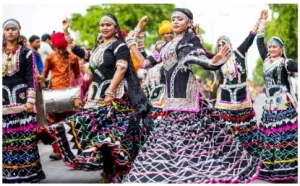 The struggle for burial land is currently a major, ongoing issue for the Kalbelia community in Rajasthan.
- Cultural Identity: Known for vibrant Kalbeliya folk dance and music, inspired by snake movements.
- UNESCO Recognition: Kalbeliya folk songs and dances inscribed in UNESCO’s Representative List of Intangible Cultural Heritage (2010).
- Dance Features: Performed mainly by women wearing black swirling skirts, with intricate embroidery and silver jewellery.
National Leprosy Day
Context: On National Leprosy Day 2026, the Central Leprosy Division organised an Information, Education and Communication (IEC) outreach programme at Dilli Haat to promote awareness, early detection and stigma reduction.
About National Leprosy Day
- National Leprosy Day is observed annually on 30 January in India, commemorating Mahatma Gandhi’s death anniversary and his lifelong advocacy for persons affected by leprosy.
- Objectives: The day aims to raise public awareness, promote early diagnosis and complete treatment, and eliminate stigma and discrimination associated with leprosy.
- It also reinforces India’s commitment towards achieving “Leprosy-Mukt Bharat” by 2027 under the National Leprosy Eradication Programme (NLEP).
- Key Activities (2026): IEC campaigns, street plays, self-examination initiatives, community pledges and distribution of educational material were used to encourage behavioural change and social inclusion.
About Leprosy (Hansen’s Disease)
- Leprosy is a chronic infectious disease caused by Mycobacterium leprae, primarily affecting the skin, peripheral nerves, eyes and upper respiratory tract.
- Transmission and Prevention: It spreads through prolonged close contact with untreated patients via nasal droplets and is not highly contagious.
- Early detection, contact screening and Leprosy Post-Exposure Prophylaxis (LPEP) are key preventive strategies.
- Treatment: Leprosy is completely curable with Multi-Drug Therapy (MDT) comprising dapsone, rifampicin and clofazimine, provided free of cost by WHO.
World Leprosy Day
- World Leprosy Day is observed globally on the last Sunday of January to highlight leprosy as a Neglected Tropical Disease (NTD).
- Theme (2026): “Leprosy is curable, the real challenge is stigma”
- Global Significance: Despite elimination at the national level in many countries, over 200,000 new cases annually underline the need for sustained global action.
World Nuclear Performance Report 2025
Context: The World Nuclear Performance Report 2025 notes a record 2667 TWh nuclear electricity generation in 2024, reinforcing calls to triple global nuclear capacity by 2050.
World Nuclear Performance Report 2025
- The World Nuclear Performance Report 2025 provides a comprehensive assessment of global nuclear electricity generation, reactor performance, capacity trends and construction outlook.
- Published by: The report is published by the World Nuclear Association (WNA).
- Purpose: It evaluates nuclear energy’s role in energy security, decarbonisation, and rising electricity demand, especially from electrification, data centres and AI-driven growth.
Key Findings of the Report
- Record Nuclear Generation: Global nuclear reactors generated 2667 TWh in 2024, surpassing the previous 2006 record, supported by high average capacity factors of around 83%.
- A power plant’s capacity factor is the ratio of its actual energy output over a specific period to its potential output if it operated at full nameplate capacity 24/7.
- Need for Accelerated Expansion: To triple nuclear output by 2050, annual capacity additions must rise sharply, far exceeding current construction rates and approaching or surpassing historic 1980s peaks.
- Lifetime Extensions Are Critical: Extending reactor lifetimes to 60–80 years is identified as one of the most cost-effective ways to secure large volumes of low-carbon electricity while avoiding premature shutdowns.
India’s Position in Global Nuclear Growth
- Among Global Leaders: India is identified alongside China, France, Russia and the United States as one of five countries that could together account for nearly 980 GWe of global nuclear capacity by 2050.
- Strategic Role in Decarbonisation: India’s inclusion reflects expectations of sustained fleet expansion, positioning nuclear power as a key pillar of its long-term energy security and low-carbon transition strategy.
The report underscores that tripling global nuclear capacity by 2050 is achievable but demands policy certainty, accelerated construction, financing reforms and international coordination.
About World Nuclear Association (WNA)
- The World Nuclear Association (WNA) was founded in 2001 and is headquartered in London.
- It is an international industry organisation representing the global civil nuclear sector.
- Mission and Objectives: WNA works to facilitate the peaceful and sustainable use of nuclear energy, promote informed understanding of nuclear power, and advocate its role in climate change mitigation and energy security.
- Functions: The Association publishes authoritative data and reports, develops industry best practices, represents nuclear interests in key global forums, and fosters collaboration on safety, security and economics.
- Membership: Its members span the entire nuclear fuel cycle and collectively account for nearly 70% of global nuclear power generation, bringing together leading companies and stakeholders worldwide.
Dhan Dhan Sri Guru Har Rai Sahib Ji
Context: The Union Home Minister extended greetings on the Prakash Purab of Dhan Dhan Sri Guru Har Rai Sahib Ji, highlighting his legacy of compassion, service, and equality.
About Dhan Dhan Sri Guru Har Rai Sahib Ji (1630–1661)
- Dhan Dhan Sri Guru Har Rai Sahib Ji, the seventh Sikh Guru, led the Sikh Panth from 1644 to 1661.
- He is revered as the “Tender-Hearted Guru” as he upheld the Miri-Piri tradition while prioritising peace, healing, and humanitarian service.
- The Miri-Piri tradition was introduced by the sixth Sikh Guru, Guru Hargobind Sahib Ji (1606) which signifies the inseparable blend of spiritual authority (Piri) and temporal or worldly power (Miri).
Key Contributions
- Compassion and Social Service: He strengthened the institutions of langar and sangat, ensuring dignity and care for people across caste, class, and community. He established hospitals and dispensaries, providing free medical treatment using herbal medicines.
- Environmental Consciousness: A pioneer of ecological sensitivity, he developed gardens and protected wildlife at Kiratpur Sahib, reflecting Sikh values of harmony with nature.
- Sikh–Mughal Relations: While maintaining a disciplined force of around 2,200 horsemen, he avoided conflict.
- His medical assistance to Dara Shikoh symbolised compassion beyond political divides. He later upheld doctrinal integrity by excommunicating his son Ram Rai for altering scripture.
- Expansion of Sikhism: He expanded Sikh outreach by establishing 360 missionary centres (Manjis) and promoting the teachings of Guru Nanak Dev Ji across Punjab.
Legacy: Guru Har Rai Sahib Ji’s life continues to inspire selfless service, equality, environmental ethics, and moral courage, leaving a lasting imprint on Sikh philosophy and Indian history.
India–Arab Foreign Ministers’ Meeting
Context: Recently, India hosted the Second India–Arab Foreign Ministers’ Meeting in New Delhi, reaffirming strategic engagement with the Arab world.
India–Arab League Foreign Ministers’ Meeting
- The second India–Arab Foreign Ministers’ Meeting was held in New Delhi, with participation from foreign ministers of Arab countries, the Secretary General of the Arab League, and senior Arab delegations.
- Objectives: To deepen India–Arab cooperation in trade, investment, energy, technology, healthcare, and people-to-people exchanges. It also provided a platform to discuss regional peace, stability, and global geopolitical challenges.
- Significance: The dialogue underscored India’s growing role in West Asia and North Africa, reaffirmed support for Palestine and peace efforts in Gaza, and highlighted convergence on economic collaboration and shared security concerns.
About Arab League (League of Arab States)
- The Arab League was founded on March 22, 1945, in Cairo, Egypt, to promote unity and cooperation among Arab nations.
- Membership: It comprises 22 member states across West Asia and North Africa.
- Egypt, Iraq, Jordan, Lebanon, Saudi Arabia, Syria, Libya, Tunisia, Algeria, Bahrain, Comoros, Djibouti, Kuwait, Mauritania, Morocco, Oman, Palestine, Qatar, Somalia, Sudan, United Arab Emirates, and Yemen.
- Objectives: The League seeks to safeguard sovereignty, promote political, economic, cultural, and security cooperation, and resolve regional disputes through diplomacy.
- India–Arab League Engagement: The Arab–India Cooperation Forum (AICF) was established in 2008, with the first ministerial meeting held in 2016 at Manama, Bahrain, institutionalising India–Arab dialogue.


 31 Jan 2026





.png)






 Current Affairs






 GS Foundation
 Optional Course
 Combo Courses
 Degree Program