Recently, an explosion in an illegally operated rat-hole coal mine in Meghalaya’s East Jaintia Hills killed 18 miners, exposing persistent failures in mining regulation.
Key Highlights of the Accident
- The blast occurred in a banned rat-hole mine operating in a forested area, with victims suffering burn injuries and toxic gas inhalation.
- NDRF, SDRF and State Rescue Teams were deployed, while FIRs were registered under the Mines and Minerals (Development and Regulation) Act (MMDR Act) 1957 and the Explosive Substances Act.
- The tragedy recalls earlier fatal incidents, despite the NGT ban (2014) and Supreme Court affirmation for the ban (2019).
What is Rat-Hole Mining?
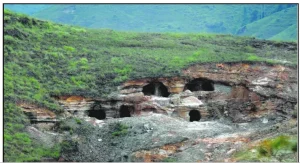
- Rat-hole mining is a primitive, labour-intensive method involving narrow horizontal or vertical tunnels, often just 3–4 feet high, to extract coal.
- Process of Rat-Hole Mining
- Site identification: Small groups identify coal-bearing hill slopes using minimal geological knowledge, often selecting unstable and high-risk locations.
- Tunnel excavation: Narrow vertical or horizontal tunnels (3–4 feet wide) are dug manually using rudimentary tools, without structural supports.
- Manual extraction: Miners crawl inside poorly ventilated shafts to chip out coal, which is transported by hand through cramped passages.
- Environmental Impact
- Deforestation and erosion: Clearing vegetation destabilises hillsides, increasing landslides and sedimentation of rivers.
- Water and soil pollution: Acid mine drainage contaminates surface and groundwater, reduces soil fertility, and damages agriculture.
- Biodiversity loss: Mining in ecologically sensitive areas destroys habitats and disrupts local ecosystems.
- Safety and Health Concerns
- Fatal working conditions: Unsupported tunnels are prone to collapse and flooding, while poor ventilation leads to toxic gas buildup and oxygen deficiency, causing frequent suffocation deaths.
- In 2018, 15 miners drowned in an illegal mine in East Jaintia Hills, and similar incidents occurred in 2021 and 2025, with water from nearby rivers or underground aquifers entering into the tunnels.
- Occupational diseases: Prolonged coal dust exposure leads to respiratory illnesses such as pneumoconiosis (black lung disease).
- Community health risks: Polluted air and water adversely affect nearby populations, increasing disease burden.
- Social Impact
- Labour exploitation: The practice relies on poorly paid workers and child labour.
- Livelihood insecurity: Environmental degradation undermines agriculture and traditional livelihoods, trapping communities in poverty.
- Legal Status: Banned by the National Green Tribunal in 2014 due to recurring fatalities.
- Upheld by the Supreme Court in 2019, declaring it illegal under the Mines and Minerals (Development and Regulation) Act, 1957.
- Current Presence in India
- Predominantly found in Meghalaya, especially East Jaintia Hills.
- Also reported in parts of Assam’s Dima Hasao district, despite the ban.
Reasons for Repeated Accidents
- Weak enforcement and governance gaps: Ambiguous land ownership and limited state oversight allow illegal mines to operate unchecked.
- Economic distress and coal demand: Poverty, lack of alternative livelihoods, and steady demand sustain unsafe mining practices.
- Absence of safety standards: Crude tunnels, poor ventilation, and unregulated use of explosives lead to frequent collapses and suffocation.
The recurring rat-hole mining tragedies underline the urgent need for strict enforcement, livelihood alternatives, and ecological accountability to protect lives and the environment.


 6 Feb 2026





.png)






 Current Affairs




 GS Foundation
 Optional Course
 Combo Courses
 Degree Program