India is considering “reptile patrols” in riverine gaps along the India–Bangladesh border to address surveillance challenges in marshy, unfenced areas.
UPSC Coaching Classes
Key Highlights of the “Reptile Patrols” Initiative
- Proposal: Use of natural predators like crocodiles/snakes as biological deterrents in riverine stretches where fencing and patrol infrastructure are ineffective.
- Rationale: Aims to strengthen border security amid manpower shortages, porous terrain, and rising smuggling/infiltration risks.
- Concerns: Raises ethical, ecological, and human rights issues, including risk to local populations and potential international criticism.
Policy Shift: Reflects a move towards a “deterrence-first” and unconventional border management strategy integrating nature with security.
About India–Bangladesh Border
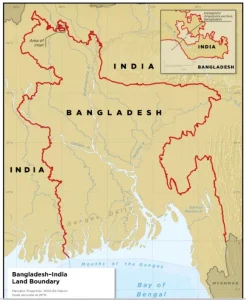
- Vast Line : The border is ~4,096 km long, making it India’s longest land border, with riverine, marshy, agricultural, and densely populated stretches.
- Porosity & Terrain: Approximately 175 km is riverine, making fencing difficult and leading to high vulnerability to illegal crossings.
Key Concerns
- Illegal migration and infiltration due to porous borders.
- Smuggling and human trafficking networks.
- Frequent tensions and human rights concerns involving border forces.
Key Bodies Responsible for Border Management
- Ministry of Home Affairs (MHA): Nodal authority for border management policies and coordination.
- Border Security Force (BSF): Guards India–Pakistan and India–Bangladesh borders under the “one border one force” principle.
- Assam Rifles: Secures India–Myanmar border with counter-insurgency focus.
- Indo-Tibetan Border Police (ITBP): Guards India–China border along with the Army.
- Sashastra Seema Bal (SSB): Manages open borders with Nepal and Bhutan.
- Indian Army: Responsible for Line of Control (LoC) and Line of Actual Control (LAC).
- Border Roads Organisation (BRO): Develops infrastructure in border areas under the Ministry of Defence.
Click to Know UPSC Coaching Centres in India
Current Initiatives for Better Border Management
- Comprehensive Integrated Border Management System (CIBMS): Integrates sensors, surveillance, and intelligence for real-time monitoring.
- Border Electronically Dominated QRT Interception Technique (BOLD-QIT): It is a smart, sensor-based surveillance project implemented on the Indo-Bangladesh border in Dhubri district, Assam, specifically over the Brahmaputra River.
- Border Infrastructure and Management (BIM) Scheme: Develops fencing, roads, floodlighting, and border outposts.
- Border Area Development Programme (BADP): Promotes socio-economic development in border regions.
- Integrated Check Posts (ICPs): Facilitate secure trade and movement with advanced infrastructure.
- Hi-tech Surveillance (UAVs, sensors): Enhances monitoring of difficult terrains and emerging threats.
- Vibrant Villages Programme: Develops border villages to reduce outmigration and improve security presence.