Restitution of Bronze Sculptures

11 Feb 2026

Restitution of Bronze Sculptures

Recently, the Smithsonian’s National Museum of Asian Art announced the return of three illegally removed South Indian bronze sculptures to India.
About the Three Returned Sculptures

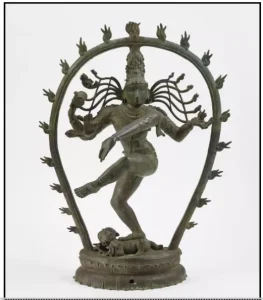
Shiva Nataraja (Chola Period, c. 990 CE)

Bronze Sculptures

  • Origin: Originally housed in the Sri Bhava Aushadesvara Temple, Thanjavur district, Tamil Nadu.
  • Features:
    • It depicts Shiva in the dynamic Ananda Tandava, encircled by a flaming aureole symbolising the cosmos, with matted locks flying and one foot subduing Apasmara, the demon of ignorance.
    • Cast in bronze using the lost-wax (cire perdue) technique.
  • Cultural Significance:
    • The image embodies the cyclical process of creation, preservation and dissolution.
    • Represent the philosophical core of Shaivism and Chola artistic excellence.

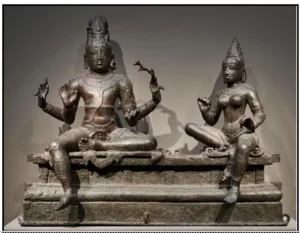
Somaskanda (Chola Period, 12th Century)

Bronze Sculptures

  • Origin: From the Visvanatha Temple, Mannargudi, Tamil Nadu.
  • Features:
    • Shows Shiva and Parvati seated in regal posture, with Skanda originally cast separately.
    • It is designed as a portable utsava murti for ceremonial processions.
  • Cultural Significance:
    • Symbolises divine family unity, fertility and royal legitimacy, central to Tamil Shaiva temple worship.

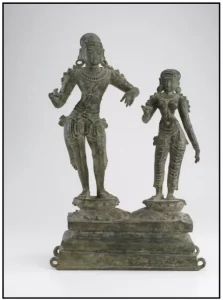
Saint Sundarar with Paravai (Vijayanagar Period, 16th Century)

Bronze Sculptures

  • Origin: Shiva Temple, Veerasolapuram village, Tamil Nadu.
  • Features:
    • Portrays the 8th-century Shaivite saint Sundarar with his consort Paravai.
    • Figures shown in devotional stance.
    • Adorned with intricate ornaments typical of Vijayanagar bronzes.
  • Cultural Significance:
    • Reflects the Bhakti movement’s emphasis on personal devotion and ritual celebration in South Indian temples.

About Smithsonian’s National Museum of Asian Art (NMAA)

  • NMAA is a leading U.S. museum dedicated to preserving and exhibiting Asian art and cultural heritage. It functions under the Smithsonian Institution.
  • Location: Washington, D.C, United States of America
  • Mandate and Ethics: The museum conducts provenance research and follows the 1970 UNESCO Convention to ensure ethical acquisition and restitution of artefacts.
    • The 1970 UNESCO Convention is convention on the Means of Prohibiting and Preventing the Illicit Import, Export and Transfer of Ownership of Cultural Property

Check Out UPSC CSE Books

Visit PW Store

online store 1

Significance of Restitution

  • Ethical Accountability: Restoration corrects historical injustices linked to illicit trafficking and weak past acquisition norms.
  • Cultural Sovereignty: Reaffirms India’s ownership over sacred heritage removed without consent.
  • International Collaboration: Encourages partnerships, long-term loans and global cultural exchanges based on trust and transparency.

Enroll in SRIJAN Prelims Crash Course

Need help preparing for UPSC or State PSCs?

Connect with our experts to get free counselling & start preparing

Aiming for UPSC?

Download Our App

      
Quick Revise Now !
AVAILABLE FOR DOWNLOAD SOON
UDAAN PRELIMS WALLAH
Comprehensive coverage with a concise format
Integration of PYQ within the booklet
Designed as per recent trends of Prelims questions
हिंदी में भी उपलब्ध
Quick Revise Now !
UDAAN PRELIMS WALLAH
Comprehensive coverage with a concise format
Integration of PYQ within the booklet
Designed as per recent trends of Prelims questions
हिंदी में भी उपलब्ध

<div class="new-fform">


    </div>

    Subscribe our Newsletter
    Sign up now for our exclusive newsletter and be the first to know about our latest Initiatives, Quality Content, and much more.
    *Promise! We won't spam you.
    Yes! I want to Subscribe.