On 23 March 2026, Prime Minister Narendra Modi paid tribute to martyrs on Shaheed Diwas, marking their sacrifice in India’s freedom struggle.
About Shaheed Diwas
- Shaheed Diwas is observed annually on 23 March in India to honour the martyrdom of revolutionary freedom fighters Bhagat Singh, Shivaram Rajguru, and Sukhdev Thapar.
- Background: On 23 March 1931, these revolutionaries were executed by British authorities in Lahore Jail for their role in anti-colonial activities.
- The Lahore Conspiracy Case (1929–1931) was a landmark trial where British authorities prosecuted Indian revolutionaries Bhagat Singh, Sukhdev, and Rajguru for the 1928 murder of police officer J.P. Saunders.
- Theme for 2026: The theme for Shaheed Diwas 2026 is “Mera Bharat Meri Zimmedari” (My India, My Responsibility), emphasising youth responsibility and active participation in nation-building.
About Bhagat Singh
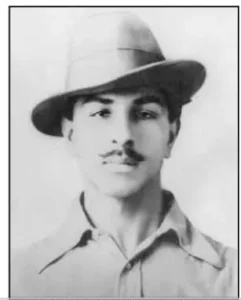
- Bhagat Singh (1907–1931) was a prominent revolutionary socialist who became a symbol of India’s anti-colonial struggle.
- Early Life & Education: Born in Punjab (1907), he was deeply influenced by the Jallianwala Bagh massacre and studied at National College, Lahore (1920s), where he developed radical ideas.
- Key Contributions
-
- He carried out the Central Legislative Assembly bombing (1929) with Batukeshwar Dutt to protest repressive laws.
- He also participated in Saunders’ assassination (1928),
- He promoted socialist ideology through HSRA (1928) and founded Naujawan Bharat Sabha (1926).
- He used to write for various revolutionary journals in Urdu , Hindi , English and Punjabi.
- He authored works like Why I Am an Atheist (1930).
- Legacy: Executed on 23 March 1931 at the young age of 23, he remains an enduring symbol of courage, intellectual clarity, and revolutionary nationalism.
About Shivaram Rajguru
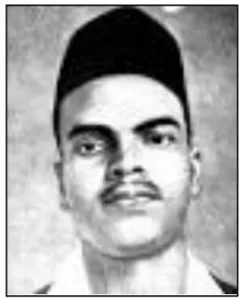
- Shivaram Rajguru (1908–1931) was a courageous revolutionary known for his militant actions against British rule.
- Early Life & Education: Born in Maharashtra (1908), he acquired physical training and developed strong nationalist ideals during his early years.
- Key Contributions :
-
- He played a decisive role in the assassination of J.P. Saunders (1928) to avenge Lala Lajpat Rai who lost his life during protest against Simon Commission (1928)
- He was an active member of HSRA (1928).
- He contributed as a skilled marksman ( precision shooter) in revolutionary missions.
- Legacy: Executed on 23 March 1931, he is remembered for his bravery, commitment, and youthful sacrifice.
Enroll now for UPSC Online Course
About Sukhdev Thapar
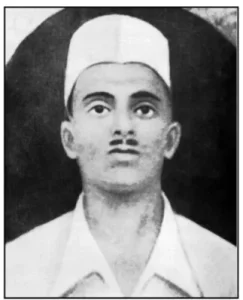
- Sukhdev Thapar (1907–1931) was a key revolutionary organiser and ideologue in the Indian freedom movement.
- Early Life & Education: Born in Ludhiana (1907), he became actively involved in nationalist and revolutionary activities during his student years.
- Key Contributions:
- He organised HSRA networks in Punjab (1920s).
- He also played a central role in the Lahore Conspiracy Case
- He emphasised disciplined organisation and mobilised youth for the freedom struggle.
- Legacy: Executed on 23 March 1931, he is remembered for his leadership, organisational strength, and unwavering dedication to India’s independence.
Significance of Shaheed Diwas
- Symbol of Sacrifice and Patriotism: Shaheed Diwas commemorates the supreme sacrifice of young revolutionaries, reinforcing values of courage and national devotion.
- Inspiration for Youth: The day inspires young citizens to uphold ideals of justice, equality, and active civic participation.
- Strengthening National Consciousness: It serves as a reminder that India’s freedom was achieved through collective struggle, encouraging commitment to constitutional values and nation-building.


 24 Mar 2026



.png)




 Current Affairs




 GS Foundation
 Optional Course
 Combo Courses
 Degree Program