Southern Ocean Carbon ‘Anomaly’

22 Dec 2025

Southern Ocean Carbon ‘Anomaly’

A key 2024-2025 study has explained Southern Ocean Carbon “anomaly” as a temporary effect due to increased surface freshening and stratification.
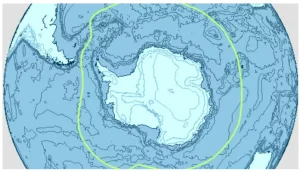
What is the Southern Ocean Carbon Anomaly?

Southern Ocean Carbon ‘Anomaly’

  • The Southern Ocean carbon anomaly refers to the unexpected behavior of the Southern Ocean as a carbon sink in recent decades. 
  • Climate models predicted it would weaken and absorb less CO₂ (or even release more), but observations showed it absorbing more CO₂ than expected since the early 2000s. 

Key Facts About the Southern Ocean

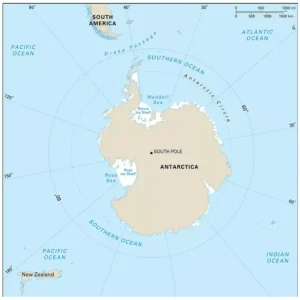
  • Location: The Southern Ocean surrounds Antarctica, extending from the continent’s coastline north to the 60° South latitude.
  • Uninterrupted Ring: It is the only ocean that circles the globe completely uninterrupted by land, connecting the southern portions of the Atlantic, Pacific, and Indian Oceans.
  • Coldest Ocean on Earth: It is dominated by polar climatic conditions. It has extensive seasonal sea ice cover, especially in winter.
  • Covers 25-30% of global ocean area.
  • Absorbs about 40% of all human-emitted CO₂ taken up by oceans.
  • Cold, fresh surface layers act like a “lid” over warmer, saltier, carbon-rich deeper waters.
  • This stratification traps CO₂, making the ocean a major carbon sink.
  • Small changes (e.g., freshwater influx, wind patterns, circulation) could turn it into a CO₂ source.

Check Out UPSC CSE Books

Visit PW Store

online store 1

What Earlier Climate Models Predicted

Southern Ocean Carbon ‘Anomaly’

  • For nearly two decades, models suggested the Southern Ocean would become less effective as a carbon sink due to warming:
    • Strengthening westerly winds (from greenhouse gases and ozone depletion)
    • Poleward shift of winds
    • Increased upwelling of deep, carbon-rich waters
  • Result: More CO₂ released to the atmosphere, weakening the ocean’s buffering role.

Key Findings of the New Research

  • A new research was published in Nature Climate Change titled “Southern Ocean freshening stalls deep ocean CO₂ release in a changing climate”.
  • Climate models got part of it right: Stronger winds around Antarctica are pushing deep, carbon-rich water closer to the surface (about 40 meters higher since the 1990s). 
    • This should make the ocean release more CO₂ into the air, weakening its role as a “carbon sponge.”
  • The ocean is still absorbing more CO₂ than expected: The Southern Ocean has been taking in extra CO₂ since the early 2000s, not releasing it, this is the “anomaly” or surprise.
  • The reason: A protective “lid” of fresh water: The surface water has become less salty (fresher) due to more rain, melting glaciers, and moving sea ice. 
    • Fresh water is lighter, so it floats on top and creates stronger layers (called stratification). 
    • This lid traps the carbon-rich deep water 100–200 meters below the surface, stopping it from reaching the air.
  • The anomaly is only temporary: This fresh-water lid is starting to get thinner (observed since the mid-2010s), and surface water is getting saltier again in some areas. 
    • Stronger winds could soon break through the lid, letting the trapped CO₂ escape suddenly.

Need help preparing for UPSC or State PSCs?

Connect with our experts to get free counselling & start preparing

Aiming for UPSC?

Download Our App

      
Quick Revise Now !
AVAILABLE FOR DOWNLOAD SOON
UDAAN PRELIMS WALLAH
Comprehensive coverage with a concise format
Integration of PYQ within the booklet
Designed as per recent trends of Prelims questions
हिंदी में भी उपलब्ध
Quick Revise Now !
UDAAN PRELIMS WALLAH
Comprehensive coverage with a concise format
Integration of PYQ within the booklet
Designed as per recent trends of Prelims questions
हिंदी में भी उपलब्ध

<div class="new-fform">


    </div>

    Subscribe our Newsletter
    Sign up now for our exclusive newsletter and be the first to know about our latest Initiatives, Quality Content, and much more.
    *Promise! We won't spam you.
    Yes! I want to Subscribe.