The ongoing conflict in West Asia, involving Iran, Israel, and the United States, is not only disrupting global oil and gas markets but also threatening supplies of critical industrial raw materials to India.
- The region is a major supplier of industrial minerals and inputs, and India imported goods worth $98.7 billion from West Asia in 2025, making several core sectors vulnerable to supply disruptions.
- The crisis highlights a critical supply-chain vulnerability for India, showing that industrial security and manufacturing resilience are closely tied to geopolitical stability in West Asia.
Key Findings- Sector-wise Impact
The conflict affects four major pillars of the Indian economy—construction, agriculture, manufacturing, and energy infrastructure.
- Construction & Cement Sector: India imports 68.5% of its limestone and 62.1% of its gypsum from West Asia, both essential for cement production and infrastructure projects.
- Fertiliser Sector (Agriculture): Around 65.8% of India’s sulphur imports come from the region. Sulphur is used to produce sulphuric acid, a key input in fertiliser manufacturing.
- Steel Industry: India imports 59.1% of its Direct Reduced Iron (DRI) from West Asia, an important raw material for steelmaking and industrial manufacturing.
- Power & Renewable Energy Infrastructure: About 50.7% of India’s copper wire imports originate from the region, which are critical for power transmission networks, electrical equipment, EV infrastructure, and renewable energy projects.
- Gems and Jewellery Sector: Over 40% of India’s rough diamonds are imported from West Asia and processed in cutting and polishing hubs such as Surat.
About India’s Core Industries
- India’s Eight Core Industries represent the backbone of the industrial economy and account for about 40% of the weight in the Index of Industrial Production (IIP). These include:
- Coal, Crude Oil, Natural Gas, Refinery Products, Fertilisers, Steel, Cement, & Electricity
- These sectors are critical for infrastructure development, energy security, manufacturing growth, and overall economic activity.
|
Strategic Concerns for India
- Supply-Side Inflation: Disruptions in imports of limestone and gypsum may increase cement prices, potentially delaying infrastructure initiatives such as PM Gati Shakti National Master Plan.
- Energy–Steel Nexus: Many Indian steel plants rely on LNG and gas-based technologies as part of their decarbonisation strategy, making the sector vulnerable to volatility in global gas prices.
- The Strait of Hormuz Chokepoint: Disruptions to shipping through the Strait of Hormuz—one of the world’s most critical trade routes—could jeopardise over $100 billion worth of Indian trade flows.
- Fertiliser Supply Risks: While the fertiliser sector may not face an immediate impact due to the current off-season, prolonged disruptions could affect urea production and fertiliser availability for the upcoming agricultural season.
Way Forward
- Diversification of Import Sources: Industry experts suggest sourcing limestone from Thailand and Vietnam and DRI from countries such as Libya or Malaysia, though these alternatives may involve higher logistics costs.
- Energy Security Measures: India may further diversify energy imports by increasing purchases of discounted Russian crude and exploring long-term LNG contracts with countries such as the United States and Australia.
- Strengthening Domestic Mineral Supply: The crisis highlights the need to accelerate domestic mining of limestone and gypsum to reduce excessive dependence on imports from a single region.
- Supply Chain Resilience: Developing resilient and diversified industrial supply chains is crucial to protect Indian manufacturing from geopolitical disruptions.
About the West Asia Region
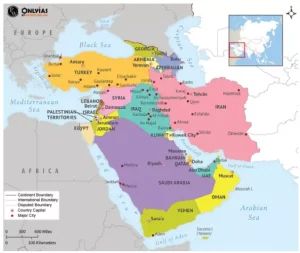
- The region includes the six members of the Gulf Cooperation Council (GCC) — Bahrain, Kuwait, Oman, Qatar, Saudi Arabia, and the United Arab Emirates — along with countries such as Iran, Iraq, Israel, Jordan, Lebanon, Syria, and Yemen.
- It is a strategic hub for global energy supplies, maritime trade routes, and industrial raw materials.
|


 7 Mar 2026






.png)






 Current Affairs




 GS Foundation
 Optional Course
 Combo Courses
 Degree Program