Prime Minister underscored India’s willingness to share its Digital Public Infrastructure (DPI) with Commonwealth countries during the 28th Conference of Speakers and Presiding Officers of the Commonwealth (CSPOC), hosted by India.
What is Digital Public Infrastructure?
- Definition: Digital Public Infrastructure (DPI) is a set of foundational digital systems that forms the backbone of modern societies.
- Functions as a digital public good because it is designed to be widely accessible, non-exclusionary by design, and capable of supporting multiple services across sectors
- Purpose: DPI enables secure and seamless interactions between people, businesses and governments.
Core Pillars of DPI
- Digital Identity Layer: The digital identity layer enables accurate verification of individuals so that services and benefits reach the intended beneficiaries.
- Digital Document Infrastructure: The digital document layer allows storage, access, and verification of official documents, reducing dependence on physical paperwork.
- Data Exchange and Consent Layer: The data exchange layer enables secure and consent-based sharing of data, which improves service efficiency while protecting user autonomy.
- Digital Payments Layer: The digital payments layer enables fast, low-cost, and secure financial transactions that support financial inclusion and formalization.
- Interoperable Platforms: Interoperability ensures that multiple service providers can build applications on common digital rails without creating silos.
India Stack
- India Stack refers to a set of open and interoperable digital building blocks that enable paperless, cashless, and presence-less delivery of services by allowing identity verification, digital payments, and secure data sharing at scale.
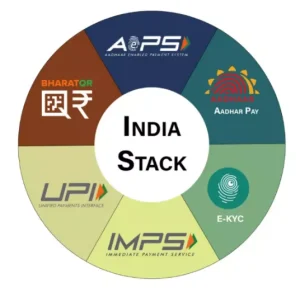 Three Interconnected Layers of India Stack
-
- Identity Layer: Secure digital identification and authentication.
- Payment Layer: Facilitates fast, low-cost, and interoperable digital transactions.
- Example: Unified Payments Interface (UPI), Aadhaar Payment Bridge.
- Data Governance Layer: Secure, consent-based data sharing and digital document management.
- Example: DigiLocker and the Account Aggregator framework.
Global Adoption of India Stack
- Digital Payments (UPI): Linked with Singapore (PayNow), UAE, and France
- Digital Identity Platforms: Modular Open Source Identity Platform (MOSIP) adopted by countries such as Philippines, Morocco and Ethiopia.
|
About the Conference of Speakers and Presiding Officers of the Commonwealth (CSPOC)
- Overview: It is a forum that brings together the Speakers and Presiding Officers of national parliaments from independent sovereign states of the Commonwealth.
- Origin and Establishment: CSPOC was established in 1969 as an initiative of Lucien Lamoureux, the then Speaker of the House of Commons of Canada.
- Objective: To strengthen parliamentary leadership and cooperation
- Secretariat:
- Hosted and supported by Canada since inception.
- Provides administrative and institutional assistance for CSPOC’s functioning.
- Institutional Status:
- Functions as an independent body.
- No formal affiliation with:
- Commonwealth Parliamentary Association (CPA)
- Commonwealth Secretariat
- Commonwealth Heads of Government Meeting (CHOGM)
- Membership Criteria: Restricted to Speakers and Presiding Officers of national parliaments of sovereign Commonwealth states
- Working Cycle and Meetings: Operates on a two-year cycle:
- Full Conference: Held every two years (usually January).
- Standing Committee Meeting: Held in the intervening year.
- Governance Structure:
- Standing Committee: Oversees CSPOC activities.
- Composed of 15 members; quorum = 5.
- Chaired by Speaker of the lower House of the next host jurisdiction.
- Term: From end of one conference → end of next.
- Objectives of CSPOC:
- Maintain, foster, and encourage impartiality and fairness on the part of Speakers and Presiding Officers of Parliaments;
- Promote knowledge and understanding of parliamentary democracy in its various forms; and
- Develop parliamentary institutions.
28th CSPOC Conference
- Host: India is hosting the 28th Conference, marking fourth occasion on which India has hosted CSPOC (Earlier in 1971, 1986 and 2010)
- Key Focus Areas:
-
- The integration of artificial intelligence (AI) and social media in legislative functioning,
- Enhancing public engagement with parliamentary institutions, and
- Ensuring the safety and security of Members of Parliament.
|


 17 Jan 2026





.png)






 Current Affairs




 GS Foundation
 Optional Course
 Combo Courses
 Degree Program