Books

Gold Mines in India are mainly found in Karnataka, Andhra Pradesh, and Jharkhand, including regions like Kolar Gold Fields, Hutti Gold Mines Limited, and Ramagiri Gold Mine. These mines are linked with ancient rock formations and support limited domestic gold production through underground mining and ongoing exploration.
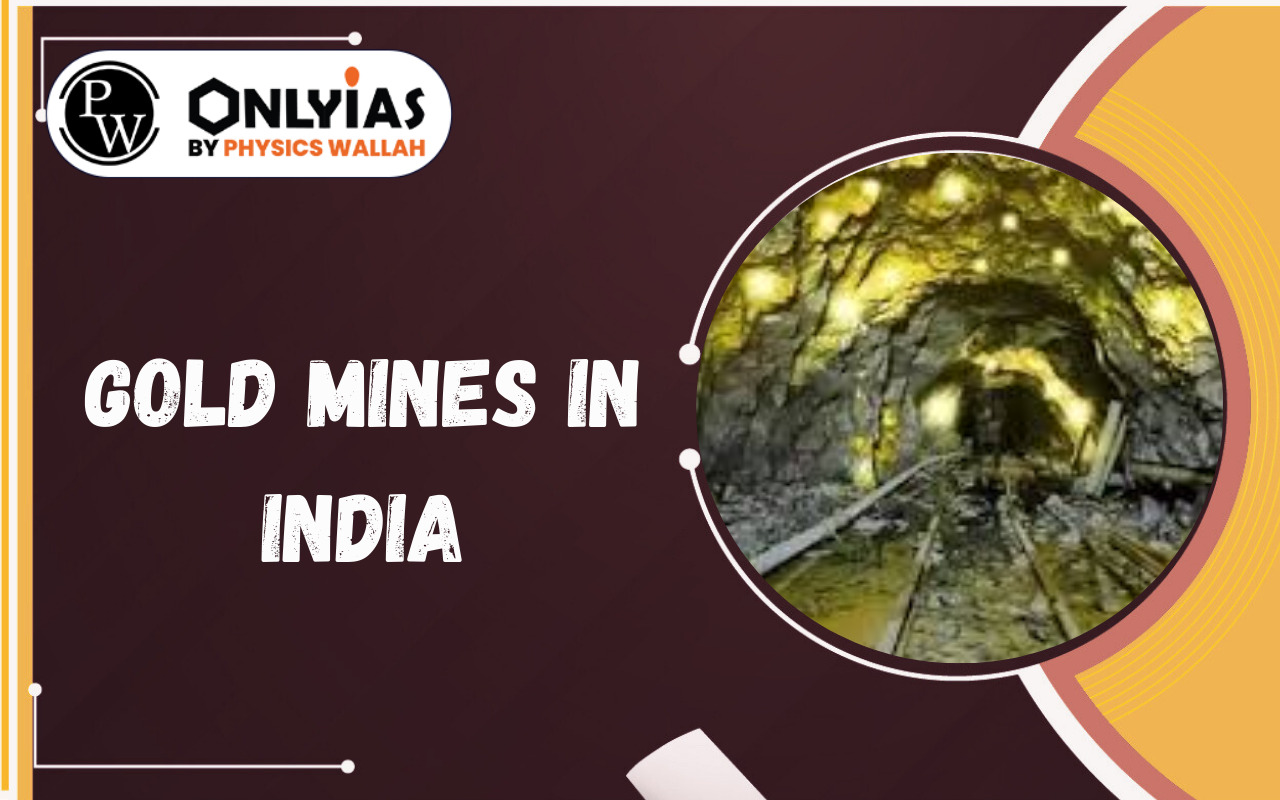
Gold has played an important role in India’s economic and cultural history for centuries. Even today, it continues to hold value as a strategic mineral resource. Apart from its traditional importance, gold is widely used in financial systems, electronics, and industrial manufacturing. The presence of Gold Mines in India is mainly linked with ancient rock formations and river-based deposits. These reserves are unevenly spread across different parts of the country.
Here, we’ll explain the distribution of Gold Mines in India, their geological presence, and the major regions where mining activities have taken place over time.
Gold mining in India is mainly carried out through hard rock deposits and alluvial sources. These deposits are found in ancient geological formations such as the Peninsular Plateau. In some regions, gold is also present in river sands. These deposits are formed through long geological processes over millions of years.
Gold mining in India includes both underground and surface-level operations. Most of the mining work is done through underground gold mining India methods because the metal is usually found deep inside the Earth’s crust.
Gold reserves in India are associated with metamorphic rocks, quartz veins, and greenstone belts. These are some of the oldest geological structures found in the country. Gold mineralisation mostly occurs in areas that belong to the Dharwar Craton.
The gold distribution in India shows a strong concentration in southern and eastern states. The presence of gold ore resources in India depends on geological stability and tectonic history. Many regions have limited commercial mining activity due to low-grade ore deposits.
Several states contribute to gold production in India. However, only a few have operational mines. These gold producing states in India include:
Among these, Karnataka remains a significant contributor due to its well-known mining belts. Gold mining is carried out in both primary and placer deposits across these states.
India’s total gold ore resources are estimated at 518.23 million tonnes. This includes 607.26 tonnes of gold metal content from primary sources. An additional 5.86 tonnes of gold metal come from placer deposits. Karnataka holds the largest share of gold metal content. Rajasthan and Bihar also contain significant gold ore resources.
|
Gold Reserves and Resources |
||
| State | Gold Ore Resources (Million Tonnes) | Gold Metal Content (Tonnes, Primary) |
| Bihar | 222.88 | 37.60 |
| Rajasthan | 125.91 | 234.56 |
| Karnataka | 103.01 | 251.17 |
| Andhra Pradesh | 15.73 | 47.17 |
| Jharkhand | 10.08 | 15.43 |
There are many important mining regions across the country. The list of gold mines in India includes both active and inactive mining sites that have contributed to production over time.
Located in Karnataka, this region is one of the oldest mining areas in the country. It is also known as the largest gold mine in India in terms of historical output. Mining activities in this region reached depths of more than three kilometres. Gold was mainly found in quartz reefs within ancient metamorphic rocks.
Mining operations have now reduced due to the limited availability of high-grade ore.
The Hutti gold mines are located in the Raichur district of Karnataka. Hutti Gold Mines Karnataka, is currently one of the few active mining regions in the country. Gold is found in schist belts associated with the Dharwar geological system.
The mine is operated by a state-owned enterprise and continues to contribute to gold production in India despite declining ore quality.
The Ramagiri gold mine is situated in the Anantapur district. It is one of the main gold mines in Andhra Pradesh. Gold occurs here in quartz veins within crystalline rock systems.
Mining activity has declined in recent years because of higher extraction costs and low-grade deposits.
Apart from the major mining areas, smaller deposits are found in various parts of the country.
Jharkhand has placer gold deposits in river sands. These are found in the Subarnarekha River and nearby regions. These deposits are not extensively mined but hold geological importance.
Sonbhadra gold deposits have attracted attention due to the reported presence of gold-bearing ore. The area is being studied for future mining possibilities.
Most Gold Mines in India use underground extraction techniques. These methods are suitable for hard rock deposits found in the Dharwar region. Underground gold mining India operations generally include the following steps:
Modern gold mining companies in India focus on improving recovery rates and reducing environmental impact. Safety measures are also given importance in deep mining operations.
The overall gold production in India is modest when compared to global leaders. However, domestic mining reduces dependence on imports to some extent. Continued exploration and technology upgrades may improve output in the future.
The Geological Survey of India gold exploration projects play a key role in identifying new deposits. Detailed geological mapping, drilling surveys, and laboratory analysis help in estimating reserves. Exploration efforts are ongoing in several states, including parts of central and eastern India.
The publication of updated data also supports policymakers and investors. With better geological understanding, the potential for new Gold Mines in India may increase over time.
The Indian government has introduced policies to promote gold mining. The Mines and Minerals (Development and Regulation) Act amendments aim for transparent auction processes and longer lease periods. The National Minerals Exploration Policy (NMEP) and National Mineral Policy (NMP 2019) seek to streamline approvals, attract investment, and enhance exploration. These measures promote a “Make in India Gold” approach.
A gold mines map of India shows that most active mining areas are located in southern India. Karnataka stands out as the main centre. Eastern and central regions show scattered deposits. Northern India has limited confirmed resources.
The regional concentration of Gold Mines in India highlights the importance of geological conditions. Areas with ancient rock formations are more likely to contain economically viable deposits.
Gold holds economic value as a financial asset and industrial resource. Mining activities generate employment and support local economies. The presence of major gold mines in India also reduces partial dependence on imported bullion.
While gold reserves in India are not as extensive as those in some other countries, the strategic importance remains high. Investment in exploration and improved mining technology can help strengthen domestic supply.
Gold Mines in India are mainly concentrated in the Peninsular Plateau, especially in Karnataka. Historic regions like Kolar Gold Fields and active sites such as Hutti gold mines have shaped the country’s mining history. Other states like Andhra Pradesh, Jharkhand, and Rajasthan also contribute through smaller deposits.
The geological setting plays a major role in determining gold distribution in India. Continued surveys by the Geological Survey of India and responsible mining practices will guide future development. Although production levels are limited, the importance of Gold Mines in India remains significant for economic and strategic reasons.
Check Out UPSC CSE Books
The Hutti Gold Mines in Karnataka is currently the largest and only active major gold mine in India.
Karnataka is the leading gold producing state, contributing over 99% of primary gold production. Jharkhand also contributes a small amount.
No, the Kolar Gold Fields in Karnataka were closed in 2001 due to economic and environmental reasons. There are plans to revive it.
Significant new gold deposits were discovered in Sonbhadra district, Uttar Pradesh, by the Geological Survey of India in 2020.
Challenges include complex regulatory processes, high import taxes on mining equipment, and inadequate infrastructure in remote mining areas.


Connect with our experts to get free counselling & start preparing
Books
Udaan (Prelims Wallah)
Prahaar (Mains Wallah)
Q&A Bank (Prelims & Mains)
Budget & Economic Survey
NCERT Wallah
Marks Booster
हिंदी माध्यम विशेष शृंखला
 Current Affairs
Monthly Current Wallah
Subject Wise Current Affairs
Editorial Analysis
Editorial PDFs
News of The Day
Download Our App



Download Our App
<div class="new-fform">
</div>

 GS Foundation
 Optional Course
 Combo Courses
 Degree Program