Books

Humayun, the second Mughal emperor, ruled from 1530–1540 and 1555–1556, faced exile after defeats by Sher Shah Suri, and regained the throne with Persian support. His reign shaped Mughal revival, and Humayun’s Tomb is India’s first garden tomb.
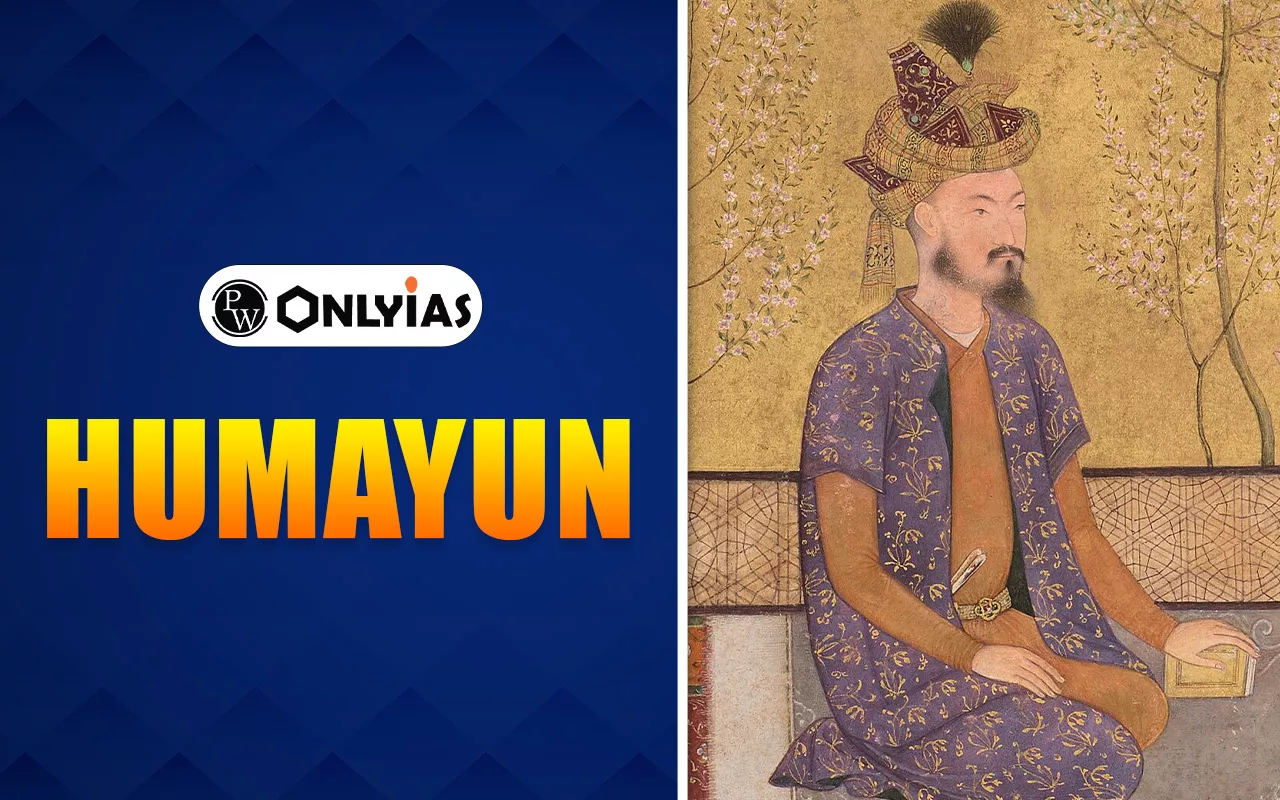
Humayun (Mirza Nasir ud-din Baig Muhammad Khan Humayun),is the second emperor of the Mughal Empire. He is one of the most fascinating personalities of medieval Indian history. Humayn’s life reflects the dramatic journey of rise, fall, struggle, and more. That is from inheriting vast lands but an unstable empire to losing to Sher Shah Suri and ultimately reclaiming it after 15 years of exile; he went through all.
Humayun’s story highlights resilience, diplomacy, and strategic alliances. He also laid the foundation for the powerful Mughal rule under Akbar. For UPSC aspirants, Humayun’s reign is crucial to understanding Mughal administration, military challenges, and the early consolidation of the empire.
Humayun was born as Nasir-ud-Din Muhammad Humayun. He was the second ruler of the Mughal Empire and the eldest son of Babur. He ruled India in two phases: 1530 to 1540 and 1555 to 1556.
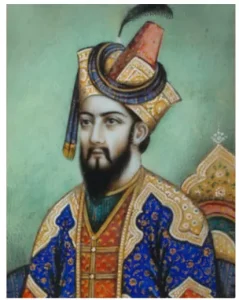
Despite facing multiple setbacks, especially defeat at the hands of Sher Shah Suri. He was yet able to preserve the Mughal legacy through perseverance and diplomacy. His second reign restored Mughal authority and paved the way for Akbar’s strong empire. Humayun is remembered for his cultural interests, Persian influence, and strategic alliances.
Provided here is the Biography of Humayun that reflects on the political, military, and other challenges that he went through. His life journey began from being a young prince in Kabul till being the emperor who reclaimed his lost empire, playing a major role in shaping the Mughal Empire. So check the table below for more detailed information
| Humayun Biography | |
| Category | Details |
| Humayun Full Name | Nasir-ud-Din Muhammad Humayun |
| Birth | 17 March 1508, Kabul |
| Father | Babur |
| Mother | Maham Begum |
| Dynasty | Mughal |
| First Reign | 1530–1540 |
| Exile Period | 1540–1555 |
| Support in Exile | Shah Tahmasp of Persia |
| Second Reign | 1555–1556 |
| Death | 27 January 1556 |
| Successor | Akbar |
Humayun spent his childhood in Kabul, where he learned about Persian culture, stories, and basic military skills. He studied subjects like maths, poetry, and astronomy. As a young boy, he was also made the governor of Badakhshan, which helped him learn how to manage people and places.
Humayun was smart, kind, and loved reading and learning more than fighting. Still, he helped his father Babur in battles and gained some military experience. These early years made him a brave but gentle ruler who believed more in peace, learning, and understanding than in war.
Humayun belonged to the Timurid-Mughal lineage and had a close-knit yet politically significant family.
Humayun had several wives, the most notable being:
| Children | ||
| Child | Mother | Notes |
| Akbar | Hamida Banu Begum | Succeeded Humayun; greatest Mughal ruler |
| Aqiqa Sultan Begum | Unknown/Disputed | Died in childhood |
Humayun’s reign was marked by several crucial battles that shaped the fate of the Mughal Empire. Provided here is the details of the battles fought by Humayun, including the tug of war between him and Sher Shah Suri:
| Major Battles of Humayun | ||||
| Battle | Year | Opponent | Outcome | Significance |
| Battle of Dourah | 1532 | Afghan rebels | Mughal victory | Strengthened Mughal control in Bihar |
| Battle of Chausa | 1539 | Sher Shah Suri | Humayun defeated | Beginning of Mughal decline |
| Battle of Kannauj (Bilgram) | 1540 | Sher Shah Suri | Major defeat | Humayun lost the throne |
| Battle of Kabul | 1555 | Kamran Mirza | Victory | Regained Kabul with Persian support |
| Battle of Sirhind | 1555 | Afghan forces | Mughal victory | Humayun restored to the throne |
Despite the fact that Humayun was often seen as a weak ruler, he made several significant contributions to the Mughal empire. Mentioned below is the table carrying all the details of the same:
| Humayun Achievements | |
| Achievement | Details |
| Re-establishment of Mughal Rule | Regained the throne in 1555 after 15 years of exile |
| Safavid Alliance | Formed a strong diplomatic and military alliance with Persia |
| Cultural Enrichment | Promoted Persian art, literature, and architecture |
| Administrative Reforms | Reorganised provinces and strengthened governance |
| Foundation for Akbar’s Empire | Stabilised the empire, enabling Akbar to expand it |
Humayun died on 27 January 1556 in Delhi under tragic circumstances. While descending the staircase of his library at Sher Mandal, he slipped and suffered a fatal injury. Some accounts say he was carrying books when he fell, highlighting his love for learning. His sudden death left the empire in the hands of his young son Akbar, who later transformed the Mughal Empire into one of the greatest in Indian history.
Check Out UPSC CSE Books
Visit PW Store
Humayun Tomb of Delhi is well known for being one of the first garden tombs in India. The Humayun tomb is built in the Persian Charbagh style. The construction was commissioned by his wife, Hamida Banu Begum. Designed by Persian architects, it replicates a perfect blend of Mughal and Persian architecture.
The monument also inspired later structures like the Taj Mahal. Its symmetrical design, red sandstone façade, domed roof, and sprawling gardens make it one of the finest examples of Mughal architecture. Today, it is a UNESCO World Heritage Site and a major historical landmark.
Ready to boost your UPSC 2026 preparation? Join PW’s UPSC online courses today!
Explore UPSC Test Series

Humayun was the second Mughal emperor and son of Babur who ruled in two phases between 1530–1540 and 1555–1556.
He lost his empire to Sher Shah Suri due to weak strategy and defeat in the Battles of Chausa and Kannauj.
Humayun regained his throne in 1555 with military support from the Persian ruler Shah Tahmasp.
He died after slipping from the staircase of his library, Sher Mandal, in Delhi.
Humayun’s Tomb is famous as India’s first garden tomb and a UNESCO World Heritage Site that inspired the Taj Mahal.



Explore SRIJAN Prelims Crash Course


Connect with our experts to get free counselling & start preparing
Books
Udaan (Prelims Wallah)
Prahaar (Mains Wallah)
Q&A Bank (Prelims & Mains)
Budget & Economic Survey
NCERT Wallah
Marks Booster
हिंदी माध्यम विशेष शृंखला
 Current Affairs
Monthly Current Wallah
Subject Wise Current Affairs
Editorial Analysis
Editorial PDFs
News of The Day
Download Our App



Download Our App
<div class="new-fform">
</div>

 GS Foundation
 Optional Course
 Combo Courses
 Degree Program