Udaan, Prahaar, Q&A Bank etc.
CA Magazines & Editorials
Interlinking of Rivers in India aims to transfer water from surplus to deficit regions through the National River Linking Project (NRLP). It can reduce water stress, droughts, and floods, but faces environmental, financial, and inter-state challenges. This is an important UPSC topic for Geography, Environment, and Disaster Management.
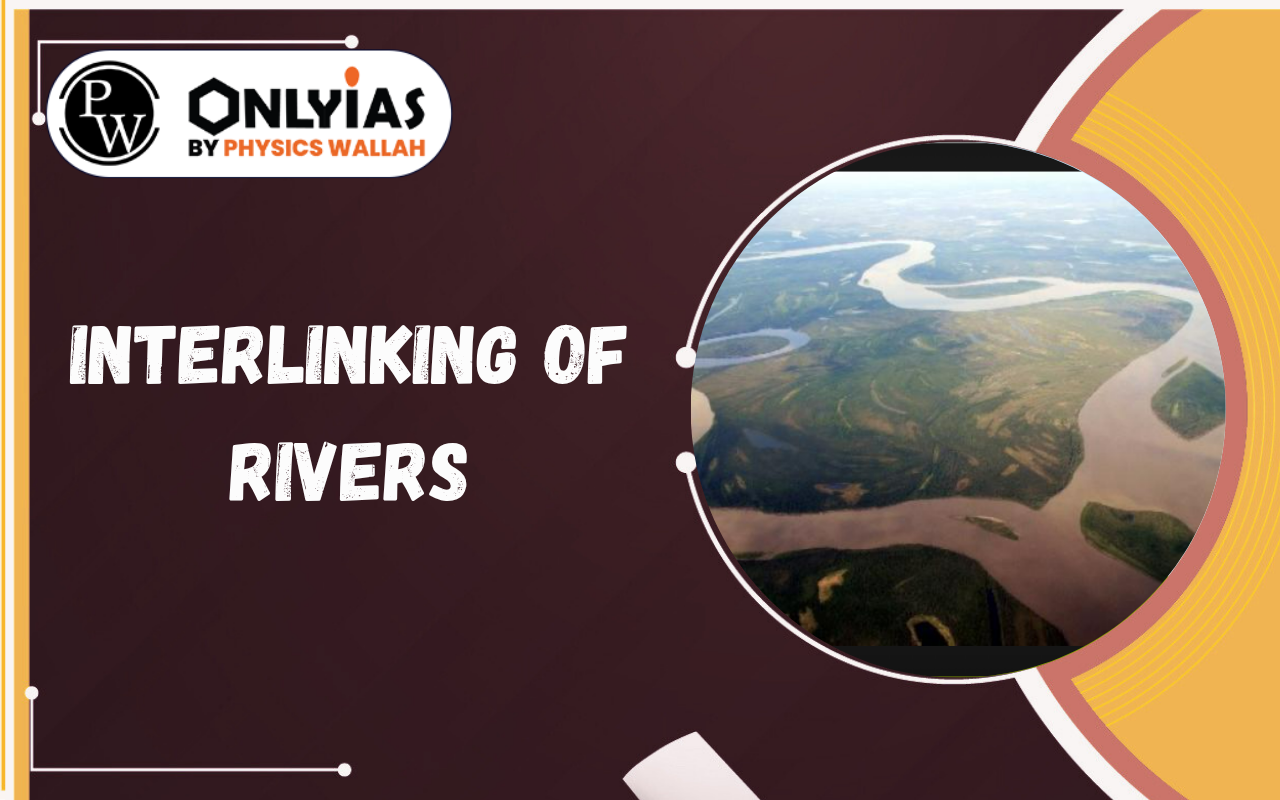
Interlinking of rivers in India is a proposed strategy to connect major rivers through canals, allowing water transfer from surplus to deficit regions. It aims to address issues like uneven water distribution, water scarcity, and recurring floods in different parts of the country.
This concept is part of the National River Linking Project (NRLP), designed to improve irrigation, ensure water availability, and support agriculture. While it offers potential benefits, it also raises concerns related to environmental impact, cost, and inter-state coordination.
This topic of ‘Interlinking of Rivers’ is important from the perspective of the UPSC IAS Examination, which falls under General Studies Paper 1 (Mains) and General Studies Paper 1 (Preliminary) and particularly in the Geography section of UPSC IAS EXAM. Here, we discuss the ‘Interlinking of Rivers’ and learn about the National River Linking Project (NRLP), its background, benefits, challenges, and more facts for the UPSC Exam!
Here are some important questions asked by UPSC in previous years related to the Interlinking of Rivers and associated water resource issues;
Interlinking of rivers in India refers to connecting rivers through canals to form a national water grid. The aim is to transfer water from surplus basins to deficit regions.
This concept helps:
Explore UPSC Foundation Courses

Explore UPSC Foundation Courses

The idea of interlinking rivers in India has evolved over time—from early proposals during the British era to multiple government initiatives, committees, and policy efforts aimed at addressing water distribution challenges across regions.
The need for interlinking of rivers arises from uneven water distribution across different regions of India.
Key issues include:
Interlinking is considered as one of the approaches to address these imbalances by improving water availability and managing floods.
The National River Linking Project is India’s largest water management initiative. It plans to link around 30 rivers.
Explore Prarambh Course

Explore Prarambh Course

The Himalayan component of NRLP focuses on rivers like Ganga and Brahmaputra.
Objectives:
The Peninsular component of NRLP deals with southern rivers like:
Focus:
The following are the details and status of inter-state river linking proposals under the Interlinking of Rivers Programme:
Peninsular Component of National River Linking Project (NRLP) Are Here;
| Sr. No. | Project Name | Rivers | States Involved | Current Status |
| 1A | Mahanadi–Godavari (Manibhadra–Dowlaiswaram) | Mahanadi, Godavari | Jharkhand, MP, Chhattisgarh, Telangana, AP, Odisha, Karnataka, Maharashtra | Feasibility Report completed |
| 1B | Mahanadi–Godavari (Bermul–Dowlaiswaram) | Mahanadi, Godavari | Odisha, Maharashtra, AP, Karnataka, Chhattisgarh | FR done; DPR in progress |
| 2 | Godavari–Krishna (Inchampalli–Pulichintala) | Godavari, Krishna | Odisha, MP, Chhattisgarh, Telangana, AP, Maharashtra, Karnataka | FR completed |
| 3 | Godavari–Krishna (Inchampalli–Nagarjunasagar) | Godavari, Krishna | AP, Odisha, MP, Maharashtra, Telangana, Karnataka, Chhattisgarh | FR & DPR completed |
| 4 | Godavari–Krishna (Polavaram–Vijayawada) | Godavari, Krishna | AP, Odisha, Maharashtra, Karnataka, Chhattisgarh | FR completed |
| 5 | Krishna–Pennar (Almatti) | Krishna, Pennar | Telangana, AP, Maharashtra, Karnataka | FR completed |
| 6 | Krishna–Pennar (Srisailam) | Krishna, Pennar | AP, Maharashtra, Karnataka, Telangana | FR completed |
| 7 | Krishna–Pennar (Nagarjunasagar–Somasila) | Krishna, Pennar | AP, Maharashtra, Karnataka | FR & DPR completed |
| 8 | Pennar–Cauvery (Somasila–Grand Anicut) | Pennar, Cauvery | AP, Karnataka, Tamil Nadu, Kerala, Puducherry | FR & DPR completed |
| 9 | Cauvery–Vaigai–Gundar | Cauvery, Vaigai, Gundar | Karnataka, Tamil Nadu, Kerala, Puducherry | DPR completed |
| 10 | Ken–Betwa Link | Ken, Betwa | UP, MP | Under implementation |
| 11A | Parbati–Kalisindh–Chambal | Parbati, Kalisindh, Chambal | MP, UP, Rajasthan | FR completed |
| 11B | Parbati–Kuno–Sindh | Parbati, Kuno, Sindh | MP, Rajasthan | FR completed |
| 12 | Parbati–Tapi–Narmada | Parbati, Tapi, Narmada | Maharashtra, Gujarat | DPR completed |
| 13 | Damanganga–Pinjal | Damanganga, Pinjal | Maharashtra, Gujarat | DPR completed |
| 14 | Bedti–Varada | Bedti, Varada | Maharashtra, AP, Karnataka | FR & draft DPR done |
| 15 | Netravati–Hemavati | Netravati, Hemavati | Karnataka, Tamil Nadu, Kerala | Pre-feasibility completed |
| 16 | Pamba–Achankovil–Vaippar | Pamba, Achankovil, Vaippar | Kerala, Tamil Nadu | FR completed |
The Himalayan Component of National River Linking Project (NRLP) are here;
| Sr. No. | Project Name | Rivers | States/Countries | Status |
| 1 | Manas–Sankosh–Tista–Ganga | Multiple | Bhutan, India (Assam, WB, Bihar) | FR done; DPR ongoing |
| 2 | Kosi–Ghaghra | Kosi, Ghaghra | Nepal, India (Bihar, UP) | Pre-feasibility completed |
| 3 | Gandak–Ganga | Gandak, Ganga | Nepal, India (UP) | FR completed (India part) |
| 4 | Ghaghra–Yamuna | Ghaghra, Yamuna | UP | FR completed |
| 5 | Sarda–Yamuna | Sarda, Yamuna | Nepal, India (Uttarakhand, UP, etc.) | FR completed |
| 6 | Yamuna–Rajasthan | Yamuna, Sukri | UP, Haryana, Rajasthan, Gujarat | FR completed |
| 7 | Rajasthan–Sabarmati | Sabarmati | UP, Haryana, Rajasthan, Gujarat | FR completed |
| 8 | Chunar–Sone Barrage | Ganga, Sone | Bihar, UP | FR completed |
| 9 | Sone–Southern Tributaries | Son, Badua | Bihar, Jharkhand | Pre-feasibility completed |
| 10 | Ganga–Damodar–Subarnarekha | Ganga, Damodar, Subarnarekha | WB, Odisha, Jharkhand | FR done; DPR ongoing |
| 11 | Subarnarekha–Mahanadi | Subarnarekha, Mahanadi | WB, Odisha | FR completed |
| 12 | Kosi–Mechi | Kosi, Mechi | Nepal, India | Pre-feasibility completed |
| 13 | Ganga–Sunderbans | Ganga, Ichhamati | West Bengal | FR completed |
| 14 | Jogighopa–Tista–Farakka | Manas, Tista, Ganga | Assam, Bihar, WB | Pre-feasibility completed |
Explore UPSC Optional Courses

Explore UPSC Optional Courses

The environmental effects of interlinking of rivers are a major concern:
The benefits of interlinking of rivers include:
The challenges in interlinking of rivers are significant:
A balanced and sustainable approach is essential to ensure the success of river interlinking projects in India. It requires environmental safeguards, technological support, and strong coordination among states.
Check Out UPSC CSE Books
Visit PW Store
Explore SRIJAN Courses

Interlinking of rivers in India means connecting rivers through canals to transfer water from surplus to deficit regions. It helps reduce water imbalance, improve irrigation, and manage floods and droughts.
NRLP is important as it aims to solve water stress, floods, and droughts through better water distribution. It supports irrigation, agriculture, and overall water resource management in India.
The programme has two components: the Himalayan component and the Peninsular component. They focus on flood control in the north and water transfer to drought-prone regions in the south.
It diverts excess water from flood-prone areas to water-scarce regions. This ensures better flood control and reliable water supply during droughts.
Major concerns include ecosystem damage, biodiversity loss, and changes in river flow. It also involves displacement of people, high costs, and inter-state water disputes.




Explore UPSC Foundation Batches


Connect with our experts to get free counselling & start preparing
Join India’s trusted platform for expert guidance, quality content, proven success.
Learn anytime, anywhere.



India's leading UPSC coaching platform helping aspirants prepare for IAS, IPS, IFS and other Civil Services examinations with the best faculty and proven strategies.
<div class="new-fform">
</div>