Books

The Jallianwala Bagh Massacre on 13 April 1919 was a tragic turning point in India’s struggle for freedom, where unarmed civilians were fired upon by British troops under General Dyer. Sparked by protests against the repressive Rowlatt Act, the massacre intensified nationalist movements and led to the launch of the Non-Cooperation Movement. It remains a solemn reminder of the sacrifices made for India’s independence.
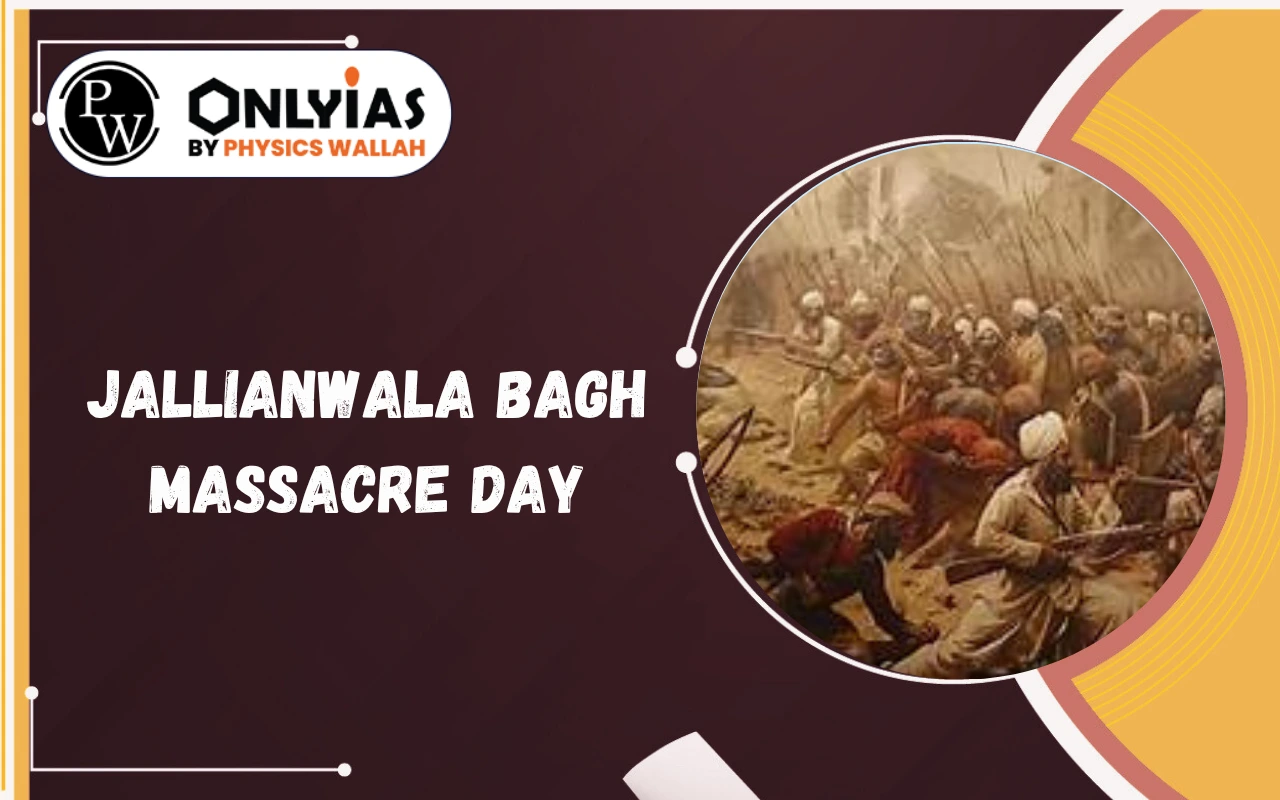
Jallianwala Bagh Massacre Day commemorates the tragic events of 13 April 1919 in Amritsar, when peaceful protestors, gathered against the Rowlatt Act and celebrating Baisakhi, were brutally fired upon by British forces under General Dyer.
This massacre shocked the nation, marked a pivotal moment in India’s freedom struggle, and galvanized public opinion against colonial rule. Understanding the history and significance of this day helps students and history enthusiasts appreciate its enduring impact on India’s path to independence.
Explore UPSC Foundation Courses

Explore UPSC Foundation Courses
The Jallianwala Bagh Massacre day marks a dark chapter in Indian history. On 13 April 1919, a large group of unarmed people gathered peacefully in Jallianwala Bagh, Amritsar. They were protesting against British rule and celebrating Baisakhi. British forces, under General Dyer, opened fire without warning. This act of extreme violence killed hundreds and wounded many more. It deeply affected the Indian independence movement.
| Jallianwala Bagh Massacre Day Overview | |
| Category | Details |
| Date of Event | 13 April 1919 |
| Location | Jallianwala Bagh, Amritsar, Punjab |
| Primary Occasion | Baisakhi Festival & Protest against Rowlatt Act |
| British Officer in Command | Brigadier-General Reginald Dyer |
| Immediate Cause | Arrest of Dr. Saifuddin Kitchlew and Dr. Satya Pal |
| Key Protesters | Unarmed civilians (men, women, and children) |
| Casualties | Hundreds killed (Official: 379; Unofficial: 1,000+) |
| Major Consequence | Catalyst for the Non-Cooperation Movement |
Growing unrest and harsh British laws set the stage for the Jallianwala Bagh tragedy. Many Indians felt angry after World War I. They had hoped for greater freedom, but the British introduced more repressive measures.
The British government passed the Rowlatt Act in March 1919. This law allowed them to arrest and jail people without trial. Large-scale protests erupted across the entire nation in response to this law. Mahatma Gandhi called for a nationwide strike. This act sparked strong public anger. The Rowlatt Act protest Jallianwala Bagh gathering was a part of this widespread dissent.
Amritsar became a centre of anti-British sentiment. Two nationalist leaders, Dr. Saifuddin Kitchlew and Dr. Satya Pal, were arrested there. This increased local tensions. Martial law was then imposed across the city. This law banned public gatherings and movements. However, many villagers were unaware of these new restrictions.
Amritsar’s Jallianwala Bagh saw a massive assembly of thousands on 13 April 1919. This date is now remembered as Jallianwala Bagh Massacre day. Many came to celebrate Baisakhi. Others attended a peaceful protest meeting.
Brigadier-General Reginald Dyer reached the Jallianwala Bagh grounds accompanied by his military forces. The area was enclosed, with only one narrow exit. Dyer blocked this exit. Without any warning, he ordered his soldiers to fire on the crowd. The soldiers kept firing for a duration of roughly ten minutes. It stopped only when ammunition ran out. This ruthless act of General Dyer Jallianwala Bagh caused immense loss of life.
Explore UPSC Prarambh Course

Explore UPSC Prarambh Course
The Jallianwala Bagh Massacre had profound effects. The massacre laid bare the ruthless reality of British imperial authority. This incident strengthened India’s resolve for freedom.
The massacre caused shock and outrage throughout India. Mahatma Gandhi renounced his Kaiser-i-Hind medal. Rabindranath Tagore gave up his knighthood in protest. The Indian National Congress formed its own committee to investigate the killings. This collective condemnation further fueled nationalist sentiments.
In response to the tragedy, the British authorities established the Hunter Commission to conduct an official inquiry. It criticised Dyer’s actions but did not impose severe punishment. Dyer was relieved of his command but not fully prosecuted. This light penalty angered many Indians. It showed them the British disregard for Indian lives and justice. The Jallianwala Bagh memorial stands today as a reminder of this sacrifice.
The Jallianwala Bagh history is not just about a single day, but a series of escalating tensions. Following World War I, the British government, fearing a pan-Indian uprising, replaced the wartime Defense of India Act with the even more restrictive Rowlatt Act. This “Black Act” became the primary catalyst for the tragedy. In Jallianwala Bagh Amritsar, the arrest of popular leaders like Dr. Satyapal and Saifuddin Kitchlew turned the city into a powder keg of dissent.
To understand the Jallianwala Bagh causes and consequences, one must look at both the immediate military decisions and the long-term political shifts they triggered.
The Jallianwala Bagh significance lies in its role as the “Point of No Return” for the Indian freedom struggle. Before 1919, many Indian leaders were still seeking “Home Rule” or “Dominion Status” within the British Empire. After the bloodbath in Amritsar, the demand shifted decisively toward Purna Swaraj (Complete Independence).
Every year, the Jallianwala Bagh anniversary on 13 April 1919 serves as a solemn reminder of the sacrifices made. For students focusing on Jallianwala Bagh UPSC topics, the site is recognized not just as a memorial, but as the birthplace of modern Indian revolutionary spirit, influencing leaders like Bhagat Singh and Udham Singh.
Check Out UPSC CSE Books
Visit PW Store
Explore UPSC Test Series

The date of 13 April 1919 marks when the Jallianwala Bagh Massacre actually happened.
Brigadier-General Reginald Dyer ordered the firing.
The main cause was the repressive Rowlatt Act, which led to widespread protests.
It became a major turning point, greatly increasing nationalist sentiment against British rule.




Explore SRIJAN Prelims Crash Course


Connect with our experts to get free counselling & start preparing
Books
Udaan (Prelims Wallah)
Prahaar (Mains Wallah)
Q&A Bank (Prelims & Mains)
Budget & Economic Survey
NCERT Wallah
Marks Booster
हिंदी माध्यम विशेष शृंखला
 Current Affairs
Monthly Current Wallah
Subject Wise Current Affairs
Editorial Analysis
Editorial PDFs
News of The Day
Download Our App



Download Our App
<div class="new-fform">
</div>

 GS Foundation
 Optional Course
 Combo Courses
 Degree Program