Books

Kakori Conspiracy (1925) was a major revolutionary event where members of the Hindustan Republican Association carried out the famous Kakori train robbery to seize British government funds. For exam preparation, these concise Kakori Conspiracy UPSC notes highlight its causes, objective, trial, execution, and long-term impact on India’s fight for independence.
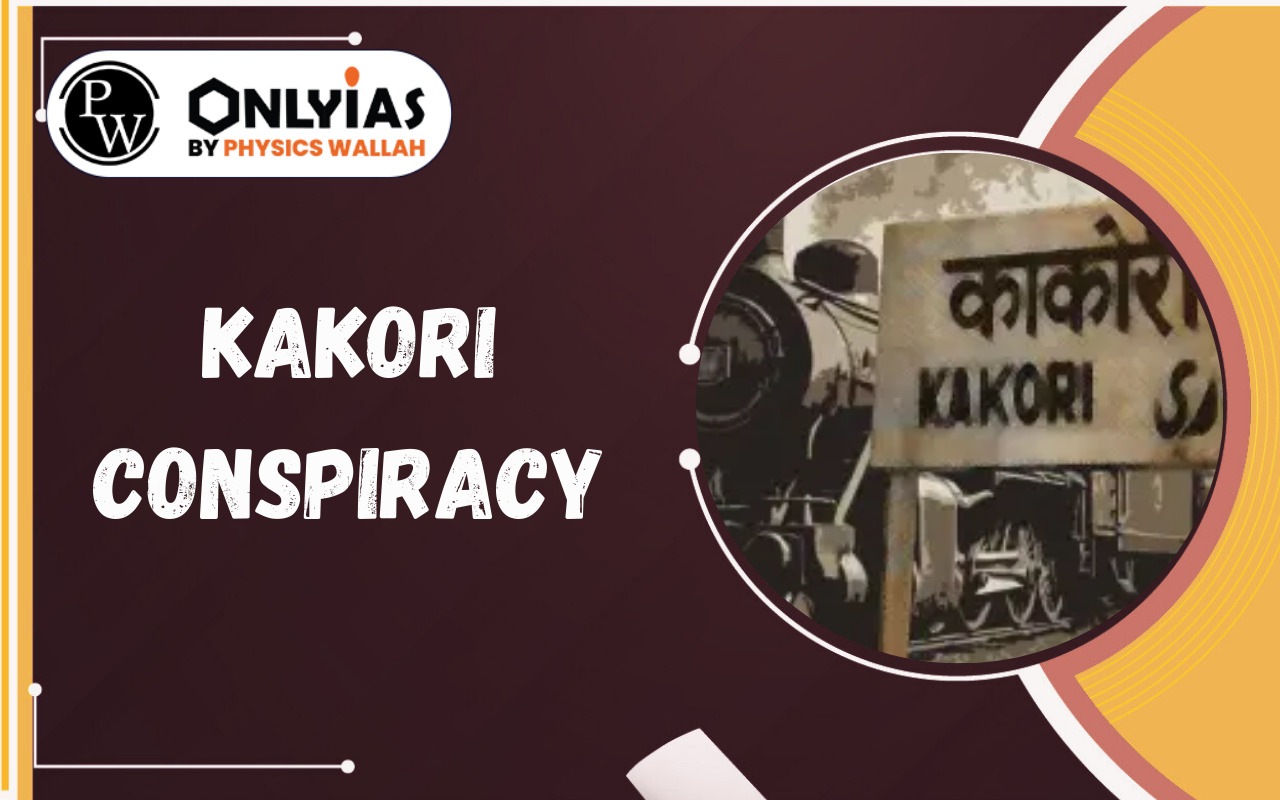
The Kakori Conspiracy 1925 is one of the most important events in the history of India’s revolutionary movement. Also known as the Kakori conspiracy case 1925, this bold act by young revolutionaries shook the British government and became a turning point in the Indian freedom struggle revolutionary phase.
The incident, popularly called the Kakori train robbery or Kakori incident, was not just a robbery—it was a carefully planned political action aimed at challenging British authority and funding revolutionary activities nd it is an important part of UPSC.
The Kakori Conspiracy took place on 9 August 1925, near Kakori, a small town close to Lucknow in present-day Uttar Pradesh. Members of the Hindustan Republican Association Kakori (HRA) stopped a train carrying government treasury money and looted it.
The train involved was the 8 Down Saharanpur–Lucknow passenger train. The revolutionaries pulled the chain, halted the train, and seized the British government funds that were being transported.
This event came to be known as the Kakori train robbery, but its purpose went far beyond robbery—it was a political protest against colonial rule.
Explore UPSC Foundation Courses Explore UPSC Foundation Courses
The Hindustan Republican Association Kakori was formed in 1924 by revolutionaries like Ram Prasad Bismil, Chandrasekhar Azad, and others.
The HRA revolutionary activities included secret meetings, distribution of pamphlets, recruitment of youth, and planning direct actions against the British government. The Kakori incident was one such bold step.
Understanding the causes of Kakori conspiracy helps explain why young revolutionaries chose this path.
Financial Crisis
The HRA lacked funds to buy weapons and continue its revolutionary work.
After the withdrawal of the Non-Cooperation Movement, many young people felt frustrated and believed armed struggle was necessary.
The youth were inspired by revolutionary ideas from Russia and Ireland and wanted immediate action.
The money looted in the Kakori incident belonged to the British government and was collected from Indian taxpayers.
The Kakori conspiracy objective was not personal gain. The main goals were:
Explore UPSC Prarambh Course Explore UPSC Prarambh Course
Several brave revolutionaries were involved in the Kakori conspiracy case 1925.
Leader of the operation and a prominent revolutionary writer. The Ram Prasad Bismil Kakori conspiracy role was central in planning and execution.
A close associate of Bismil. The Ashfaqulla Khan Kakori case highlights Hindu–Muslim unity in the freedom struggle.
Remembered as Roshan Singh Kakori, he was later sentenced to death.
Known as Rajendra Lahiri Kakori, he played a major role and was executed before others.
Although involved, he managed to escape arrest.
After the robbery, the British launched massive investigations. Many revolutionaries were arrested within months.
The Kakori conspiracy trial began in 1926 and continued for about 18 months. The British government treated it as a conspiracy against the Crown.
The trial was widely publicized to discourage revolutionary activities.
The judgment was delivered in 1927.
The Kakori conspiracy execution took place in December 1927. These brave men became known as the Kakori martyrs.
Many others were given life imprisonment and transported to the Cellular Jail in the Andaman Islands.
The British repression after Kakori case was severe:
The British wanted to crush the growing revolutionary movement in India, but the result was the opposite.
The Kakori conspiracy significance lies in several areas:
It inspired future revolutionaries like Bhagat Singh.
The friendship between Bismil and Ashfaqulla Khan symbolized unity beyond religion.
The trial attracted nationwide attention and created sympathy for revolutionaries.
It marked a structured and ideological phase of the Indian freedom struggle revolutionary phase.
The Kakori conspiracy impact was long-lasting:
Although the British executed the leaders, the spirit of resistance only grew stronger.
Check Out UPSC CSE Books
Explore UPSC Test Series

The Kakori Conspiracy was a revolutionary action carried out on 9 August 1925 by members of the Hindustan Republican Association. The Kakori train robbery involved looting British government treasury money to fund HRA revolutionary activities.
The key leaders in the Kakori conspiracy case 1925 were Ram Prasad Bismil, Ashfaqulla Khan, Roshan Singh, and Rajendra Lahiri. These Kakori martyrs were later executed by the British government.
The main Kakori conspiracy objective was to raise funds for the revolutionary movement in India and challenge British authority. It aimed to strengthen HRA revolutionary activities and inspire youth participation in armed struggle.
The Kakori conspiracy trial began in 1926 and lasted about 18 months. Several revolutionaries were convicted, and four leaders faced the Kakori conspiracy execution in December 1927.
The Kakori conspiracy significance lies in its strong impact on the Indian freedom struggle revolutionary phase. Despite British repression after the Kakori case, the movement grew stronger and inspired future revolutionaries like Bhagat Singh.



Explore SRIJAN Prelims Crash Course


Connect with our experts to get free counselling & start preparing
Books
Udaan (Prelims Wallah)
Prahaar (Mains Wallah)
Q&A Bank (Prelims & Mains)
Budget & Economic Survey
NCERT Wallah
Marks Booster
हिंदी माध्यम विशेष शृंखला
 Current Affairs
Monthly Current Wallah
Subject Wise Current Affairs
Editorial Analysis
Editorial PDFs
News of The Day
Download Our App



Download Our App
<div class="new-fform">
</div>

 GS Foundation
 Optional Course
 Combo Courses
 Degree Program