Books

The Kol Rebellion (1831–32) was a major tribal uprising in the Chotanagpur region against British rule and exploitation by moneylenders and zamindars. Led by Budhu Bhagat, Joa Bhagat, and Jhindrai Manki, the revolt protested tribal land alienation, high taxes, and political oppression. Although the British suppressed the rebellion, it became an important example of early tribal revolts in India.
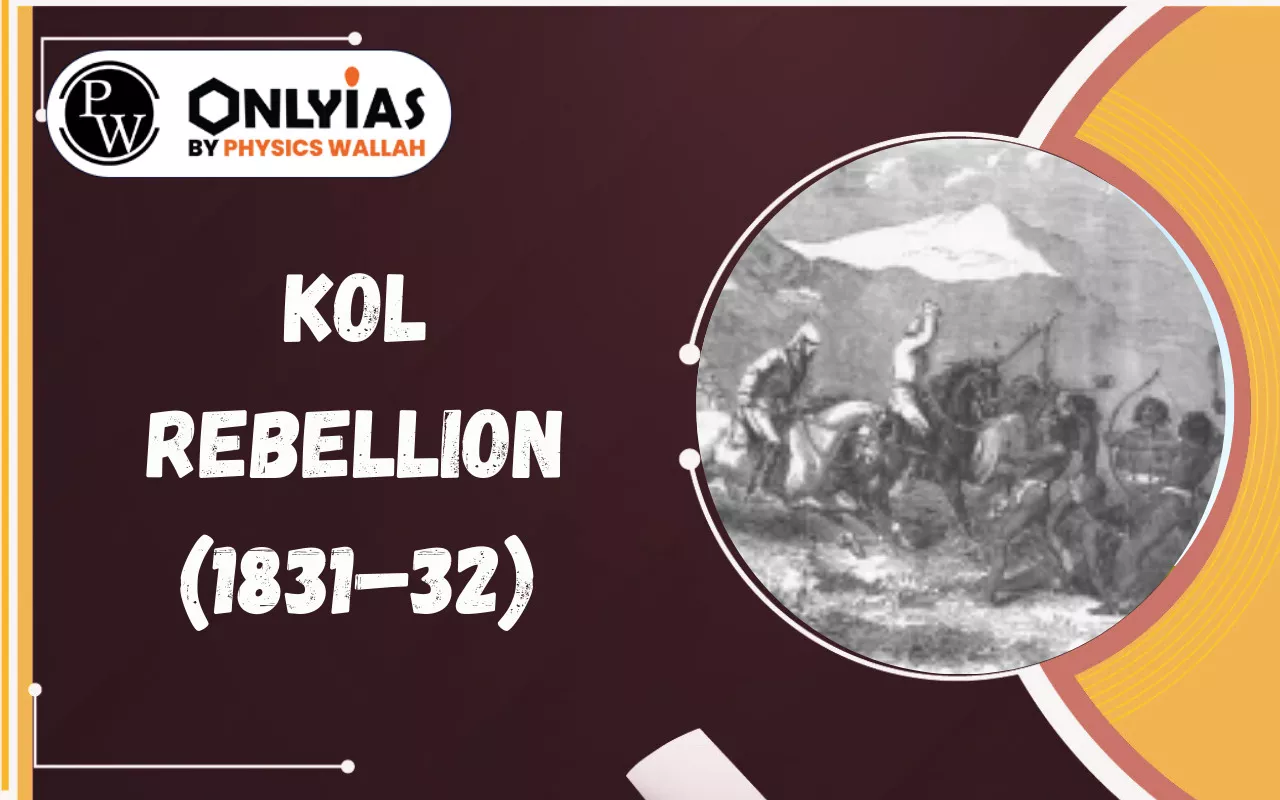
Kol Rebellion (1831–32) was one of the earliest tribal uprisings against British colonial rule in India. It occurred in the Chotanagpur plateau region (present-day Jharkhand) where tribal communities revolted against economic exploitation, land alienation, and oppressive colonial policies. Led by Budhu Bhagat and other tribal leaders, the revolt represented a strong resistance by indigenous groups against British authority and non-tribal outsiders.
The uprising is an important topic in modern Indian history and tribal resistance movements in India, making it highly relevant for UPSC and other competitive exams.

The Kol Rebellion in Jharkhand region was a tribal uprising that took place between 1831 and 1832 in the Chotanagpur region. The revolt involved the Kol tribal communities along with Mundas, Oraons, and Hos, who united to protest against the British revenue system and the exploitation by non-tribal landlords and moneylenders.
British policies disrupted the traditional Munda-Manki administrative system, which had governed tribal villages for generations. As a result, tribal communities lost control over their lands and governance structures, leading to widespread anger and eventually rebellion.
The Kol Rebellion features help explain the main aspects of this tribal uprising, including the year, region, tribes involved, leaders, and major causes.
| Feature | Details |
| Event | Kol Rebellion |
| Year | 1831–1832 |
| Region | Chotanagpur Plateau (Jharkhand) |
| Communities Involved | Kols, Mundas, Oraons, Hos |
| Major Leaders | Budhu Bhagat, Joa Bhagat, Jhindrai Manki |
| Main Cause | Land alienation and exploitation by outsiders |
| Opponents | British administration, moneylenders, zamindars |
| Outcome | Rebellion suppressed by British forces |
| Significance | Early tribal resistance movement in India |
The Kol tribal revolt was fueled by multiple grievances against British policies and the actions of non-tribal outsiders.
One of the major causes of the Kol revolt against British rule was the introduction of new revenue systems and taxation policies. The British introduced land tenure systems that replaced traditional tribal ownership patterns.
Key problems included:
These policies caused tribal land alienation in the Kol rebellion. Many tribals became labourers on land that once belonged to them. This economic injustice became a major reason behind the revolt.
The British introduced new land tenure systems. These systems displaced the Kols from their ancestral lands. High rents, increased taxes, and forced labour worsened their living conditions. Many Kols were reduced to bonded labour. Additional taxes on traditional brewing also caused distress. This economic pressure was a primary cause for the Kol revolt against moneylenders and zamindars.
Non-tribal settlers, including moneylenders and merchants, encroached upon Adivasi lands. These outsiders disregarded Kol customs and treated the tribals as inferior. The British often sided with these non-tribal landlords, ignoring Kol complaints. This led to deep resentment among the Kol tribals, resulting in the exploitation of Kol tribals.
British colonial rule weakened the Kols’ traditional political structure. The Munda-Manki system, which governed their villages, was replaced. Corrupt officials and Political Agents took over, removing the Kols’ role in their own governance. This political subjugation pushed the Kols towards rebellion.
The Kol uprising 1831 32 unfolded with increasing intensity across the Chotanagpur region.
The rebellion started in late 1831 when tribal groups began protesting against landlords and colonial officials. The movement soon turned into an armed uprising led by tribal leaders.
Key leaders included:

The revolt quickly spread across several areas of Chotanagpur.
Rebels targeted:
Tribal fighters used traditional weapons such as bows, arrows, and axes and adopted guerrilla warfare tactics against British troops.
Many communities including Mundas, Oraons, Hos, Bhumijs, Kharwars, and Cheros participated in the uprising.
Initially, the British underestimated the revolt. However, as the rebellion intensified, the colonial government sent military forces to control the region.
The Kol rebellion suppression was harsh, resulting in many deaths and arrests.
The Kol Rebellion drew strength from various tribal communities.
The main figures who led the Kol revolt were:
The Kol Rebellion received support from a broad range of marginalised groups. These included the Mundas, Oraons, Hos, and Bhumijs. The Kharwars and Cheros also joined the fight. Their collective participation showed widespread discontent against colonial policies and tribal land alienation Kol rebellion.

The Kol rebellion significance lies in its role as an early resistance movement against British policies.
It was one of the first large-scale tribal uprisings against British rule in eastern India.
The rebellion exposed serious problems such as:
The revolt influenced later uprisings such as:
These movements continued the struggle against colonial exploitation.
Although the rebellion failed to achieve its immediate objectives, it had important consequences.
The Kol rebellion impact remains significant in the history of tribal resistance movements in India.
Check Out UPSC CSE Books
Visit PW Store
The Kol rebellion UPSC notes are useful for quick revision for the UPSC Prelims exam:
Quick Revision Points
Revise well, as questions related to the Kol rebellion often appear in UPSC Prelims, Mains, and history examinations under topics like tribal revolts, colonial policies, and resistance movements.
Ready to boost your UPSC 2026 preparation? Join PW’s UPSC online courses today!

The main cause was the economic exploitation, social oppression, and political disruption caused by British policies and non-tribal outsiders in the Chotanagpur region.
Key leaders included Budhu Bhagat, Joa Bhagat, and Jhindrai Manki.
The Kol Rebellion occurred between 1831 and 1832 in the Chotanagpur plateau region.
The rebellion was brutally suppressed by the British, leading to the establishment of the South-West Frontier Agency in 1833.
It is significant as one of the earliest large-scale tribal revolts against British rule, highlighting tribal resistance and inspiring future movements.






Connect with our experts to get free counselling & start preparing
Books
Udaan (Prelims Wallah)
Prahaar (Mains Wallah)
Q&A Bank (Prelims & Mains)
Budget & Economic Survey
NCERT Wallah
Marks Booster
हिंदी माध्यम विशेष शृंखला
 Current Affairs
Monthly Current Wallah
Subject Wise Current Affairs
Editorial Analysis
Editorial PDFs
News of The Day
Download Our App



Download Our App
<div class="new-fform">
</div>



 GS Foundation
 Optional Course
 Combo Courses
 Degree Program