Answer:
|
How to approach the question
- Introduction
- Write about 360-degree performance evaluation briefly.
- Body
- Write the strengths of the 360-degree performance evaluation mechanism as a tool for ensuring accountability.
- Write the weaknesses of the 360-degree performance evaluation mechanism.
- Write the potential areas of improvement in this regard.
- Conclusion
- Give appropriate conclusion in this regard
|
Introduction
The 360-degree performance evaluation was introduced in 2015 to supplement the existing system of Annual Confidential Reports for civil servants and incorporates assessment from multiple perspectives ensuring a holistic appraisal fostering integrity, accountability, transparency, and fairness.
Body
Strengths of the 360-degree performance evaluation mechanism as a tool for ensuring accountability
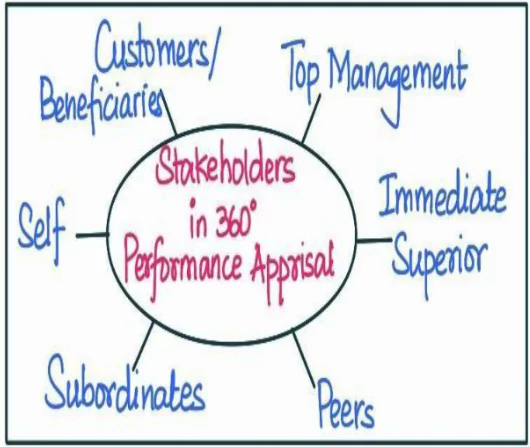
- Comprehensive Assessment: For example, a civil servant’s interactions with colleagues, responsiveness to public grievances, and adherence to ethical standards can be assessed through different perspectives.
- Fairness and Impartiality: For instance, if a civil servant consistently exhibits ethical conduct but faces criticism from a superior, the inputs from other sources can balance the evaluation.
- Encouraging Ethical Behaviour: For instance, if a civil servant consistently demonstrates honesty and transparency in financial matters, this would be reflected in feedback from peers and subordinates.
- Multi-dimensional Feedback: For example, if a civil servant receives constructive criticism about their communication skills from subordinates, they can work on enhancing their effectiveness in conveying information.
- Performance Alignment: For instance, if the organizational value system emphasizes public service and responsiveness, feedback from external stakeholders can highlight any deviations or failures in meeting those expectations.
- Enhanced Team Dynamics: It encourages collaboration, cooperation, and mutual support. For example, if feedback reveals a lack of cooperation from a civil servant, it can prompt discussions and interventions to improve team dynamics.
- Performance Recognition: The 360-degree mechanism also allows for the recognition and reward of exemplary performance, further reinforcing accountability and encouraging their dedication, professionalism, and commitment to ethical conduct
Weaknesses of the 360-degree performance evaluation mechanism
- Lack of clarity and subjectivity: It may lead to personal biases and favouritism influencing the assessment. Like if an officer holds a personal grudge against a subordinate, he may provide a biased assessment.
- Inconsistent standards: For instance, one evaluator may focus on administrative skills, while another may emphasize leadership qualities. This inconsistency undermines the objective of a fair and transparent evaluation process.
- Mutual back scratching and collusion: For instance, if two officers have a close friendship, they may give each other excessively positive ratings without proper justification.
- Fear of retribution and lack of anonymity: For example, an officer may hesitate to provide critical feedback about a superior’s misconduct for fear of jeopardizing their own career.
- Limited scope of feedback: It primarily focuses on feedback from colleagues and subordinates, neglecting inputs from external stakeholders such as the public.
- Time-consuming and resource-intensive: It requires significant time and resources to collect and analyze feedback from multiple sources. This can lead to delays in evaluations and a drain on administrative resources.
- Bias towards popularity over performance: This bias can lead to undeserving individuals receiving favorable evaluations, while those with superior performance but less popularity may be overlooked.
Potential areas of improvement in this regard
- Clear Ethical Guidelines: Establish clear ethical guidelines and standards through CVC for evaluating performance, emphasizing integrity, transparency, and impartiality.
- Inclusion of Stakeholder Feedback: Engaging citizens, NGOs, and beneficiaries of government schemes to evaluate the impact and effectiveness of civil servants. For example, it can include inputs from citizens’ feedback portals like MyGov.
- Robust Performance Metrics: Develop comprehensive and objective performance metrics that measure both quantitative and qualitative such as efficiency, effectiveness, responsiveness, and adherence to ethical standards.
- Independent Evaluation Committee: Establish an independent committee comprising experts from diverse fields, including ethics, governance, and social responsibility, to review and assess the performance evaluations.
- Performance-linked Incentives: Link performance evaluations with incentives, such as promotions or bonuses, to motivate civil servants to maintain high ethical standards.
- Public Disclosure of Performance Evaluation Reports: Making non-confidential parts of performance evaluation reports publicly available would create a sense of public trust and allow citizens to hold civil servants accountable.
- Feedback Mechanism: Establish a feedback mechanism to gather suggestions and inputs from civil servants themselves on how to improve the performance evaluation process.
Conclusion
Through adopting these measures, the 360-degree performance evaluation mechanism in the Indian civil services can become a powerful tool for fostering accountability, integrity, and ethical behaviour among civil servants, ultimately benefiting the public and society at large.
 February 3, 2024