
Books

Core Demand of the Question
|
As India targets 500 GW of non-fossil fuel capacity by 2030, the Production Linked Incentive (PLI) scheme has emerged as a key policy instrument to drive energy transition and manufacturing self-reliance. However, its performance in solar photovoltaic and battery manufacturing highlights structural and technological constraints that limit outcomes.
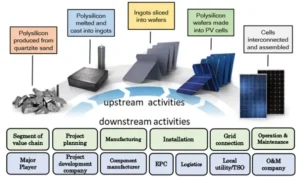
To make the PLI scheme a true catalyst for green industrial transformation, India must move beyond short-term output incentives towards ecosystem creation. Strengthening upstream capabilities, embedding technical expertise, enabling selective collaboration, and aligning policy design with technological realities will allow India to evolve from an assembler to a globally competitive manufacturer of clean energy technologies.
To get PDF version, Please click on "Print PDF" button.
Welfare vs Development in India: Understanding the...
Right to Be Forgotten (RTBF) in India: Legal Frame...
131st Constitutional Amendment Bill Defeat: Delimi...
Legal Consequences of Piracy in India: Laws, Penal...
Industrial Accidents in India: Regulatory Gaps, La...
India’s Migration Governance Blind Spot: Gulf Mi...


Connect with our experts to get free counselling & start preparing
Books
Udaan (Prelims Wallah)
Prahaar (Mains Wallah)
Q&A Bank (Prelims & Mains)
Budget & Economic Survey
NCERT Wallah
Marks Booster
हिंदी माध्यम विशेष शृंखला
 Current Affairs
Monthly Current Wallah
Subject Wise Current Affairs
Editorial Analysis
Editorial PDFs
News of The Day
Download Our App



Download Our App
<div class="new-fform">
</div>



 GS Foundation
 Optional Course
 Combo Courses
 Degree Program



 January 28, 2026
 0
0
Latest Comments