Books

National Census 2027 is India’s first digital census, starting in 2026. It uses online tools, self-enumeration, and a census portal for easy data collection. This digital system improves accuracy, saves time, and helps the government plan better services using real population data.
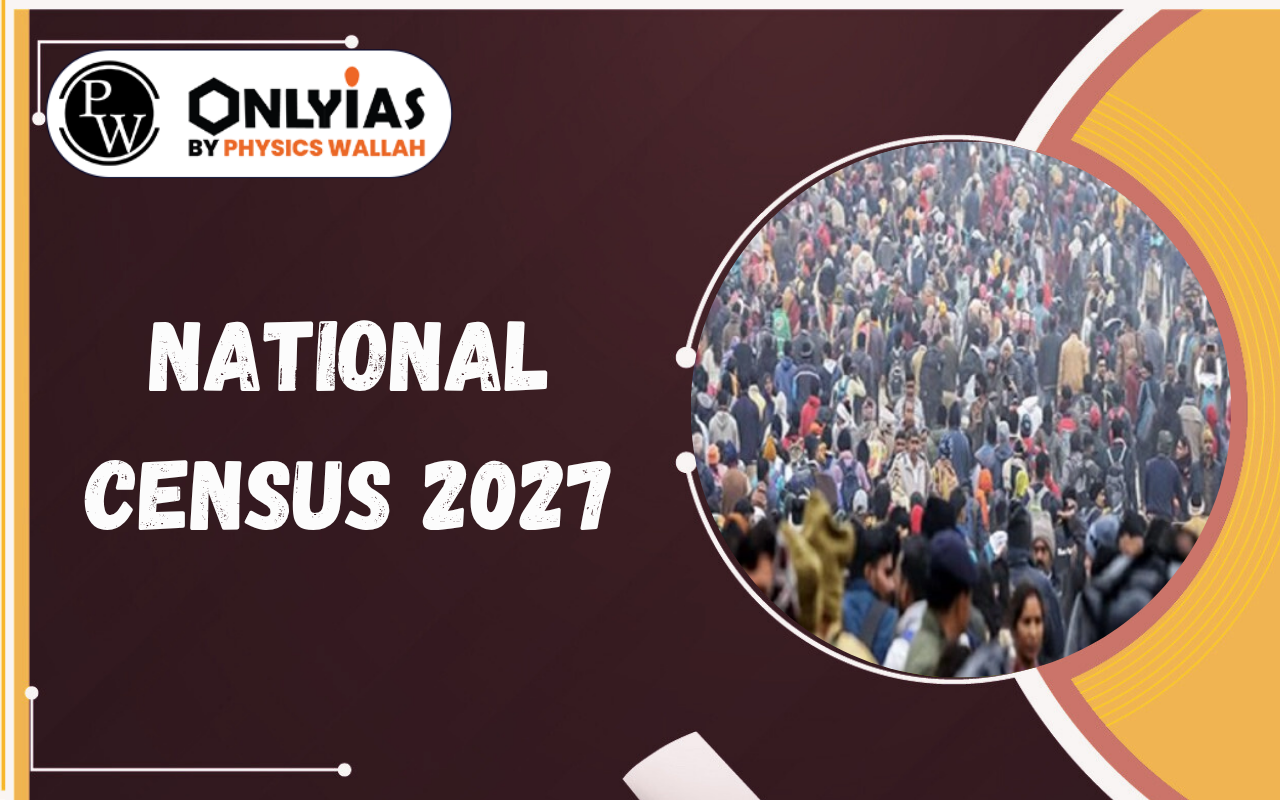
A census counts a country’s population and gathers key information about its people. The National Census 2027 is India’s 16th census and the 8th since independence. It starts on April 1, 2026. This census is unique as it will be the world’s first completely digital population count.
It aims to collect demographic and socio-economic data with high speed and accuracy. The government has approved over ₹11,718 crore for this critical project.
The National Census 2027 is a historic event for our country because it is the world’s first fully digital census. In the past, officials used big stacks of paper to count people, but now, India is using mobile apps and a web portal for citizen data collection India.
This massive project will help the government understand how many people live in India, what jobs they do, and what facilities they have at home. By using the digital census India model, the government can collect information faster and more accurately than ever before.
The India census 2027 is special because it introduces the self enumeration census for the very first time. This means you don’t have to wait for an officer to come to your house to give your details; you can do it yourself online!
Here are the main features of the 16th Indian National Census (Census 2027):
The India census 2027 follows a two-phase structure for data collection.
The first phase, House Listing Operations (HLO), starts on April 16 and. It will continue until May 15 in the initial areas. Enumerators will list all buildings and structures across the country. Key activities include:
This household data collection India directly supports government schemes like Pradhan Mantri Awas Yojana.
Population Enumeration (PE) is set for February 2027. March 1, 2027, is the national reference date for this phase. For snowy regions, enumeration will happen in September 2026.
This phase collects individual data. It covers age, gender, religion, education, job, migration, and caste. This forms the basis for policy decisions over the next ten years.
The digital census India uses advanced technology for efficient data collection. The system relies on four integrated platforms:
The Registrar General and Census Commissioner of India confirm strong data security. This includes encryption and role-based access. These measures follow the Digital Personal Data Protection (DPDP) Act, 2023. This India census digital platform ensures secure and accurate citizen data collection India.
A major part of the NATIONAL CENSUS 2027 is a detailed caste enumeration. This practice was last fully done in 1931. While Scheduled Castes (SCs) and Scheduled Tribes (STs) are always counted, Other Backward Classes (OBCs) have not been. The Cabinet Committee on Political Affairs approved this in April 2025. This population data collection India will help:
The Office of the Registrar General & Census Commissioner of India (ORGI) is working on a method to classify the vast number of caste names.
To participate in the online census registration India, you need to follow a simple process on the official website. This self enumeration census India facility is open for 15 days in each state before the official workers start their visits. Check 16th Indian National Census registration process here.
| Step | Action to be Taken |
| 1. Visit Portal | Go to the official India census digital platform (se.census.gov.in). |
| 2. Login | Use your mobile number to get an OTP (One-Time Password). |
| 3. Fill Details | Answer 33 questions about your house, like water source and electricity. |
| 4. Save ID | After submitting, you will get an 11-digit Self-Enumeration ID (SE ID). |
| 5. Verification | Show this SE ID to the census worker when they visit your home. |
Check Out UPSC CSE Books
Visit PW Store
The move towards digital governance in India is important because it helps the government plan better for schools, hospitals, and roads. When the census survey in India is done on paper, it takes years to see the results.
With the new digital tools like “Census-as-a-Service,” the data will be ready much faster. This helps in making sure that government schemes reach the people who need them most. Even if you don’t use the online portal, an enumerator will still come to your door to help you, ensuring the National Census 2027 leaves no one behind.
This digital governance India census is essential for effective national planning and resource allocation. It provides a complete picture of how the population lives.
UPSC Offline Centres List
City
UPSC Offline Centres
Pantna
UPSC Coaching in Patna
Delhi
UPSC Coaching in Delhi
Lucknow
UPSC Coaching in Lucknow
Indore
UPSC Coaching in Indore
Jaipur
UPSC Coaching in Jaipur
Chandigarh
UPSC Coaching in Chandigarh
Bengaluru
UPSC Coaching in Bengaluru
Muzaffarpur
UPSC Coaching in Muzaffarpur
Prayagraj
UPSC Coaching in Prayagraj
Explore UPSC Test Series

The first phase of the India Census 2027 started on April 1, 2026.
It is the world’s first fully digital population census.
The two phases are House Listing Operations (HLO) and Population Enumeration (PE).
Caste was last comprehensively enumerated in an Indian Census in 1931.
Heads of households can fill their details online in 16 languages. They receive a unique 16-digit ID for verification by the enumerator.



Explore SRIJAN Prelims Crash Course


Connect with our experts to get free counselling & start preparing
Books
Udaan (Prelims Wallah)
Prahaar (Mains Wallah)
Q&A Bank (Prelims & Mains)
Budget & Economic Survey
NCERT Wallah
Marks Booster
हिंदी माध्यम विशेष शृंखला
 Current Affairs
Monthly Current Wallah
Subject Wise Current Affairs
Editorial Analysis
Editorial PDFs
News of The Day
Download Our App



Download Our App
<div class="new-fform">
</div>

 GS Foundation
 Optional Course
 Combo Courses
 Degree Program