Books

The National Youth Policy 2026 India aims to empower youth for Viksit Bharat 2047. It identifies six core focus areas, including education and skill development youth policy. The MY Bharat platform boosts youth participation in governance India and strengthens policy monitoring.
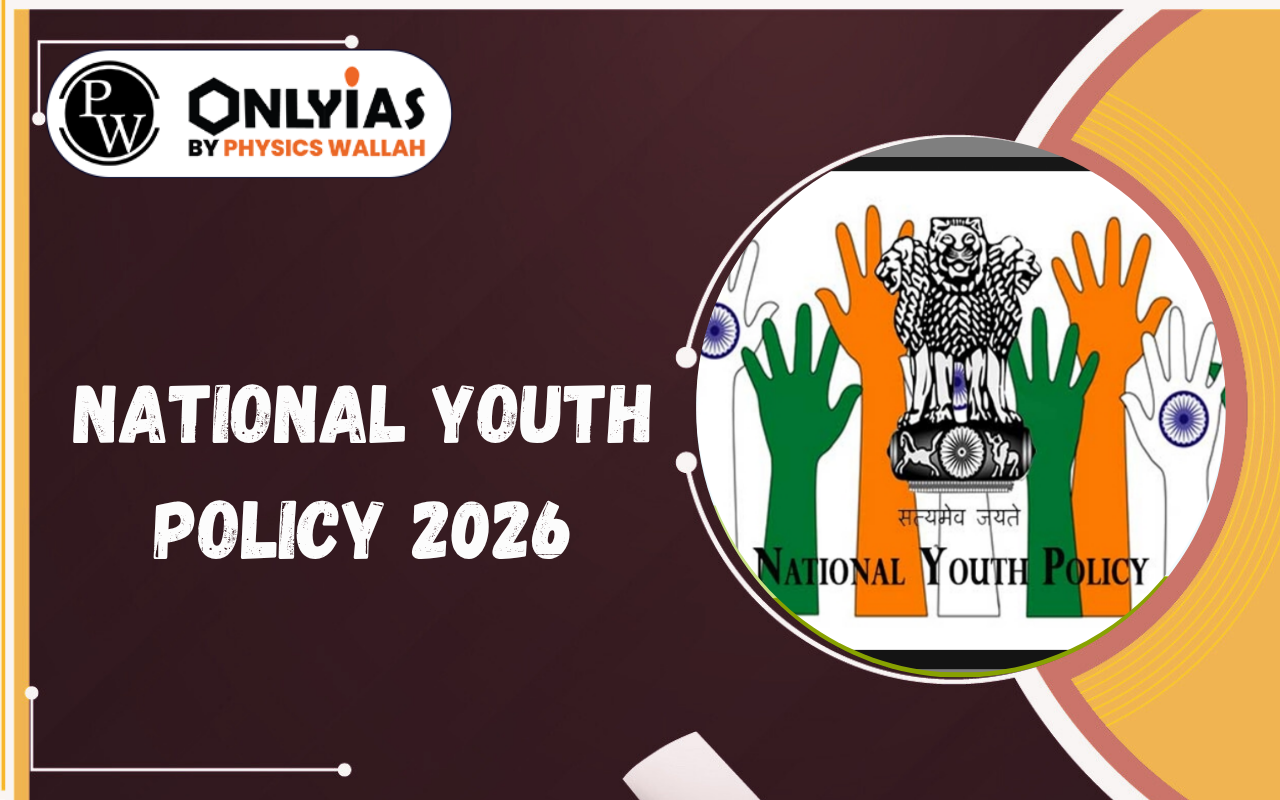
Understanding key government policies is very important for competitive exams and informed citizenship. The National Youth Policy 2026 is a critical framework shaping India’s future. This document outlines the strategies to empower young people and align their aspirations with national development goals. Studying it offers insights into government’s vision and plans for youth development.
The National Youth Policy 2026 is India’s strategic plan for youth development. It aims to connect the goals of young people with the national vision of Viksit Bharat 2047. This policy builds on the earlier 2014 framework. It moves towards a more structured and results-oriented approach. It sees youth as active partners in India’s progress.

| National Youth Policy 2026 Overview | |
| Feature | Details |
| Official Name | National Youth Policy (NYP) 2026 |
| Nodal Ministry | Ministry of Youth Affairs and Sports |
| Target Age Group | 15–29 years |
| Primary Vision | Empowerment for Viksit Bharat 2047 |
| Key Platform | MY Bharat (Mera Yuva Bharat) |
| Preceded By | National Youth Policy 2014 |
The proposed National Youth Policy 2026 evolves India’s approach to youth development. It shifts from broad guidance to specific, outcome-focused actions. This policy emphasizes overall human capital growth. It highlights both economic output and civic duty.
The policy identifies six main areas. These are key for youth development programs India:
A major feature of this policy is the MY Bharat platform. This digital system helps engage youth. It allows young people to register, create profiles, and join various activities. These include learning programs and volunteering. The platform is a central point for many opportunities from different ministries. It promotes ‘Seva Bhav’ (spirit of service). This platform makes youth empowerment initiatives India more accessible. It also helps in data-driven governance. This platform tracks registrations and activities.
The formulation of the National Youth Policy 2026 involved wide consultations. It gathered feedback from citizens through platforms like MyGov and MY Bharat. It also included inputs from various ministries and states. This ensures diverse perspectives are included. Analytical tools like the Youth Development Index provide insights into education and health. Real-time dashboards on the MY Bharat portal help track youth engagement. The NITI Aayog’s framework also aids in monitoring results. These tools strengthen youth policy implementation India. They ensure effective program design.
The National Youth Policy updates represent a strategic shift in India’s developmental philosophy. When comparing the previous youth policy 2014 vs 2026, the focus has moved from generic welfare to a “partner-led” model. While the 2014 policy laid the groundwork for basic youth rights, the NYP 2026 India is specifically engineered to achieve the vision of Viksit Bharat 2047.
This new National Youth Policy draft 2026 introduces a more data-driven and outcome-oriented approach. It moves beyond providing services to creating a robust youth engagement strategy India can rely on for the next two decades.
A primary objective of the Ministry of Youth Affairs policy 2026 is to maximize the demographic dividend India youth policy seeks to capture. With over 65% of the population under age 35, the policy aims to:
Despite the ambitious framework, there are notable challenges for youth India policy that the 2026 update seeks to address. These include:
Check Out UPSC CSE Books
Visit PW Store
The National Youth Policy 2026 has wide-ranging importance.
Ready to boost your UPSC 2026 preparation? Join PW’s UPSC online courses today!

Its main goal is to align youth aspirations with the vision of Viksit Bharat 2047 through focused development.
The six core areas include youth leadership, education, skilling, entrepreneurship, health, sports, and the environment.
It is a digital platform for youth engagement. It helps with registration, participation in programs, and data collection for policy.
It ensures youth participation through platforms like MyGov and MY Bharat. It also conducts inter-ministerial and State/UT consultations.
It is monitored using tools like the Youth Development Index, real-time dashboards on MY Bharat, and NITI Aayog's Output-Outcome Monitoring Framework.






Connect with our experts to get free counselling & start preparing
Books
Udaan (Prelims Wallah)
Prahaar (Mains Wallah)
Q&A Bank (Prelims & Mains)
Budget & Economic Survey
NCERT Wallah
Marks Booster
हिंदी माध्यम विशेष शृंखला
 Current Affairs
Monthly Current Wallah
Subject Wise Current Affairs
Editorial Analysis
Editorial PDFs
News of The Day
Download Our App



Download Our App
<div class="new-fform">
</div>



 GS Foundation
 Optional Course
 Combo Courses
 Degree Program