Books

Rashtriya Gram Swaraj Abhiyan strengthens local self-governance across India. This initiative aims to empower local bodies. It focuses on economic growth and localizing Sustainable Development Goals (SDGs). The program provides capacity building and training for elected representatives. It promotes e-governance for efficient local administration. Its goal is to improve grassroots democracy and decentralization.
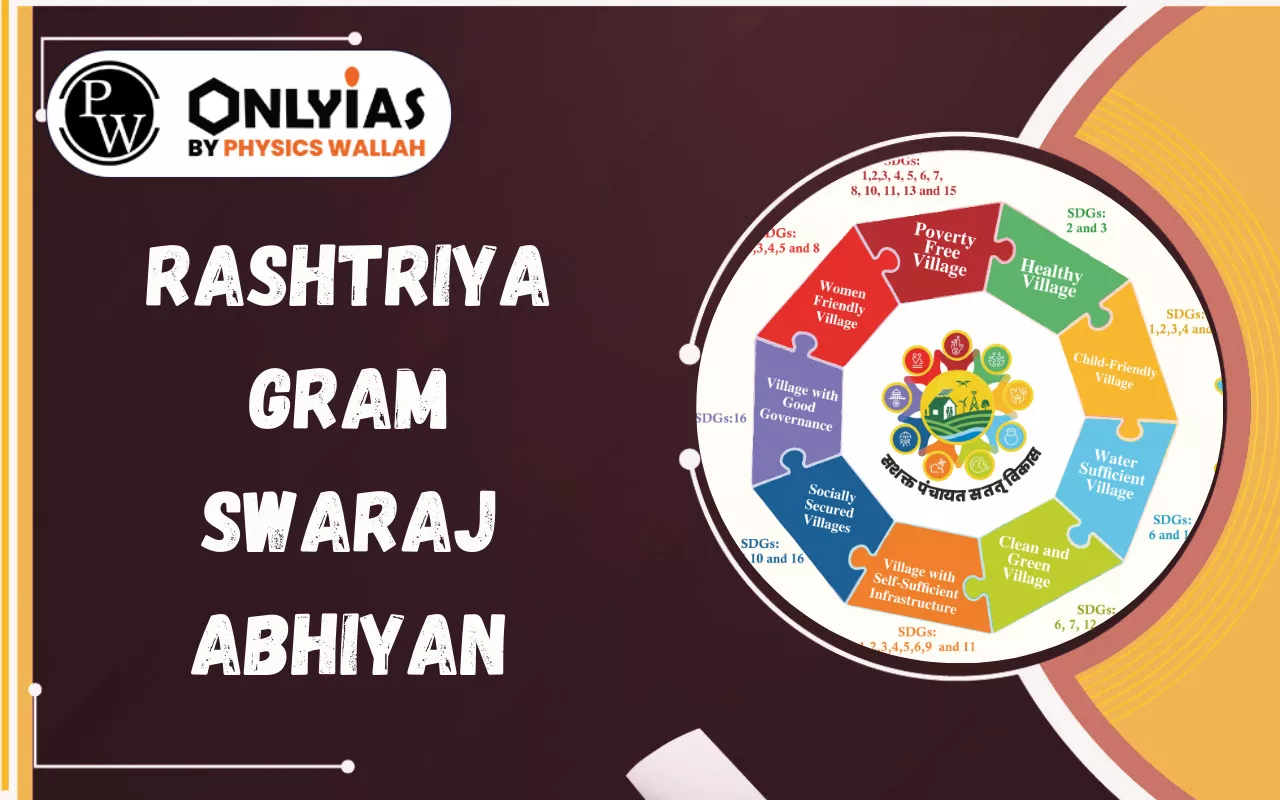
Rashtriya Gram Swaraj Abhiyan (RGSA) stands as a transformative pillar in India’s journey toward robust rural development. Launched by the Ministry of Panchayati Raj, the RGSA scheme is fundamentally designed to develop the governance capabilities of Panchayati Raj Institutions (PRIs). In a country where the majority of the population resides in villages, strengthening Panchayati Raj Institutions scheme initiatives like RGSA is essential for ensuring that the fruits of development reach the last mile. By fostering rural local governance scheme India frameworks, RGSA enables Panchayats to become self-sustainable, transparent, and efficient units of local self-government.
The RGSA full form is Rashtriya Gram Swaraj Abhiyan. It is a Centrally Sponsored Scheme implemented by the Ministry of Panchayati Raj RGSA scheme division. The primary mandate of the RGSA ministry is to bridge the gaps in the functioning of Gram Panchayats. Under the revamped version (extended from 2022 to 2026), the scheme has been aligned with the Sustainable Development Goals (SDGs), focusing on “Localization of SDGs” (LSDG) to ensure that global targets like poverty eradication, health, and education are met at the village level.
Explore UPSC Foundation Courses

Explore UPSC Foundation Courses
The Rashtriya Gram Swaraj Abhiyan (RGSA) is India’s flagship initiative designed to transform rural governance. Launched by the Ministry of Panchayati Raj, it acts as a roadmap for empowering local self-governments (Panchayats) to lead their own development.
By providing training and resources to elected representatives, RGSA ensures that villages are not just administrative units, but self-sufficient hubs capable of achieving global Sustainable Development Goals (SDGs). In essence, it bridges the gap between central policies and grassroots reality, making “Gram Swaraj” (Village Self-Rule) a functional truth for millions of citizens.
This table provides a snapshot of the RGSA scheme framework, funding, and core focus areas.
| Rashtriya Gram Swaraj Abhiyan Key Information at a Glance | |
| Feature | Details |
| Full Form | Rashtriya Gram Swaraj Abhiyan (RGSA) |
| Nodal Ministry | Ministry of Panchayati Raj |
| Current Phase | Revamped RGSA (2022–2026) |
| Primary Goal | Capacity Building and Training (CB&T) of Panchayati Raj Institutions (PRIs) |
| Focus Area | Localization of Sustainable Development Goals (LSDG) |
| Funding (General States) | 60% (Central) : 40% (State) |
| Funding (NE & Hill States) | 90% (Central) : 10% (State) |
| Funding (UTs) | 100% Central Government |
| Total Outlay (Revamped) | ₹5,911 Crore |
| Target Audience | Elected Representatives, Panchayat Functionaries, and SHGs |
The RGSA objectives are centered around creating a “Viksit Bharat” through empowered villages. Key goals include:
The RGSA features are diverse, covering both human resources and physical infrastructure. The RGSA components include:
The RGSA implementation follows a collaborative model between the Center and the States.
One of the most significant RGSA benefits for panchayats is the intensive RGSA training for Panchayati Raj Institutions.
Effective RGSA for rural governance means moving beyond infrastructure to “functional” empowerment. By promoting RGSA for local self government, the scheme ensures:
Check Out UPSC CSE Books
Visit PW Store
According to the Ministry of Panchayati Raj and recent PIB releases, the revamped RGSA (2022-2026) has a total financial outlay of ₹5,911 crore.
Ready to boost your UPSC preparation? Join PW’s UPSC online courses today!
Explore UPSC Test Series

The RGSA full form is RASHTRIYA GRAM SWARAJ ABHIYAN.
The revamped initiative was approved on April 13, 2022.
A primary objective is to develop governance capabilities of local bodies to deliver on the Sustainable Development Goals.
The funding pattern for state components is 60:40 between Central and State Governments.
The Ministry of Panchayati Raj implements this program.



Explore SRIJAN Prelims Crash Course


Connect with our experts to get free counselling & start preparing
Books
Udaan (Prelims Wallah)
Prahaar (Mains Wallah)
Q&A Bank (Prelims & Mains)
Budget & Economic Survey
NCERT Wallah
Marks Booster
हिंदी माध्यम विशेष शृंखला
 Current Affairs
Monthly Current Wallah
Subject Wise Current Affairs
Editorial Analysis
Editorial PDFs
News of The Day
Download Our App



Download Our App
<div class="new-fform">
</div>

 GS Foundation
 Optional Course
 Combo Courses
 Degree Program