Books

Ravi River is a significant transboundary waterway in India and Pakistan. Originating in Himachal Pradesh, it is a vital part of the Indus River System. Known historically as Iravati or Purushni, it supports irrigation and hydropower. Key projects like the Ranjit Sagar Dam manage its waters. Its allocation to India is under the Indus Waters Treaty.
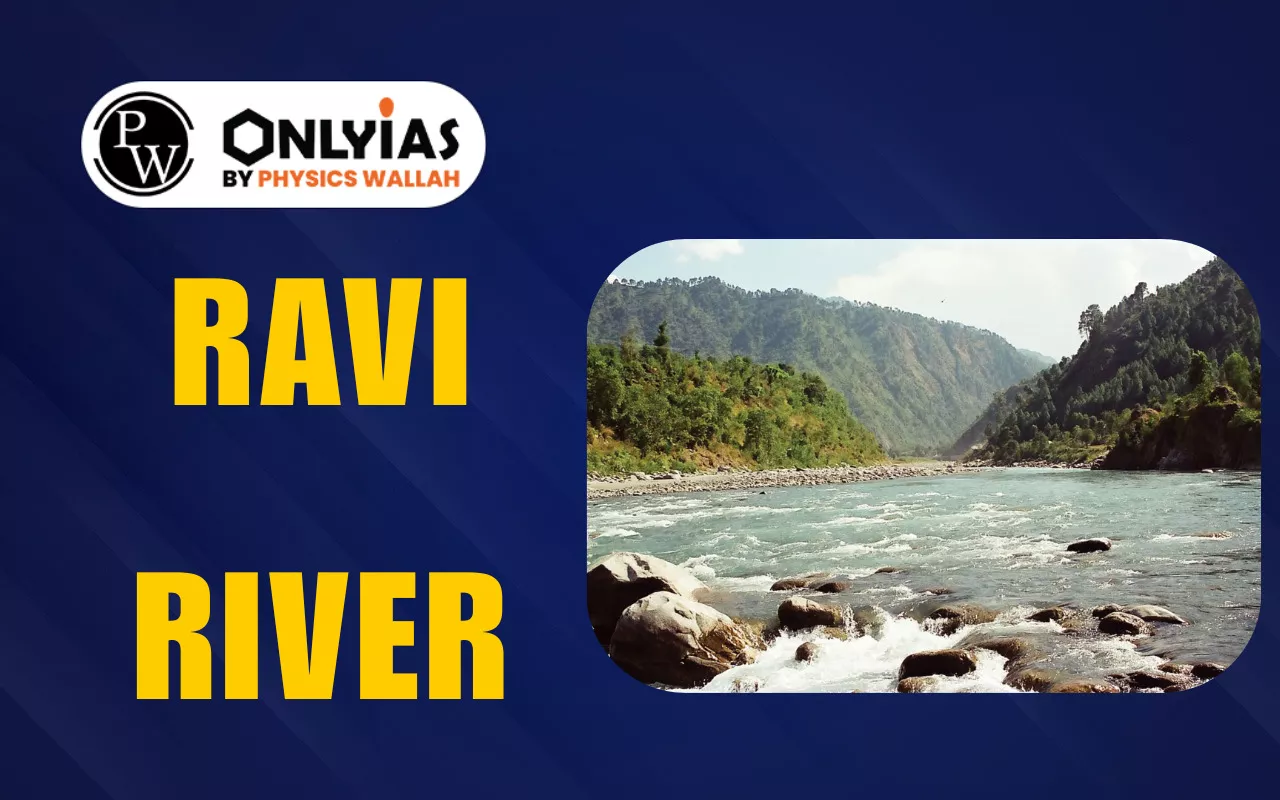
Ravi River is one of the five major rivers of the Punjab region. It holds historical importance, appearing in Vedic texts. This river provides crucial resources for agriculture and power generation in the region.
The Ravi begins in the Bara Bhangal area of Multhan tehsil, Kangra District, Himachal Pradesh. The Ravi River origin is from Himalayan glacier fields. The river drains a large catchment area in India, supporting diverse flora.
The Ravi River origin is in the Himalayan region. Understanding the Ravi River source helps students learn how rivers start from mountains.
The Ravi River begins near the Bara Banghal area of the Dhauladhar range in Himachal Pradesh. It starts at a high altitude where snow melts and small streams join together. This fresh mountain water makes the Ravi River clean and fast-flowing in its early stage.
| Attributes | Details |
| Ravi River Vedic Name | Purushni |
| Ravi River Sanskrit Name | Iravati |
| Ravi River Ancient Greek Name | Hydraotes |
| Ravi River Length | 158 kms |
| Ravi River Source | Multan Tehsil (Kangra) |
The Ravi River Sanskrit name is Parushni. This name is found in ancient Indian literature. The Ravi River Vedic name is also Parushni, which is mentioned in the Rigveda.
In Vedic times, the Ravi River was known for its strong flow and wide valley. Many important historical events took place near its banks. Because of this, the Ravi River holds a special place in Indian history.
Explore UPSC Foundation Courses

Explore UPSC Foundation Courses
The Ravi River map is very useful for students to understand its route and nearby regions. Maps help in learning location, direction, and river flow clearly.
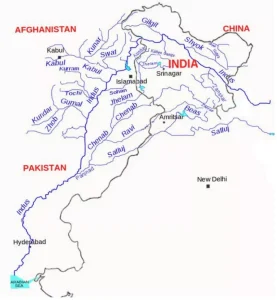
The Ravi River flows through Himachal Pradesh and Punjab before entering Pakistan.
The river flows north-westerly. It travels through the Chamba district of Ravi River in Himachal Pradesh. Then it enters the plains of Punjab. The Ravi River in Punjab flows through flat plains. Here, the river is mainly used for farming and irrigation.
In Punjab, canals from the Ravi River help farmers grow crops. The river is less fast here but very important for daily life and agriculture. It forms a boundary between India and Pakistan for about 80 kilometers.
The Ravi River joins Chenab River in Pakistan. After crossing the Indian border, the Ravi River finally merges with the Chenab River. This makes it part of the Indus River system. The total length is about 720 kilometers (450 miles).
The Ravi River basin is the area where all small streams and rainwater flow into the river. This basin supports forests, farms, and towns.
The Ravi River valley is narrow in the mountains and wider in the plains. The valley is known for fertile soil, which helps farmers grow crops like wheat and rice. Life in the basin depends heavily on the Ravi River.
Key Ravi River tributaries include the Budhil, Dhona (Nai), Siul, Baira, Tant Giri, and Ujh rivers. These smaller rivers contribute significantly to the main river’s flow. Many originate in high mountain ranges, fed by snowmelt and springs.
| Tributary | Source / Origin | Confluence with Ravi |
| Bhadal River | Originates between the Pir Panjal and Dhauladhar ranges in the Bara Banghal area of central Himachal Pradesh | Joins the Ravi after meeting Tant Giri |
| Siul River | Rises between the Dhauladhar and Pir Panjal ranges near the J&K–Himachal Pradesh border | Joins Ravi downstream of Chamba |
| Baira River | Originates from the southern slopes of the Pir Panjal range | Joins the Ravi in Chamba district |
| Tant Giri River | Originates from the eastern slopes of the Pir Panjal range in Bharmour (Chamba) | Joins the Ravi via Bhadal River |
| Budhil River | Rises in the Lahaul Range; sourced from Manimahesh Kailash Peak and Manimahesh Lake | Joins Ravi about 40 miles downstream from source |
| Dhona / Nai River | Originates from Kali Debi Pass | Joins Ravi at Triloknath (Trilokinath) |
Several important Ravi River dams and projects manage its waters. The Ranjit Sagar Dam (Thein Dam) is a significant multipurpose project. It provides 600 MW of power and aids irrigation. Other projects like Chamera Dam and Shahpur Kandi Dam are also vital. The Madhopur Headworks diverts water for irrigation canals.
The Ravi River dams and projects are important for electricity and water storage. These projects help control floods and provide power.
Below are some key dams built on the Ravi River. These projects are mainly located in India.
| Dam Name | State | Purpose |
| Chamera Dam | Himachal Pradesh | Hydropower |
| Chamera II | Himachal Pradesh | Electricity |
| Chamera III | Himachal Pradesh | Power generation |
The Ravi River dam list shows that most dams are used for hydropower. These are also called Ravi River dams in India.
Check Out UPSC CSE Books
Visit PW Store
The Indus Waters Treaty of 1960 allocates the waters of the river to India. This legal framework defines water use for both India and Pakistan. Disputes sometimes arise among Indian states regarding water allocation.
The river faces severe pollution, especially near urban centers like Lahore. Industrial and agricultural waste leads to high contamination levels. Efforts are underway to address these environmental challenges.
Ready to boost your UPSC preparation? Join PW’s UPSC online courses today!
Explore UPSC Test Series

The river's Sanskrit name is Iravati.
The river originates in the Bara Bhangal area, Kangra District, Himachal Pradesh, India.
The Ranjit Sagar Dam and Chamera Dam are major projects on the river.
Yes, the river flows through Himachal Pradesh.
The Vedic name for the river is Purushni.




Explore SRIJAN Prelims Crash Course


Connect with our experts to get free counselling & start preparing
Books
Udaan (Prelims Wallah)
Prahaar (Mains Wallah)
Q&A Bank (Prelims & Mains)
Budget & Economic Survey
NCERT Wallah
Marks Booster
हिंदी माध्यम विशेष शृंखला
 Current Affairs
Monthly Current Wallah
Subject Wise Current Affairs
Editorial Analysis
Editorial PDFs
News of The Day
Download Our App



Download Our App
<div class="new-fform">
</div>

 GS Foundation
 Optional Course
 Combo Courses
 Degree Program