Books

Republic Day Tableaux 2026 showcase India’s culture, heritage, and development during the national parade. With the core theme marking 150 years of Vande Mataram and focus on Atmanirbhar Bharat, 30 tableaux from States, UTs, and ministries highlight unity, self-reliance, and inclusive national progress.
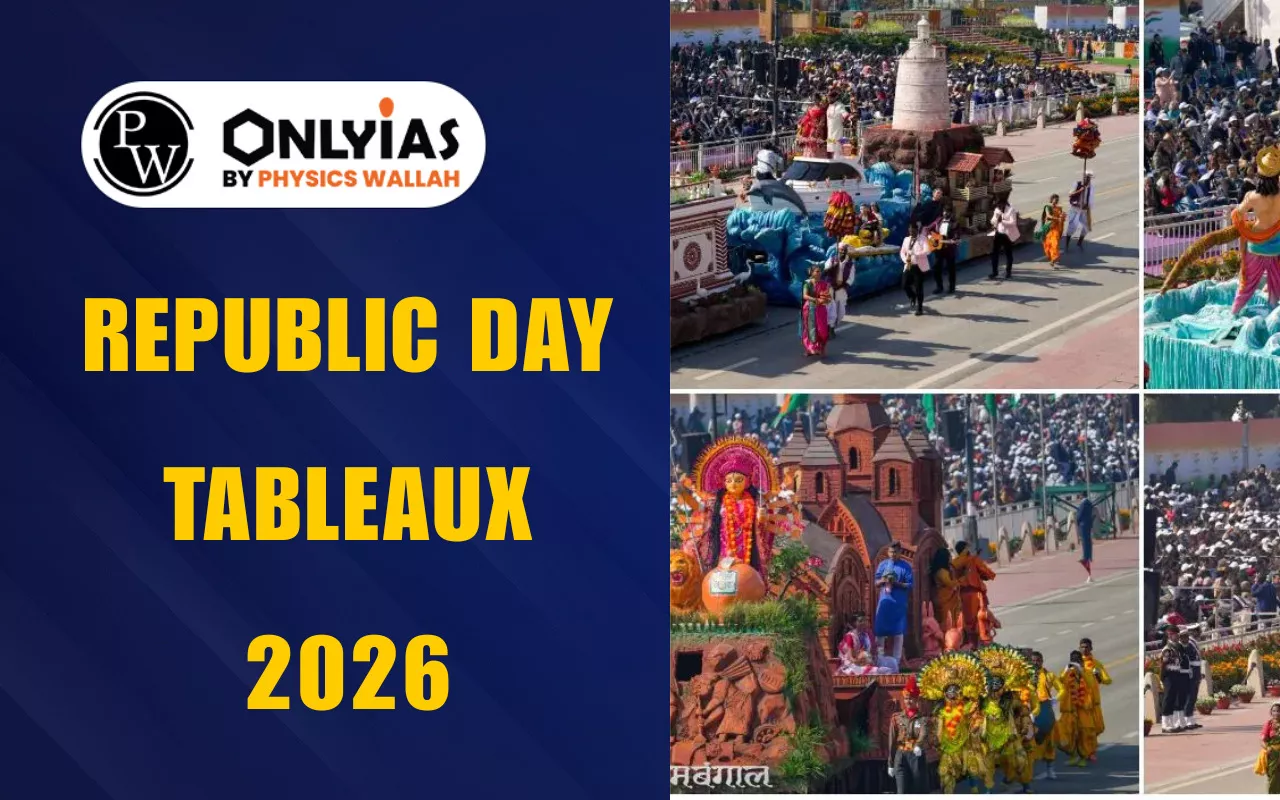
Republic Day Tableaux 2026 present India’s unity, culture, and progress through colorful and meaningful displays during the national parade. These tableaux help citizens, especially students, understand India’s heritage and national values in a visual form.
In 2026, the Republic Day tableaux celebrations focus on Vande Mataram and Atmanirbhar Bharat, highlighting freedom, self-reliance, and inclusive growth across States, Union Territories, and central ministries.
The Republic Day Celebrations 2026 will blend India’s military strength and cultural diversity. The parade’s core theme marks 150 years of the national song ‘Vande Mataram’. This theme underscores a significant cultural and historical milestone.
Chief Guests for the parade include Mr. Antonio Costa, President of the European Council, and Ursula von der Leyen, President of the European Commission. Their presence highlights international relations. Parade highlights also include a Battle Array Format by the Indian Army, showcased for the first time.
Around 10,000 special guests from various walks of life will witness the event. Approximately 2,500 artists will perform cultural acts. The Republic Day Tableaux 2026 displays will primarily revolve around the broader themes “स्वतंत्रता का मंत्र – वंदे मातरम” and “समृद्धि का मंत्र – आत्मनिर्भर भारत”.
After the Republic Day Parade 2026, awards were presented to the best marching contingents and tableaux based on judges’ evaluation and public voting. These honours recognised excellence in discipline, creativity and thematic presentation, encouraging higher standards in future parades.
At the 77th Republic Day Parade held on 26 January 2026 in New Delhi, panels of judges evaluated all participating marching contingents based on precision, discipline, uniformity and ceremonial performance.
Best Marching Contingent (Three Services) – Indian Navy
Best Marching Contingent (CAPFs & Auxiliary Forces) – Delhi Police
These awards celebrate the rigorous training, coordination and excellence shown by the personnel during the parade.
The tableau displays from various States and Union Territories were judged for creativity, theme relevance and presentation of cultural heritage and national progress.
Maharashtra – “Ganeshotsav: A Symbol of Aatmanirbharta”
Jammu & Kashmir – “Handicrafts and Folk Dances of Jammu & Kashmir”
Kerala – “Water Metro & 100% Digital Literacy: Aatmanirbhar Kerala for Aatmanirbhar Bharat”
These tableaux depicted stories of cultural richness, tradition and state-level achievements.
Ministry of Culture – “Vande Mataram – The Soul Cry of a Nation”
This presentation was adjudged the best among the Central Ministries/Departments’ entries.
A Republic Day tableaux is a visual representation by states, UTs, and ministries during the annual parade. It showcases India’s cultural diversity, progress, and national themes. For Republic Day Tableaux 2026 displays a focus on the ‘Vande Mataram’ theme and ‘Atmanirbhar Bharat’. This reflects India’s journey and aspirations, offering cultural representation.
Every year, a common theme guides the design of all tableaux. The Republic Day tableaux 2026 theme is decided to reflect national priorities, heritage, or future goals.
The Republic Day Tableaux 2026 theme helps ensure that all displays follow a shared national idea while still allowing each region to show its unique story.
Theme of the Tableaux for Republic Day Parade, 2026:
Here is a summary of Republic Day tableaux list 2026 states and union territories wise participating in the Republic Day tableaux 2026, along with their proposed themes:
| State/UT/Ministry | Theme |
| Assam | Ashirakandi: The Craft Village |
| Chhattisgarh | Mantra of Freedom: Vande Mataram |
| Gujarat | Swatantrata ka Mantra – Vande Mataram |
| Himachal Pradesh | Himachal Pradesh – Dev Bhoomi is equally Veer Bhoomi |
| Jammu & Kashmir | Handicrafts and Folk Dances of Jammu and Kashmir |
| Kerala | Water Metro & 100% Digital: Atmanirbhar Kerala for Atmanirbhar Bharat |
| Maharashtra | Ganeshotsav: A Symbol of Atmanirbharta |
| Manipur | Towards Prosperity: From Fields International Markets |
| Nagaland | The Hornbill Festival – Celebrating Culture, Tourism & Self-Reliance |
| Odisha | Soil to Silicon: Rooted in Tradition, Rising with Innovation |
| Puducherry | Puducherry’s Rich Heritage of Craft, Culture and Auroville’s Vision |
| Rajasthan | Camel Hide and Golden Art |
| Tamil Nadu | Mantra of Prosperity: Self-Reliant India – EV Manufacturing Hub |
| Uttar Pradesh | Culture of Bundelkhand |
| West Bengal | Bengal in the Freedom Movement of India |
| Madhya Pradesh | ‘Punyashlok’ Lokmata Devi Ahilyabai Holkar |
| Punjab | 350th Martyrdom Day of Sri Guru Tegh Bahadur Ji |
| Air HQrs | Veteran Tableau – Nation Building through War |
| Naval HQrs | Samudra Se Samridhi |
| Dept. Military Affairs | Tri-Services Tableau – Operation Sindoor, Victory through Jointness |
| Ministry of Culture | Vande Mataram: The Soul-Cry of a Nation |
| Dept. School Ed. & Lit. | National Education Policy 2020: Rocketing Indian School Education… |
| M/o AYUSH | AYUSH ka Tantra, Swasthya ka Mantra |
| M/o Home Affairs (NDMA & NDRF) | Bhuj 25 Years Commemoration |
| M/o Home Affairs (BPRD) | Jan Kendrit Nyay Pranali – Enactment of the Three New Laws – 2023 |
| M/o Housing & Urban Affairs (CPWD) | Vande Mataram ke 150 Saal (Floral Tableau) |
| M/o Information & Broadcasting | Bharat Katha: Shruti, Kriti, Drishti |
| M/o Panchayati Raj | SVAMITVA Scheme – Atmanirbhar Panchayat se Samriddh evam Atmanirbhar Bharat |
| M/o Power | Prakash Ganga – Powering an Atmanirbhar and Vikshit Bharat |
| M/o Skill Development & Entrepreneurship | India’s Path to Self-Reliance and Future Readiness Powered by Skills. |
Tableaux designs must be simple, colorful, and easy to understand for all viewers. Avoid using excessive statistical data or complex details in their presentation. Construction materials should be eco-friendly to promote sustainability.
Writing or logos on the tableaux are not permitted. Only the name of the State or UT can be displayed. It should be in Hindi at the front, English at the back, and the regional language on the sides. Tableaux must align with the overall themes set for the Republic Day Parade. Designs from different participants should not be too similar to ensure variety and uniqueness.
The Republic Day tableaux competition 2026 is held among selected participants. Tableaux are judged on theme clarity, creativity, cultural value, and overall impact.
This healthy competition encourages States and UTs to improve quality and innovation in the Republic Day Tableaux 2026.
After the parade, awards were distributed to the best-performing tableaux. The Republic Day Tableau Winners 2026 were announced based on evaluations by the judges along with public voting results.
These awards recognised creativity, thematic relevance and presentation, while also motivating participants to deliver even better tableaux in the coming years.
The tradition of Republic Day tableaux started soon after India became a republic in 1950. In the early years, tableaux mainly focused on freedom fighters and national unity. Over time, the themes became wider and included culture, science, women’s empowerment, tribal life, environment, and government schemes.
The Republic Day Tableau 2026 continues this long tradition of storytelling through visuals and helps people understand India’s journey as a nation.
The Republic Day Tableau 2026 has great national importance. It allows each State and UT to proudly present its identity. It also helps people learn about regions they may never visit.
For students, the Republic Day tableau significance lies in learning about Indian culture, geography, history, and values in an easy and engaging way.
One of the strongest features of the Republic Day Tableaux 2026 is cultural representation. States and UTs use traditional dresses, folk dances, music, festivals, and art forms.
This Republic Day tableaux cultural representation shows how India is united despite having many languages, religions, and traditions.
The Ministry of Defence (MoD) manages the Republic Day Parade. It coordinates arrangements and oversees the Republic Day tableaux selection process. States, Union Territories, and various departments submit design sketches for their proposed tableaux. The overall themes for 2026 include ‘Viksit Bharat’ (Developed India) and ‘Bharat-Loktantra ki Matruka’ (India-Mother of Democracy).
An expert committee evaluates these proposals. This committee comprises experts in fields such as arts, culture, painting, sculpture, music, architecture, and choreography. The selection involves two main phases.
The committee holds ultimate authority over selected tableaux, ensuring quality and thematic relevance.
A new 3-year rotational plan (2024-2026) ensures equitable opportunities. All States and Union Territories can present their tableaux at the Republic Day Parade. This policy reduces concerns about political bias, promoting greater inclusivity in the national celebration.
States not selected for the main parade can still display their tableaux at Bharat Parv. This alternative event takes place at the Red Fort from January 26-31.
Check Out UPSC CSE Books
Visit PW Store
Republic Day tableaux are a key part of the national parade, showing India’s culture, progress, and ideas through moving displays. These unique floats go through a careful and strict process before they are chosen for the Republic Day Tableaux 2026 showcase.
The Ministry of Culture will present a special Republic Day 2026 tableau themed ‘150 Years of Vande Mataram’, celebrating the national song as a timeless symbol of India’s civilisational heritage, unity, and patriotic spirit. The tableau will highlight how Vande Mataram has inspired generations during the freedom struggle and continues to resonate as a powerful expression of collective identity and cultural pride.
Through artistic visuals and historical elements, the presentation will trace the journey of the song from its origins to its role in awakening national consciousness, portraying it as more than a song—an enduring call to serve and safeguard the nation. As the country marks Republic Day 2026, the tribute reminds citizens not only to honour the sacrifices of the past but also to uphold the values of responsibility, unity, and progress. The initiative reaffirms Vande Mataram as a bridge between India’s rich history, its present duties, and its future aspirations.
Nagaland will present a vibrant Republic Day Tableaux 2026 themed “The Hornbill Festival – Celebrating Culture, Tourism & Self-Reliance” at the 77th Republic Day Parade on Kartavya Path, New Delhi. The presentation will highlight the state’s rich tribal heritage, colourful traditions, folk arts, and the iconic Hornbill Festival, often called the “Festival of Festivals,” as a symbol of unity in diversity.
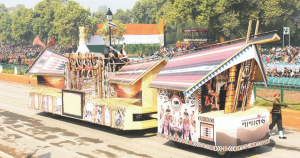
Through this tableau, Nagaland aims to showcase how cultural pride and tourism are driving local development and self-reliance, reflecting the broader national themes of Vande Mataram and Aatmanirbhar Bharat. The display will celebrate not only the state’s cultural identity but also its growing role in sustainable growth and economic progress.
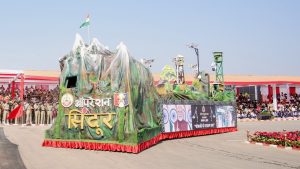
The Indian Armed Forces will present a striking Tri-Service tableau titled “Operation Sindoor: Victory Through Jointness” at the 77th Republic Day Parade on Kartavya Path, showcasing the strength of coordination and unity among the Army, Navy, and Air Force. The display will underline how seamless joint operations and integrated planning enhance India’s defence preparedness and operational effectiveness.
Ready to boost your UPSC preparation? Join PW’s UPSC online courses today!

The main theme for Republic Day 2026 is "150 years of Vande Mataram".
The chief guests are Mr. Antonio Costa, President of the European Council, and Ursula von der Leyen, President of the European Commission.
A total of 30 tableaux will feature, comprising 17 from States/UTs and 13 from Ministries/Departments/Services.
A 3-year rotational plan (2024-2026) ensures every State and Union Territory gets a chance to showcase their Republic Day Tableau 2026.
The Republic Day tableau theme is selected by the Ministry of Defence in consultation with other central ministries and expert committees.






Connect with our experts to get free counselling & start preparing
Books
Udaan (Prelims Wallah)
Prahaar (Mains Wallah)
Q&A Bank (Prelims & Mains)
Budget & Economic Survey
NCERT Wallah
Marks Booster
हिंदी माध्यम विशेष शृंखला
 Current Affairs
Monthly Current Wallah
Subject Wise Current Affairs
Editorial Analysis
Editorial PDFs
News of The Day
Download Our App



Download Our App
<div class="new-fform">
</div>



 GS Foundation
 Optional Course
 Combo Courses
 Degree Program