Books

The Santhal Revolt (1855–56), also called Santhal Hul, was a tribal uprising against British rule caused by land alienation, heavy taxes, and exploitation by moneylenders and zamindars. Led by Sidhu and Kanhu in the Damin-i-Koh region, it led to reforms and the formation of the Santhal Pargana district.
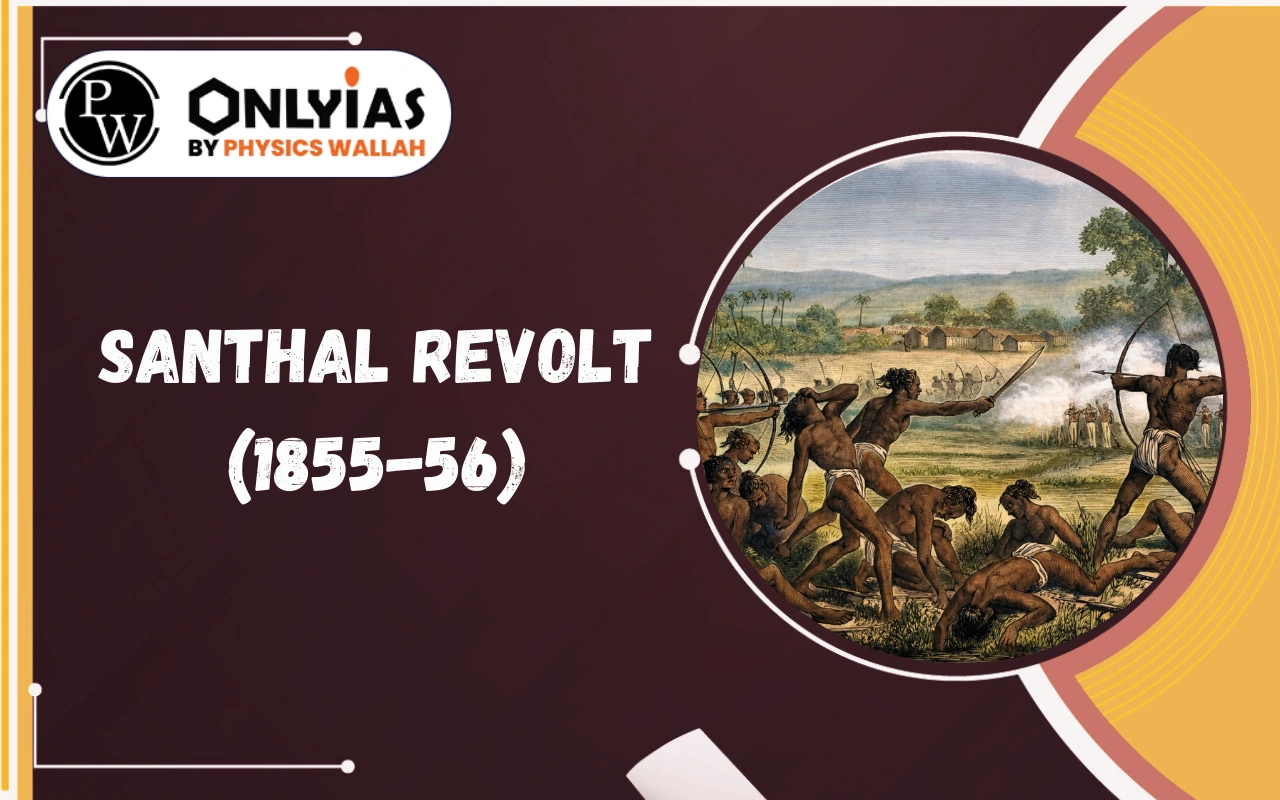
The Santhal Revolt was one of the earliest organised movements against colonial oppression in India. It took place in the mid-nineteenth century when tribal communities began raising their voices against unfair practices introduced during British rule. This movement is also remembered as the Santhal rebellion 1855 56, which reflected the anger of local communities against economic and social injustice.
The movement was not limited to protest. It became a strong expression of unity among tribal people who wanted to protect their land, culture, and traditional way of life. The Santhal Hul History was therefore not only a political reaction but also a cultural resistance against changing systems imposed by colonial administration.
The Santhal community lived mainly in forested and agricultural areas. They depended on farming and forest produce for survival. Their lifestyle was deeply connected with nature. However, changes in land systems during colonial rule disturbed their traditional practices.
The beginning of the Santhal Revolt can be traced to the settlement of tribal communities in the Rajmahal hills region. The colonial government encouraged them to move into the Damin i koh region Santhal revolt for agricultural expansion. Initially, this provided land for cultivation. Over time, the situation changed due to increasing administrative control and rising external interference.
Gradually, the tribal communities lost control over their own lands. Many outsiders entered the region. This created tension and conflict in daily life. The situation worsened due to heavy taxation and strict land revenue policies. The role of British revenue policies Santhal revolt became a major reason behind the growing dissatisfaction.
The Santhal uprising causes were mainly economic, social, and administrative in nature. The tribal community faced continuous hardship under colonial rule. The major causes are explained below in clear sub-points:
Exploitation by Moneylenders and Zamindars
There was severe exploitation by moneylenders zamindars British authorities. Moneylenders charged very high interest on loans. Many Santhals were unable to repay debts due to poverty. Their lands were taken away when they failed to repay loans. Zamindars imposed heavy rents and illegal demands.

Traditional land ownership patterns were disturbed. Earlier, land was held collectively by the community. New revenue systems recognised landlords instead of tribal cultivators. Many Santhals lost their land and became tenants or labourers.
The role of British revenue policies Santhal revolt was very significant. High land revenue was imposed without understanding tribal conditions. Revenue had to be paid in cash instead of produce. This forced tribal families to borrow money from outsiders.
Santhals were forced to work without fair wages. Local officials misused their authority. There was no proper system to address tribal complaints.
Police and revenue officials often supported moneylenders. Tribal people faced injustice in courts. False cases were filed against them in many instances.
The settlement of outsiders in tribal areas increased conflict. Forest rights and access to natural resources were restricted. Cultural and social practices were disturbed.
Continuous oppression created unity among the Santhals. Leaders encouraged people to protect their land and dignity. This dissatisfaction finally resulted in the Santhal Revolt against East India Company.
These combined factors created deep resentment among the tribal population and led to the outbreak of the Santhal Revolt in 1855.
The Santhal revolt leaders Sidhu and Kanhu were central figures. They mobilized their community against colonial rule.
The Santhal revolt features made this movement different from many other resistance efforts during colonial rule. The important features are given below:
The Santhal Hul unfolded through a series of key events. These actions marked the peak of the Santhal resistance movements.
The Santhal Rebellion outcomes led to significant changes in British policy towards tribal areas.

The Santhal Revolt stands as a pivotal event. It influenced later tribal resistance movements in India.
The Santhal Revolt was more than a protest against economic hardship. It was a strong response to social injustice and cultural interference. The movement showed the importance of unity in facing exploitation.
As one of the major Santhal Revolt events in Indian history, it continues to be studied for its contribution to resistance traditions. The lessons from the Santhal Revolt remain relevant even today, as they highlight the importance of protecting local rights and traditions.
The story of the Santhal Revolt reminds us of the strength of collective action and the need for fair governance systems in every society.
Check Out UPSC CSE Books

The Santhal Revolt took place from 1855 to 1856.
Sidhu and Kanhu Murmu were the main leaders of the Santhal Revolt.
Damin-i-Koh was a demarcated area in the Rajmahal hills, primarily for Santhal settlement.
A major outcome was the formation of the Santhal Parganas district in 1856.
They rebelled due to land alienation, economic exploitation by moneylenders and zamindars, and forced labor.






Connect with our experts to get free counselling & start preparing
Books
Udaan (Prelims Wallah)
Prahaar (Mains Wallah)
Q&A Bank (Prelims & Mains)
Budget & Economic Survey
NCERT Wallah
Marks Booster
हिंदी माध्यम विशेष शृंखला
 Current Affairs
Monthly Current Wallah
Subject Wise Current Affairs
Editorial Analysis
Editorial PDFs
News of The Day
Download Our App



Download Our App
<div class="new-fform">
</div>



 GS Foundation
 Optional Course
 Combo Courses
 Degree Program