Books

Sutlej River is a major trans-Himalayan river that originates from Lake Rakshastal in Tibet. From there, it flows through Himachal Pradesh and Punjab in India, playing a crucial role in the region’s water resources, irrigation, and power generation. Supporting numerous hydroelectric projects along its course, the Sutlej ultimately joins the Indus River system.
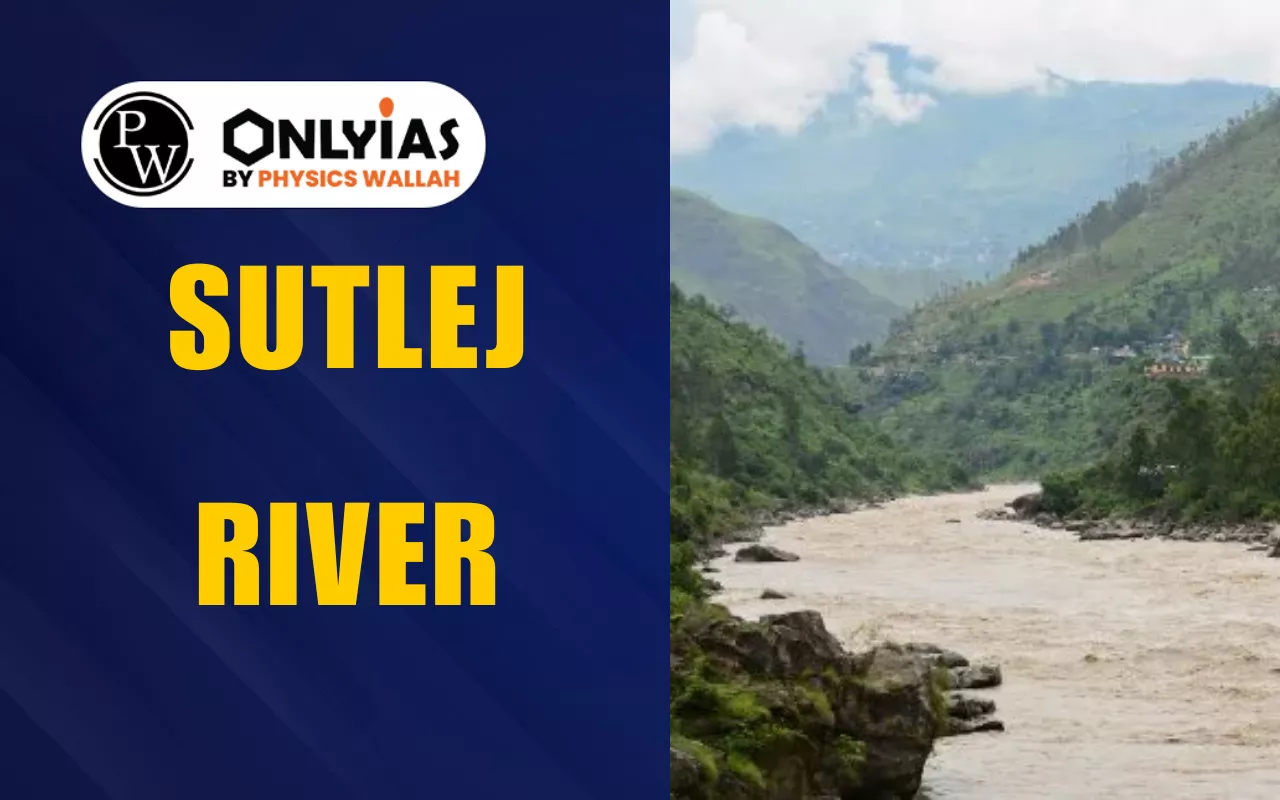
The Sutlej River is the longest of the five major tributaries of the Indus River. It plays a vital role in India’s geography, history, agriculture, and hydropower development. From its sacred origin near Mount Kailash to its journey through Himachal Pradesh and Punjab, the Sutlej River supports millions of lives.
It is also a key topic for UPSC and other competitive exams due to its link with the Indus River system, irrigation, dams, and the Sutlej-Yamuna Link Canal dispute. Read on to learn about the Sutlej River origin, course, length, basin, dams, tributaries, hydropower projects, and its role in India.

The Sutlej River is the easternmost tributary of the Indus River system. It holds deep historical, religious, and geographical importance. Ancient Indian texts mention this river as a lifeline of northwestern India. Over centuries, the Sutlej has shaped fertile plains, supported early civilizations, and connected India with Central Asia.
The Sutlej Sanskrit name is Shatadru, which means “the river of a hundred streams.” This name reflects its wide channels and powerful flow in ancient times. The Sutlej Vedic name also appears as Shatadru in Rigvedic literature. These references highlight the river’s significance in early Indian society.
Today, the Sutlej River is crucial for irrigation, hydropower, and interstate water sharing. Its waters support farming in Punjab and power major hydropower projects in Himachal Pradesh.
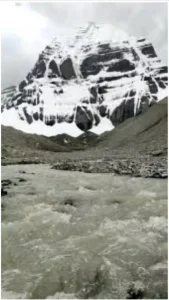
The Sutlej river origin lies close to Mount Kailash in the Tibetan Plateau. The Sutlej River source Mount Kailash is near Rakshastal Lake in Tibet. The river is known as Langqen Zagbo in Tibet and flows for about 322 km within Tibetan territory.
From Tibet, the river flows westward and enters India through Shipki La Pass in Himachal Pradesh. The Sutlej River in India passes through Himachal Pradesh and Punjab. The Sutlej River course merges with the Beas River near Harike in Punjab. The total Sutlej River length is about 1550 km.
The Sutlej River course is long and geographically diverse. After rising near Mount Kailash, it flows through Tibet for about 400 km. It then enters India in Himachal Pradesh, carving deep gorges through the Himalayas.
The Sutlej River in Himachal Pradesh flows through Kinnaur, Shimla, and Kullu regions. Here, the river has steep gradients, making it ideal for hydropower projects. Major dams are located in this stretch.
After leaving the hills, the river enters the plains of Punjab. The Sutlej River in Punjab becomes wider and slower. It supports extensive agriculture through canals and barrages.
Finally, the Sutlej river joins Indus in Pakistan, after merging with the Beas River. This completes its journey as part of the Indus River system.
A Sutlej River map shows its strategic position in northwestern India.
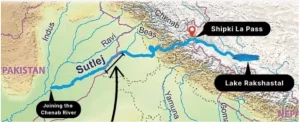
The Sutlej River has several important tributaries and numerous development projects. Major tributaries include:

There is a long list of dams on Sutlej River, especially in Himachal Pradesh. These structures help in power generation, flood control, and irrigation. Major Sutlej River dams and barrages include:
The Bhakra Nangal Dam is one of India’s tallest gravity dams. It is a symbol of post-independence development and supports irrigation in Punjab, Haryana, and Rajasthan.
The steep slopes of the Himalayas make the Sutlej ideal for energy production. Sutlej River hydropower projects contribute significantly to India’s renewable energy capacity.
Major projects include:
These projects provide electricity to northern India and reduce dependence on fossil fuels. They also create employment in hilly regions.
The Sutlej river irrigation system is one of the most developed in India. Canals originating from Bhakra Nangal support farming in Punjab and Haryana. This irrigation system transformed Punjab into the “Granary of India.” It played a key role in the Green Revolution by ensuring a year-round water supply for crops.
Check Out UPSC CSE Books
Visit PW Store
The Sutlej-Yamuna Link Canal Dispute is a major interstate water-sharing issue. The canal was planned to connect the Sutlej River with the Yamuna River to distribute water between Punjab, Haryana, and Rajasthan.
Punjab argues that it does not have surplus water, while Haryana demands its share. This dispute has political, legal, and federal implications, becoming a crucial topic for UPSC GS Paper II.
The Indus Waters Treaty governs the sharing of the Sutlej River waters. This international agreement allocates its waters to India for unregulated use. The treaty was signed between India and Pakistan in 1960.
If you are preparing for UPSC, understanding rivers like the Sutlej is essential. Explore PW OnlyIAS Courses to build strong conceptual clarity with mentors’ guidance and structured learning.

The Sutlej Sanskrit name is Satadree.
The Sutlej river origin is Lake Rakshastal in Tibet. This is near Mount Kailash.
Major list of dams on Sutlej river include Bhakra-Nangal Dam and Kol Dam.
The Sutlej river in India flows through Himachal Pradesh and Punjab.
The Sutlej River joins the Chenab River to form the Panjnad. This then flows into the Indus River.






Connect with our experts to get free counselling & start preparing
Books
Udaan (Prelims Wallah)
Prahaar (Mains Wallah)
Q&A Bank (Prelims & Mains)
Budget & Economic Survey
NCERT Wallah
Marks Booster
हिंदी माध्यम विशेष शृंखला
 Current Affairs
Monthly Current Wallah
Subject Wise Current Affairs
Editorial Analysis
Editorial PDFs
News of The Day
Download Our App



Download Our App
<div class="new-fform">
</div>



 GS Foundation
 Optional Course
 Combo Courses
 Degree Program