Books

Union Territories of India 2026 are centrally governed regions with a unique status. Learn how Union Territories of India are formed, administered, and their significance in the federal structure.
Union Territories of India 2026: India is a vast and diverse nation governed by a federal structure comprising 28 states and 8 Union Territories of India. While states enjoy autonomy with their own elected governments, Union Territories of India are directly governed by the Central Government through an appointed Administrator or Lieutenant Governor.
These Union Territories of India hold strategic, administrative, and historical importance in shaping the federal governance structure of the country. As of the year 2026, the Union Territories of India play an important role in the political, cultural, and geographical fabric of the nation.
Union Territories are administrative units governed directly by the Central Government of India. Unlike the states, which possess legislative powers and executive autonomy, most Union Territories are administered by an appointed Lieutenant Governor or Administrator who reports to the President of India. However, some, like Delhi and Puducherry, have a partial state-like status with elected legislative assemblies.
In the Indian federal structure, Union Territories (UTs) are not all governed under the same framework. They are primarily categorized into two distinct types based on their administrative setup and the presence of a local legislature. While all UTs are technically under the direct control of the Central Government through the President of India, the degree of local autonomy varies significantly.
These UTs function similarly to states but with restricted powers. They have their own elected Legislative Assembly and a Council of Ministers headed by a Chief Minister. However, certain key subjects—typically land, police, and public order—remain under the direct jurisdiction of the Central Government via a Lieutenant Governor (LG).
Examples: Delhi (NCT), Puducherry, and Jammu & Kashmir.
These are regions governed directly by the Central Government without a local representative body or cabinet. The President appoints an Administrator or a Lieutenant Governor to manage the day-to-day governance of the territory. In these areas, the Union Government has the final authority over all legislative and executive matters.
Examples: Chandigarh, Lakshadweep, Ladakh, Dadra and Nagar Haveli and Daman and Diu, and Andaman & Nicobar Islands.
After independence, the Constitution of India initially categorised regions into Part A, B, C, and D states. Part C and D states were governed directly by the Centre and later reclassified as Union Territories after the States Reorganisation Act, 1956.
| The States Reorganisation Act of 1956 was a major reform of India’s state boundaries, implemented on November 1, 1956. It reorganised states primarily on the basis of language to promote administrative efficiency and unity. This act led to the creation of 14 states and 6 union territories. It marked a significant step in shaping the modern political map of India. |
|---|
Subsequent reorganisations led to the formation and merger of several Union Territories. Notably:
The division into states and union territories ensures better governance and administration across the extensive and diverse country. Union Territories often hold geographical, cultural, or political significance that requires central oversight.
This division also helps maintain the balance between decentralisation and national integrity. Union Territories of India also serve as a model for testing new administrative structures.
As of 2026, India has 8 Union Territories, each unique in its geographical, cultural, and administrative setup. These Union Territories are governed either directly by the Central Government or through legislatures with limited powers. The list includes territories of strategic importance, historical significance, and cultural richness. Below is the updated Union Territories of India list along with their capitals.
| Union Territories of India List 2026 | ||||||
| Union Territory | Zone | Capital | Largest City | Established | Area (km²) | Official Languages |
| Andaman and Nicobar Islands | Eastern | Sri Vijaya Puram | — | 1 November 1956 | 8,249 | Hindi, English |
| Chandigarh | Northern | Chandigarh | Chandigarh | 1 November 1966 | 114 | English |
| Dadra and Nagar Haveli and Daman and Diu | Western | Daman | Silvassa | 26 January 2020 | 603 | Hindi, English |
| Delhi | Northern | New Delhi | Delhi | 1 November 1956 | 1,484 | Hindi, English |
| Jammu and Kashmir | Northern | Srinagar (Summer), Jammu (Winter) | Srinagar | 31 October 2019 | 42,241 | Dogri, English, Hindi, Kashmiri, Urdu |
| Ladakh | Northern | Leh (Summer), Kargil (Winter) | Leh | 31 October 2019 | 59,146 | Hindi, English |
| Lakshadweep | Southern | Kavaratti | — | 1 November 1956 | 32 | Hindi, English |
| Puducherry | Southern | Pondicherry | — | 16 August 1962 | 479 | Tamil, French, English |
A tropical paradise in the Bay of Bengal, this Union Territory is known for its strategic importance and natural beauty. It is a critical base for India’s defence in the eastern waters.
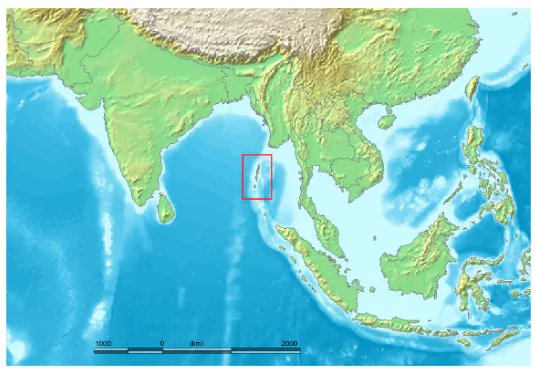
Andaman and Nicobar Islands comprise 572 islands and are rich in marine biodiversity. Port Blair, the capital, houses the historic Cellular Jail. Indigenous tribes and coral reefs make this territory ecologically and culturally significant.
Chandigarh is a unique Union Territory that acts as the capital of both Punjab and Haryana. Designed by French architect Le Corbusier, it is one of the best-planned cities in India.
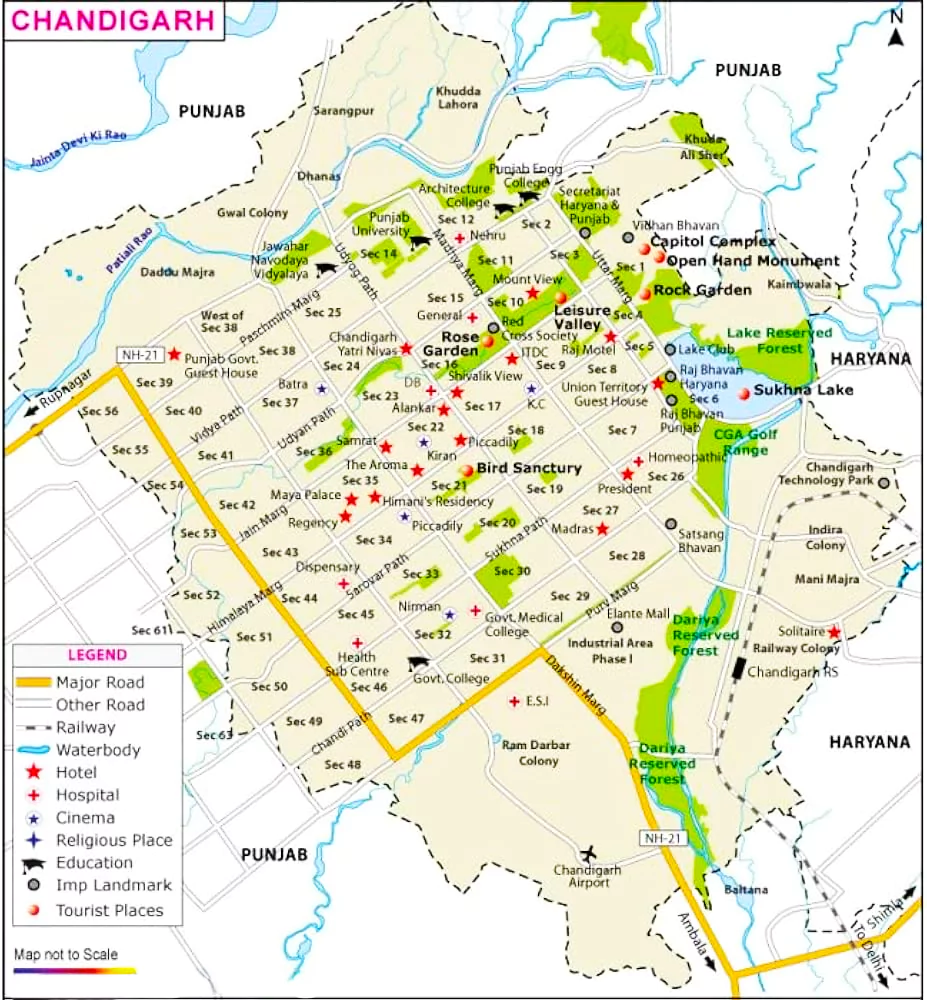
Known for its greenery and urban design, Chandigarh is also economically developed with high literacy and living standards. It is directly governed by the Central Government and does not have a legislature.
Merged in 2020, this Union Territory lies on India’s western coast. It combines the Portuguese heritage of Daman and Diu with the tribal culture of Dadra and Nagar Haveli.
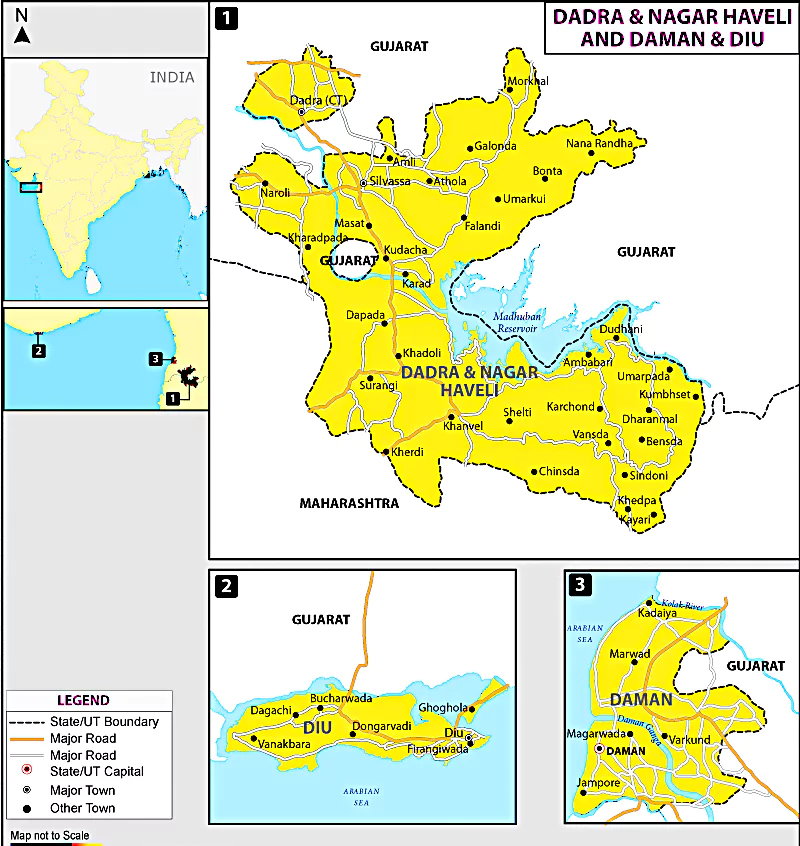
With its capital in Daman, this territory is famous for beaches, colonial churches, and forts. It is also an industrial hub due to favorable policies and tax incentives.
Delhi is both a city and a Union Territory, and is home to India’s political and administrative power. It hosts the Parliament, Rashtrapati Bhavan, and Supreme Court.
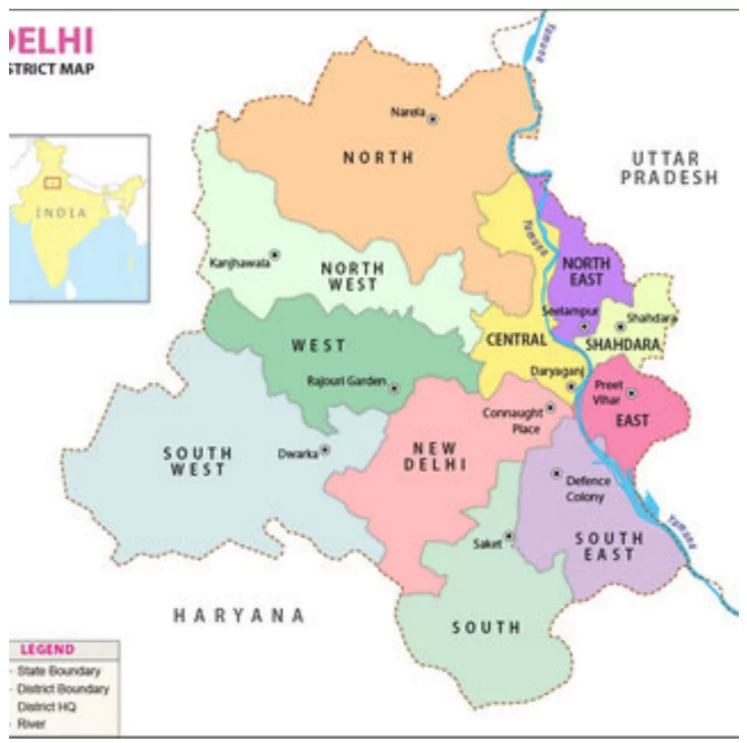
Delhi has a Legislative Assembly and a Chief Minister, but the Central Government retains control over police and public order. As the largest union territory of India by population, it plays a crucial role in national affairs.
Formed after the abrogation of Article 370 in 2019, Jammu & Kashmir became a Union Territory with partial legislative powers. Srinagar is its summer capital, while Jammu serves as the winter capital.
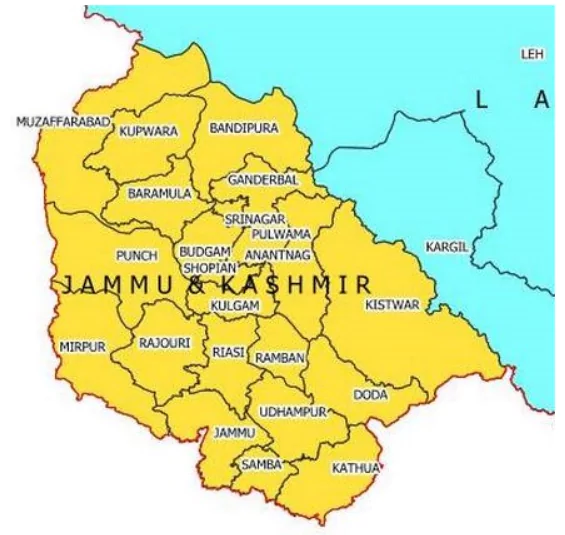
This region is known for its panoramic landscapes, diverse cultures, and strategic location. It is a hub for tourism and handicrafts, but also faces complex security challenges.
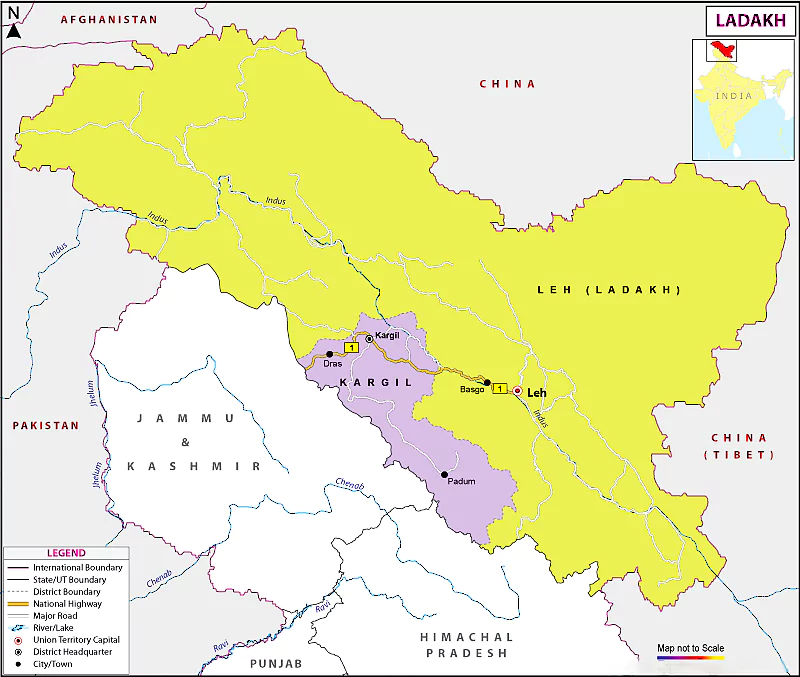
Ladakh was carved out from Jammu & Kashmir in 2019 and remains under direct central governance. It consists of two districts—Leh and Kargil.
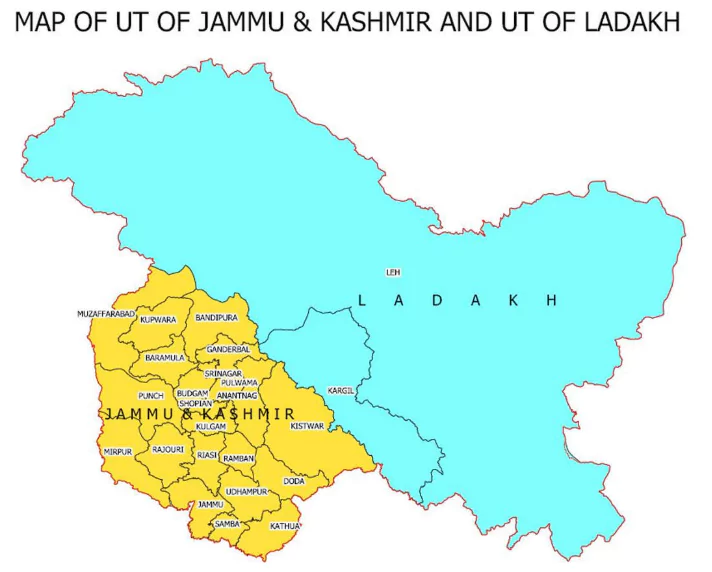
Known for its beauty, Buddhist culture, and high-altitude deserts, Ladakh is also of great strategic importance. It shares borders with both China and Pakistan.
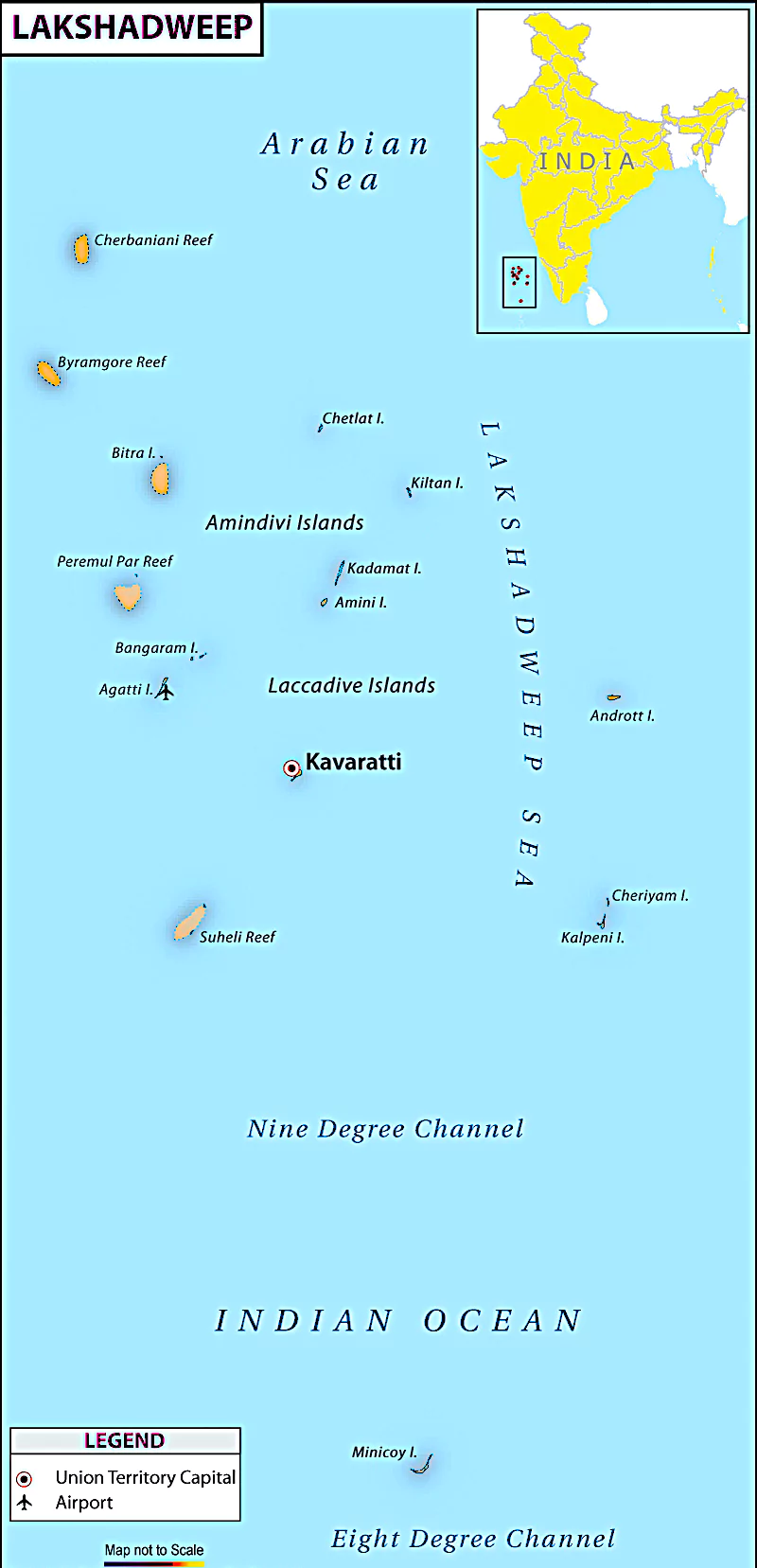
Lakshadweep is the smallest Union Territory of India, both in area and population. It is an archipelago of 36 islands located in the Arabian Sea.
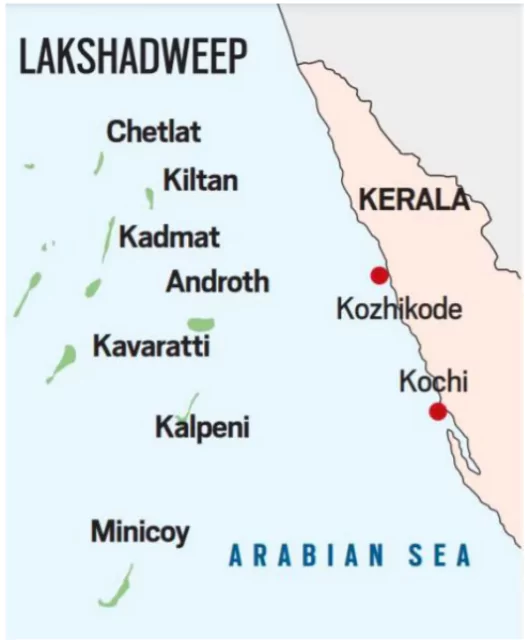
The capital is Kavaratti. The region is popular for its coral reefs, clear waters, and eco-tourism. Lakshadweep is culturally distinct, with Islamic influence and Malayalam as a widely spoken language.
Puducherry is a former French colony known for its European architecture and tranquil beaches. It has a Legislative Assembly but with limited powers.
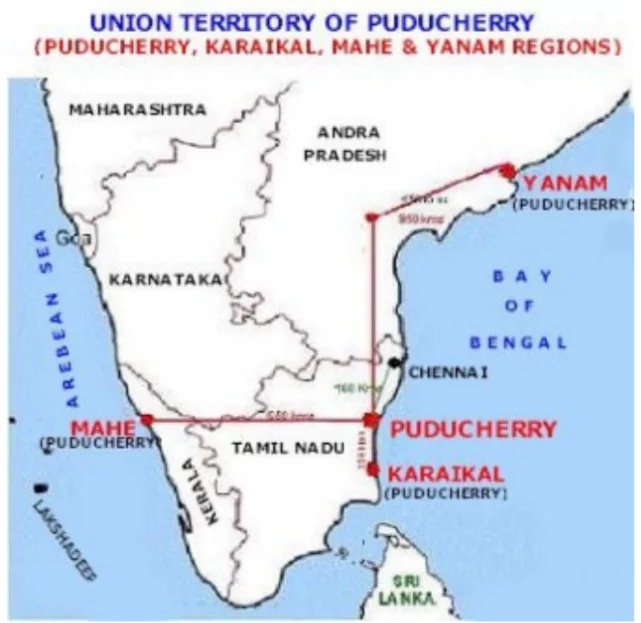
Its capital is also Puducherry, and the culture reflects a blend of Tamil and French traditions. Tourism, fishing, and agriculture drive its economy.
The smallest union territory of India by area is Lakshadweep, with an area of just 32 square kilometres. It consists of 36 islands, including 12 atolls and 3 reefs. Only 10 islands are inhabited. This coral paradise in the Arabian Sea is known for its ecological sensitivity and marine biodiversity.
The largest union territory of India by area is Ladakh, covering approximately 59,146 square kilometres. Formed in 2019, it comprises two districts—Leh and Kargil—and is strategically important due to its proximity to China and Pakistan.
The National Capital Territory (NCT) of Delhi remains the most populated Union Territory in India, with current estimates for 2026 placing its population at approximately 2.23 crore (22.3 million). Despite its relatively small land area of 1,484 sq. km, Delhi’s massive population is driven by its status as a global commercial hub and the seat of the Central Government, leading to one of the highest population densities in the world. It is followed by Jammu & Kashmir, which holds the second spot with an estimated population of over 1.3 crore.
Under the Indian Constitution, Union Territories are governed by the provisions of Articles 239 to 241 in Part VIII. Unlike States, which share a federal relationship with the Union, UTs are administrative units under the direct control of the President of India, who acts through an appointed Administrator or Lieutenant Governor. While the 69th Amendment Act (1991) granted special status to Delhi (NCT) and Puducherry with their own legislatures, the ultimate legislative authority for all UTs remains with the Parliament, ensuring centralized oversight of these strategically or culturally unique regions.
Union Territories are primarily established to address unique administrative, cultural, and strategic requirements that cannot be met by merging them with neighboring states. Reasons for their creation range from strategic importance (like the Andaman & Nicobar Islands) and cultural distinctiveness (such as Dadra and Nagar Haveli and Daman and Diu) to political/administrative instability or the need to maintain a centralized seat of power, as seen with the National Capital Territory of Delhi. By placing these regions under the direct oversight of the Central Government, the Union ensures tailored governance that protects local interests while maintaining national security.
The Union Territories of India represent a unique administrative mechanism designed to accommodate the diverse needs of regions that either require direct governance or have strategic significance. From the serene islands of Lakshadweep to the cold deserts of Ladakh, each Union Territory contributes immensely to the nation’s richness. As of the Union Territories of India 2026, these regions are more than just administrative divisions—they are vibrant embodiments of India’s unity in diversity.
Ready to boost your UPSC preparation? Join PW’s UPSC online courses today!
Explore UPSC Test Series

Union Territories are governed directly by the Central Government through an appointed Administrator or Lieutenant Governor.
There are 8 Union Territories in India as of now, each with unique administrative features and geographical significance.
Delhi and Puducherry have legislative assemblies, unlike other Union Territories that are centrally administered without elected legislatures.
States have their own governments, while Union Territories are administered by the Centre, with limited or no legislative powers.
Union Territories of India hold strategic, political, and cultural importance, often including regions of national interest or smaller population.
Yes, with a constitutional amendment, Union Territories of India can be granted full statehood, as seen in the case of Himachal Pradesh and Goa.



Explore SRIJAN Prelims Crash Course


Connect with our experts to get free counselling & start preparing
Books
Udaan (Prelims Wallah)
Prahaar (Mains Wallah)
Q&A Bank (Prelims & Mains)
Budget & Economic Survey
NCERT Wallah
Marks Booster
हिंदी माध्यम विशेष शृंखला
 Current Affairs
Monthly Current Wallah
Subject Wise Current Affairs
Editorial Analysis
Editorial PDFs
News of The Day
Download Our App



Download Our App
<div class="new-fform">
</div>

 GS Foundation
 Optional Course
 Combo Courses
 Degree Program